
Big News: FERC Grants Final EIS for ET Rover Pipeline
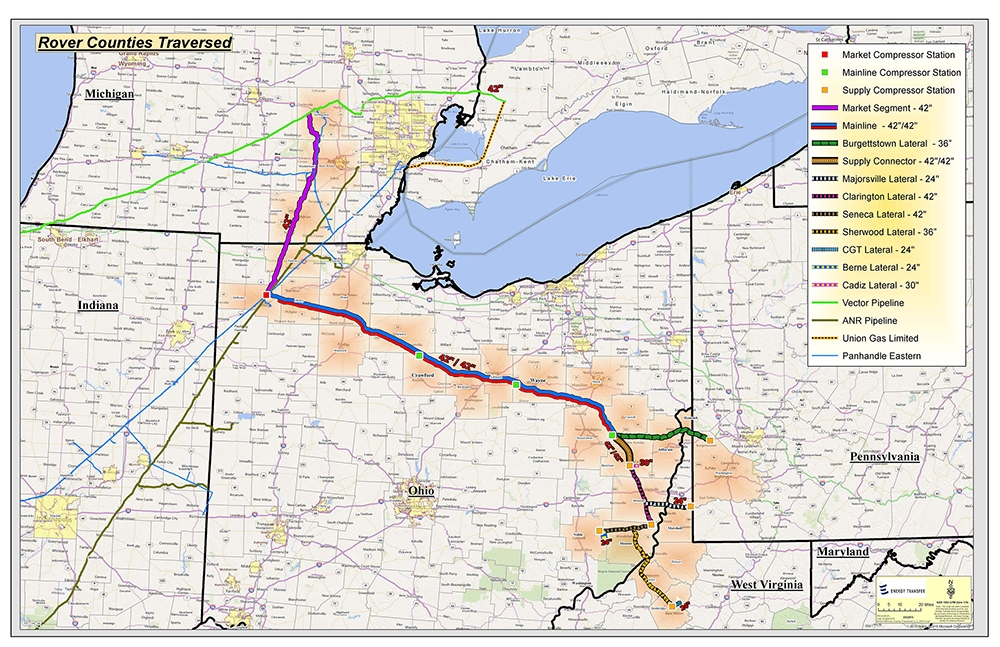
In June the Federal Energy Regulatory Commission (FERC) handed Energy Transfer’s proposed Rover pipeline project, a $3.7 billion, 711-mile Marcellus/Utica natural gas pipeline that will run from PA, WV and eastern OH through OH into Michigan and eventually into Canada, a big red light (see FERC Tells Rover, Leach XPress Pipes to Redesign Routes in SE OH). FERC told Rover and another pipeline project, Leach XPress, which will run from Marshall County, WV through Ohio to Leach, KY, that where their two projects meet something different would have to be worked out. Shortly thereafter the two projects being developed by different companies became best friends (see Rover, Leach XPress Pipelines Become BFFs to Fix FERC Objection). Apparently that fix helped clear the path and FERC, last Friday, issued a final Environmental Impact Statement (EIS) favorable to ET Rover. About the only left now is for a final approval to be issued by FERC for the project, which is now pretty much a foregone conclusion…
Read More “Big News: FERC Grants Final EIS for ET Rover Pipeline”
 In May MDN brought you the news that a researcher at West Virginia University believes an natural gas liquids (NGL) storage hub is what the Marcellus/Utica region really needs (see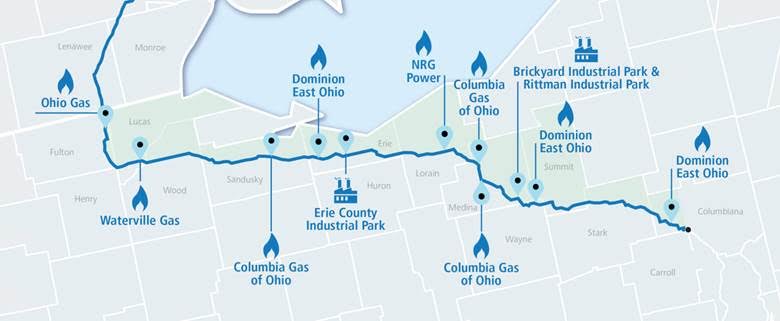
 Last week MDN reported that a previously trumpeted so-called research study of air quality near fracking sites in Ohio had been retracted (see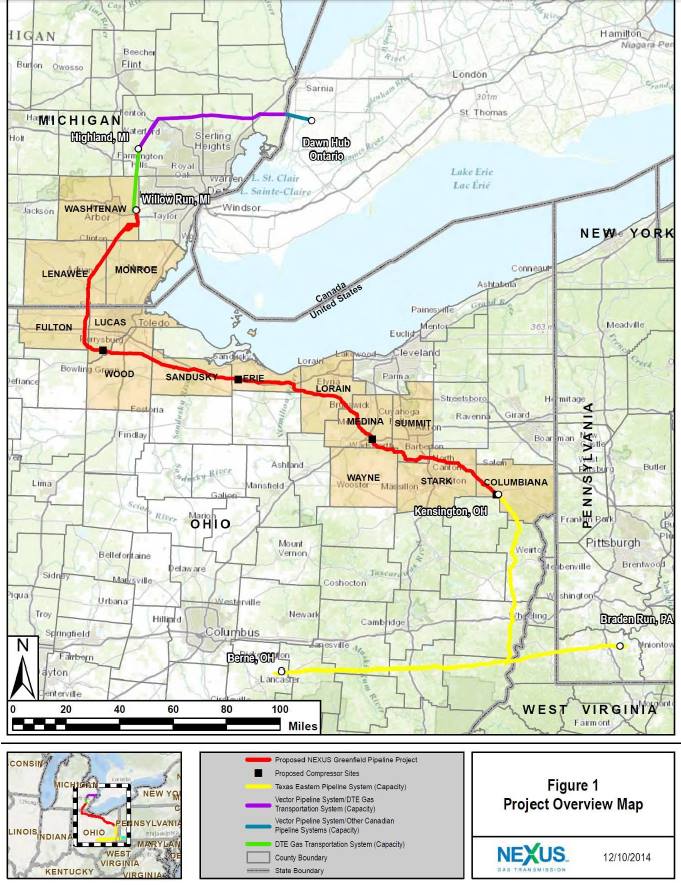
 Relief is on the way for some Ohio landowners who want to see drilling on or under their land, but have been held up because their land border state-owned land belonging to the Ohio Dept. of Transportation (DOT). Apparently the DOT (and/or the Ohio Dept. of Natural Resources, or ODNR) has been reluctant to pool or unitize land under DOT control to allow shale drilling. OH Gov. John Kasich has just signed House Bill (HB) 390 into law–a new law that gives the the ODNR 45 days to pool DOT-controlled land into units so drillers can begin drilling under it. Although the bill forces units to be issued, it allows drillers up to two years to begin their drilling after the units are issued, given the low prices in the market right now…
 Last December MDN ripped the mask off a group of extremely partisan, virulently anti-drilling Democrats who call themselves the innocent-sounding Multi-State Shale Research Collaborative (see
 There was lots of cracker talk at the first Northeast U.S. & Canada Petrochemical Construction Conference & Exhibition in Pittsburgh yesterday. According to NGI’s ace reporter for Shale Daily, Jamison Cocklin, excitement over the Shell cracker announcement from a few weeks ago was “palpable” at yesterday’s event. There was plenty of talk about the Shell cracker–but the talk coming from the event that interests MDN is talk about both the PTT Global Chemical cracker planned for Ohio, AND the Braskem cracker planned for West Virginia. These other two world class cracker plants (similar in size and scope to Shell’s project) “remain on track.” Now that is news!…
 Two major pipeline projects have just received a big red light from the Federal Energy Regulatory Commission (FERC), pending changes to their plans. Energy Transfer’s Rover pipeline, a $3.7 billion, 711-mile Marcellus/Utica natural gas pipeline that will run from PA, WV and eastern OH through OH into Michigan and eventually into Canada, along with Columbia Pipeline’s Leach XPress, running from Marshall County, WV through Ohio to Leach, KY, got word from FERC that a small section where the pipelines cross must be reworked or it’s a “no go” for both projects…
 On Monday MDN brought you the latest quarterly production numbers for the Ohio Utica Shale, direct from the Ohio Dept. of Natural Resources (see
  The Ohio Dept. of Natural Resources (ODNR) has just issued production numbers for the first quarter of 2016. Compared with first quarter 2015, production numbers in 1Q16 continue to impress. Natural gas production from shale is up 80% year over year, and oil production is up 24% y/y. Below we have the ODNR’s high level overview of the numbers, along with MDN’s own exclusive analysis showing: the top 25 producing gas wells, the top 25 producing oil wells, and then the top 25 gas and oil wells as ranked by average production per day. There is a difference! The longer an oil or gas well is online, the less it produces. Newer wells produce more. So we show you which wells are not just producing the most quantity overall, but which wells are producing at the fastest (most productive) rates–even if they haven’t yet been online a full three months. We also include a link to the complete list of 1,351 wells included in the 1Q16 ODNR report–in a more usable format than that provided by the ODNR…
 Gentlemen, start your engines! Your economic engines, that is. The news earlier this week that Shell has made the commitment to move ahead and build an ethane cracker plant in Monaca, PA has, as we knew it would, set the region buzzing (see
  The NEXUS Pipeline is a $2 billion, 255-mile interstate pipeline that will run from Ohio through Michigan and eventually to the Dawn Hub in Ontario, Canada (see