
PA DEP Grants Williams NE Supply Enhancement Pipe Key Permit
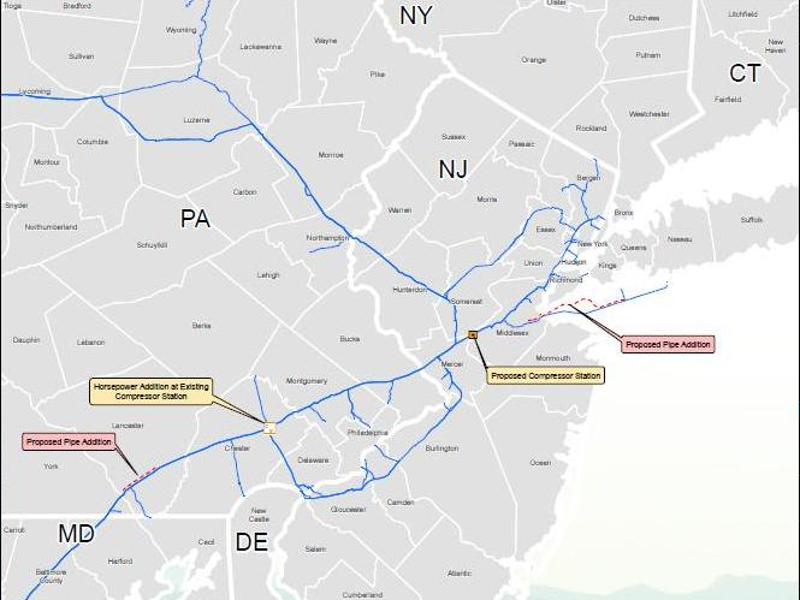
The Northeast Supply Enhancement (NESE) is a Williams Transco Pipeline project meant to increase pipeline capacity and flows heading into northeastern markets (see Time to Support Transco’s Northeast Supply Enhancement Project). Transco wants to provide more Marcellus natural gas to utility giant National Grid beginning with the 2019-2020 heating season. National Grid operates in New York City, Long Island, Rhode Island and Massachusetts. There are a number of components to the project, but the key component, the heart of the project, is a new 23-mile pipeline from the shore of New Jersey into (on the bottom of) the Raritan Bay–running parallel to the existing Transco pipeline–before connecting to the Transco offshore. After an initial rejection by the New York Dept. of Environmental Conservation (DEC), Williams refiled an application for the project in May with the DEC (see Williams Refiles Application with NY DEC for Transco NESE Project). Meanwhile, there are portions of the project in Pennsylvania that have already been approved by the PA’s Dept. of Environmental Protection. In a notice published in the June 16 Pennsylvania Bulletin, the DEP issued the project a Section 401 Water Quality Certification for work being done in Lancaster and Chester counties. According to the PA Environment Digest Blog: “The Project facilities consist of approximately 10.17 miles of new 42-inch diameter natural gas pipeline in Drumore, East Drumore, and Eden Townships, Lancaster County and the addition of one 21,902 horsepower motor-driven compressor at the existing Compressor Station 200 in East Whiteland Twp., Chester County.” Too bad the dysfunctional NY DEC couldn’t be more like the mostly-functional PA DEP…
Read More “PA DEP Grants Williams NE Supply Enhancement Pipe Key Permit”


 Sunoco Logistics Partners was drilling horizontally underneath Snitz Creek in Lebanon County, PA for its Mariner East 2 Pipeline project when it experienced yet another “inadvertent return”–nontoxic drilling mud leaking out of a place where it shouldn’t. Sunoco spilled five gallons of nontoxic drilling mud. This is the third time it’s happened in June, and the sixth time it’s happened at the Snitz Creek location in total. Predictably, antis were hysterical. Hysterical, not as in funny, but hysterical as an insane, out-of-control overreaction. Theatrics. Drama. That kind of hysterical. The reaction from antis is organized by “green” groups–in particular by one person from a local green group calling itself Concerned Citizens of Lebanon County. Five gallons of nontoxic drilling mud (the same stuff used to make kitty litter and lipstick) is, quite literally, NOTHING. We’ve seen 5 gallon spills of very toxic gasoline at the local gas station that went unnoticed. Gasoline is far more “toxic” to the environment than what’s happening at Snitz Creek. Why do drilling mud spills keep happening at the Snitz Creek location? Obviously the ground in that area is porous. Every time Sunoco drills under the creek another few feet, drilling mud pops out and drilling activity gets shut down, yet again. This is a recurring situation. We don’t know what the solution is, but not building the pipeline (which is 99% done) is not one of the options. Hopefully Sunoco can find a solution quickly so we can put this ongoing, manufactured, and tiresome drama queen theatrics behind us…
 The PA Independent Fiscal Office (IFO) does a pretty good job of guesstimating how much impact fee revenue will get generated in the coming year, based on permit and producing wells activity this year. How good? Last year the IFO predicted that impact fee (equivalent of a severance tax) revenue would be $222 million for 2017 (see
 The radicals of Food & Water Watch (FWW), a disgusting organization, have done us all a huge favor! FWW is composed of some of the worst of the worst when it comes to anti-fossil fuel nuttery. They oppose everything, including low-carbon natural gas, if it’s called a fossil fuel. FWW issued a new “report” last week taking aim at the growing number of Marcellus gas-fired electric plants sprouting up around the state, replacing dirtier coal-fired plants. Only in the mind of a demented liberal is coal better for the environment than natgas. But we digress. FWW’s report is called “Pernicious Placement of Pennsylvania Power Plants: Natural Gas-Fired Power Plant Boom Reinforces Environmental Injustice.” Those alliterations are just ingenious, aren’t they? As part of the report, FWW published a comprehensive list of 48 planned, under construction, or recently commissioned gas-fired power plant projects in the Keystone State. Wow! What a great list! We’ve extracted the list itself and shared it below (so you don’t have to endure the full report). The focus of the report is the baseless charge FWW (and others) make that new power plant projects are built in poor, black areas–where the downtrodden can’t fight back against the machine that is Big Oil/Gas. FWW includes a map (see it below) that charts where “communities of color” (meaning concentrations of black people) live in the state, along with dots that show where existing and planned gas-fired plants are located. Take a look at the dots for planned plants. Almost none of them are near “communities of color!” Whoops. Some intern wasn’t paying attention when she drafted the report…
 Shell delivered some good news at last week’s Northeast U.S. Petrochemical conference in Pittsburgh: The Falcon ethane pipeline will get built next year (see
  Perhaps the proposed legislation by PA Rep. Dan Moul (Republican from Gettysburg) to gut not only the DRBC (Delaware River Basin Commission) of its power to regulate groundwater, but also to gut the SRBC (Susquehanna River Basin Commission), is not so far off the mark after all (see
  There is nothing “bipartisan” about Tom Wolf, Governor of Pennsylvania. He’s a hard-left partisan all the way. Yet this year, for the first time since taking office, he signed a “bipartisan” budget on time–before the June 30 deadline. Wolf practically genuflected before the Republicans who control both the House and Senate in PA. This is the first budget Wolf has signed at all. The previous three annual budgets adopted during Wolf’s tenure were done so without his signature. So why did Wolf practically fall over himself to sign a budget that does NOT include a new severance tax, as he has requested each year since taking office? Simple: He’s running for reelection and wants to appear as if he’s actually governing. He’s attempting to smear a little lipstick on the pig of his awful tenure in office. Question is, will it work? Do people have the attention spans of gnats? Or will they remember the pain and suffering he inflicted by dragging out previous budgets for months? Pennsylvanians should understand that Wolf’s nicey-nice with the budget this year will completely evaporate next year (if he’s reelected). Back will be the hard-left partisan who lives under the lipstick…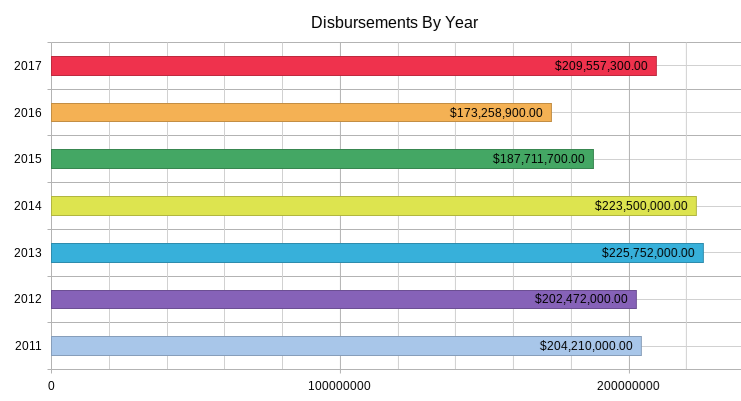
 Once again we’re talking about strippers. Uh, stripper *wells* that is. In 2012 Pennsylvania passed the Act 13 drilling law that includes an impact fee on wells targeting shale layers, including the Marcellus. Snyder Brothers, headquartered in PA, drills mostly conventional (vertical only) wells in southwestern PA. In 2011-2012 they drilled 45 vertical-only wells targeting the Marcellus. All 45 of the vertical-only wells were fracked. Initially those wells produced more than 90 thousand cubic feet per day (Mcf/day), but by December of the year in which they were drilled, the wells produced less than 90 Mcf/day. The way the 2012 Act 13 law is written, if a well produces less than 90 Mcf/day during “any” month it is considered a stripper well and exempt from paying the impact fee. The state’s Public Utility Commission (PUC) assessed the fee anyway because for 11 months the wells produced more than 90 Mcf/day, arguing the word “any” is not a get-out-tax-jail-free card. Snyder Bros. sued and after an appeal of the case, Snyder Bros. won the case in March 2017, exempting those wells from paying impact fees (see
  Some big news about Shell’s plans for drilling and fracking in the Marcellus/Utica region came from this week’s DUG East conference in Pittsburgh. The Shell head of unconventional drilling in PA told conference goers that Shell’s shale drilling is currently focused on one county: Tioga County, PA. Shell has leases on 250,000 acres in Tioga and plans to spend $150 million to drill wells on four pads in 2018. That’s the focus for this year. According to MDN’s recently published
  This year’s Pennsylvania budget deal is different from the previous three such annual budgets. One way it’s not different is that this year’s budget once again hits a new high–a massively bloated, morbidly obese $32.7 billion. Although the budget does not include any new taxes, it does increase spending in a number of areas, including “education” (i.e. teacher’s unions). Democrat Gov. Tom Wolf once again asked for a Marcellus-killing severance tax this year, but he didn’t really mean it. He knew he wouldn’t get one. So Wolf brokered a deal with House and Senate Republicans that leaves out a severance tax. In the previous three budgets Wolf demanded a severance tax and delayed adopting each budget by months, in an act of petulance and temper tantrum. Since this is an election year and Wolf is up for reelection, he decided to forgo the histrionics over a severance tax. So, we’ve dodged the tax bullet once again. However, if Wolf is reelected, expect him to double down and perhaps even shut down state government in order to get a severance tax. The tax battle will be super-nasty next year, you can count on it. Meanwhile, the Senate is due to pass the budget on Friday, and Wolf will sign it soon after…
 Last October MDN told you that a second Marcellus gas-fired electric generating plant is planned for Greene County, PA (see
  Liberal Presbyterians in Pittsburgh, along with their comrades from New York, have succeeded in pressuring a once-great denomination, Presbyterian Church (U.S.A.), into adopting a proposal that forces the denomination to divest from all investments in fossil fuel companies, and instead invest in so-called renewable energy companies. The measure says divestment is “the beginning of a faithful response to the devastating and urgent reality of climate change.” The leaders of the divestment movement within the denomination say investing in fossil fuels is the moral equivalent of investing in tobacco, alcohol and gambling. And yet the very same people and the very same denomination refuse to lead by example. They don’t force their churches to quit using “devastating fossil fuels” to heat and cool their buildings. They don’t demand parishioners quit driving fossil-fuel powered automobiles to church. And they certainly don’t refuse tithes and offerings from those who work at evil fossil fuel companies (nor do they prohibit contributions from fossil fuel companies). Just a tad hypocritical?…