
Japanese Co. Launches NatGas Service for Powergen in 10 U.S. States
 Overwatch Capital and Japanese company Idemitsu Kosan Co., Ltd. have formed a strategic partnership to develop high-density, energy-resilient AI data centers across ten U.S. states. This collaboration involves Idemitsu investing in Overwatch and supplying up to 1 gigawatt of natural gas for on-site power generation to support next-generation AI computers. The initiative leverages Overwatch’s SIDE Platform, which integrates generation, battery storage, and advanced cooling, alongside Idemitsu’s global energy expertise. Initial projects are set to begin in 2026 in Dallas-Fort Worth and Columbus, Ohio, to provide reliable infrastructure for hyperscalers and cloud providers. Read More “Japanese Co. Launches NatGas Service for Powergen in 10 U.S. States”
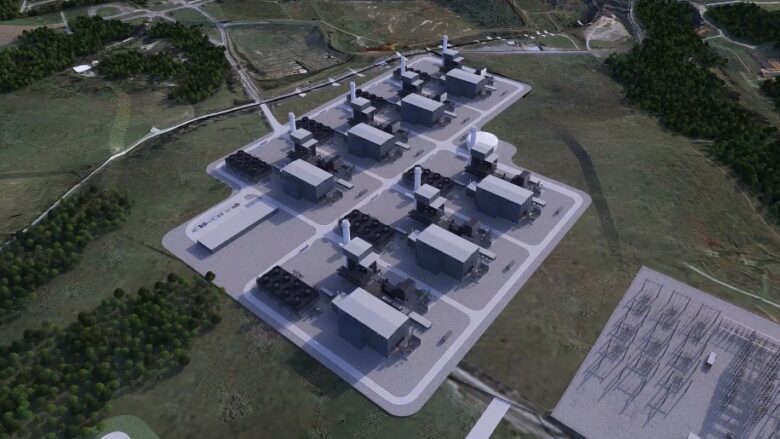
 In July, MDN told you that Talen Energy, a leading energy producer in the U.S., which owns and operates approximately 10.7 gigawatts (GW) of power infrastructure, had announced the acquisition of two gas-fired power plants: one located near Wilkes-Barre in northeastern Pennsylvania, and the other in Guernsey County, in eastern Ohio (see
  Last week, MDN warned you that the enviro-left that opposes fracking and shale energy in Pennsylvania (because they have an irrational hatred of fossil fuels) has morphed into opposing data centers, because data centers need lots of electricity and the only practical way of providing that power is via natural gas-fired power plants (see
  Last week, we brought you the fantastic news that the Regional Greenhouse Gas Initiative (RGGI) carbon tax scheme in Pennsylvania is officially dead with the adoption of the 4-month late state budget (see
  Last week, the Baker Hughes U.S. national rig count gained rigs for the second week in a row. The national count increased by one rig, rising from 548 to 549. The BH rig count has added rigs in four of the last five weeks. Rigs in the Marcellus/Utica remained the same last week at a combined 37, the same number for seven weeks in a row. Pennsylvania remained unchanged at 17 active rigs (seven weeks in a row). Ohio was the same at 13 rigs (eight weeks in a row). And West Virginia maintained its 7 rigs, which it has operated since May 30 (25 weeks in a row). There were 23 rigs targeting the Marcellus and 14 targeting the Utica.
  You knew the number of new permits issued in the M-U would come back down to earth sooner or later. Last week it happened. After three consecutive weeks with numbers of 37, 39, and 37, the number of new permits issued fell to 24 last week. Still respectable, but not in the coveted 30s. Pennsylvania issued 16 new permits last week, up from 13 the prior week. Ohio issued 6 new permits, down from 8 the prior week. West Virginia was shut out, issuing no new permits last week, which was the main reason why the number fell precipitously.
  In April, Knighthead Capital Management, Homer City Redevelopment (HCR), and Kiewit Power Constructors Co. announced a plan to convert the former Homer City Generating Station, previously the largest coal-fired power plant in Pennsylvania (Indiana County, 50 miles east of Pittsburgh) into a more than 3,200-acre natural gas-powered data center campus, designed to meet the growing demand for artificial intelligence (AI) and high-performance computing (see
  For seven looooooong years, Pennsylvania Senate Republicans (and MDN, we modestly add) have fought against enrolling the Keystone State in the Regional Greenhouse Gas Initiative (RGGI) carbon tax scheme. RGGI taxes gas- and coal-fired power plants, charging them so much per ton of carbon dioxide emitted. The aim is to eliminate these sources and replace them with unreliable renewable energy sources, such as wind and solar. PA’s former failed Governor, Tom Wolf, tried to force the state to join RGGI via an executive order (see
  Despite claims by anti-fossil fuelers that the Tenaska Westmoreland Generating Station in southwestern PA would spread disease and death if it were built, it’s been up and running since 2018, producing power and generating money for both its builders and the community. Oh, and everyone is in good health. However, the plant has been operating under a state permit since it opened. It needs a federal Title V permit for long-term operation. The state Department of Environmental Protection (DEP) is the agency that issues such a permit and is proposing to do so, which (of course) has antis’ knickers in a twist. In particular, antis are complaining that there are no public complaining sessions scheduled.
  ECA Marcellus Trust I, the royalty interest holder in some of the wells drilled and maintained by Greylock Energy in Greene County, PA, announced yesterday that it will issue a 2-cent per unit dividend to unitholders for the third quarter of 2025. The company continues to hold back some profits ($90,000 in 3Q25) to build a cash reserve for “future known, anticipated or contingent expenses or liabilities.” ECA Marcellus Trust I, traded over-the-counter on the Pink Sheets, canceled distributions to investors for the first three quarters of 2020 due to the pandemic and the crash in oil and gas prices. The company restarted paying dividends in 4Q20. Since then, the Trust has paid out something in most quarters, floating from under a penny to as high as 18 cents/unit in 3Q22.
  National Fuel Gas Company (NFG), headquartered in Buffalo, NY, is the parent company for Marcellus/Utica driller Seneca Resources and the parent of midstream company NFG Midstream (and subsidiary Empire Pipeline). Last week, NFG issued its latest quarterly update, which is the company’s fiscal year 4th quarter (but everyone else’s 3rd quarter). According to NFG CEO David Bauer, the company added 220 new Upper Utica locations during the quarter, extending the well inventory to “almost 20 years” that will be profitable at a NYMEX price under $2/MMBtu. Bauer also stated the company recently executed a new pipeline deal with an unnamed shipper to haul an extra 250 MMcf/d of Seneca’s molecules from Tioga County, PA, to premium markets, with an expected in-service date of late 2028.
 The Pennsylvania House Environmental & Natural Resource Protection Committee will hold a hearing on November 17 for House Bill 1946, sponsored by Rep. Greg Vitali (Democrat from Delaware County), which proposes to significantly increase setback distances for unconventional shale gas wells to “better protect public health and the environment.” The bill mandates a minimum setback of 2,500 feet from homes and 5,000 feet from schools, hospitals, and long-term care facilities, a substantial increase from the current 500 feet. It also raises setbacks for drinking water sources from 1,000 to 2,500 feet and for natural bodies of water from 300 to 750 feet, affecting everything, from lakes and ponds to mud puddles. Vitali knows his bill would be a de facto ban on new shale drilling in 95-97% of the state. That’s his objective.
  Last week, the Pennsylvania Public Utility Commission (PUC) approved a Tentative Order by a 3-2 vote, proposing a statewide model tariff (tax) to manage the growing impact of large-load customers, such as AI data centers, on the electric grid. The goal is to encourage investment and job growth while protecting existing ratepayers from cost-shifts and ensuring reliability. The PUC failed. The proposed order was passed on a partisan basis, with the three Democrat commissioners voting to make it harder and more expensive for data centers to locate in the Keystone State, potentially jeopardizing $92 billion of investments promised to the state related to data centers (see