
Anti-Drilling/Fossil Fuel | Energy Companies | Industrywide Issues | Lycoming County | Pennsylvania | Pennsylvania General Energy | Regulation
PA Antis Want DEP Hearing on 3.9-Mile Rd to Shale Pad in Loyalsock
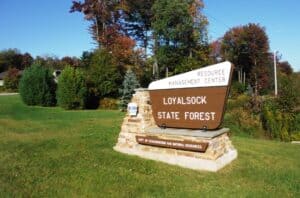 Three anti-shale drilling groups—the PA Council of Trout Unlimited, the Keystone Trails Association, and the Responsible Drilling Alliance—have requested the Pennsylvania Department of Environmental Protection (DEP) hold a hearing on the Chapter 105 permit requested for a 3.9-mile shale gas access road and staging area proposed by PA General Energy in Gamble and Cascade Townships, Lycoming County. The aim of their request is not to elicit information or express concerns that can be addressed to achieve a better outcome; rather, it is to flood the hearing with bombastic charges in hopes of blocking the project altogether. Read More “PA Antis Want DEP Hearing on 3.9-Mile Rd to Shale Pad in Loyalsock”
 Today is data center day here at MDN, given that most of our main stories today revolve around the issue of data centers, facilities full of computers that need enormous amounts of electricity, most of which will be generated by gas-fired power plants. This past summer, Pennsylvania’s newest U.S. Senator, Dave McCormick, convened the Pennsylvania Energy and Innovation Summit in Pittsburgh. Together with the Trump administration, McCormick announced a mind-blowing $92 billion of promised new investment for PA mostly related to AI data centers (see
  Continuing on our data center theme, a new article by MDN friend Gordon Tomb, a senior fellow with the Commonwealth Foundation, makes the case that Pennsylvania needs more energy and sensible regulation to lure data centers. There is a stark contrast to what PA legislators are offering. On the Republican side, legislators are offering a bill that would expedite permits for data center projects that meet or exceed federal standards (see
  We have to (immodestly) say that we spotted the environmental left’s opposition to AI data centers a mile away. We were the first to alert you to PA green groups lining up to oppose data centers based on an irrational hatred of the fossil energy that powers them (see
  Two weeks ago, Pennsylvania finally passed a budget, four months late. As part of the deal struck between Democrats and Republicans, the Regional Greenhouse Gas Initiative (RGGI) carbon tax scheme was permanently ash-canned (see
  The number of new permits issued in the Marcellus/Utica from November 17 – 23 was 23, down from 31 issued the prior week. Pennsylvania issued 13 new permits, down 1 from the prior week. Ohio got skunked, issuing no new permits. Must be the ODNR staffers went on vacation early for Thanksgiving. West Virginia made up for Ohio’s poor performance by issuing 10 permits, down 2 from the prior week.
  U.S. Secretary of Energy Chris Wright issued an emergency order on November 25 directing PJM Interconnection and Constellation Energy to keep Units 3 and 4 at Pennsylvania’s Eddystone Generating Station (near Philadelphia, in Delaware County) operational through the winter. Effective from November 26, 2025, to February 24, 2026, the mandate aims to ensure grid reliability following PJM’s record winter demand in January 2025. This directive follows two previous orders that kept the aging, dual-fuel units online to support energy security during summer heatwaves. The DOE asserts that despite planned retirements, these 380-MW units remain essential for stabilizing the regional power supply. Big Green is unhappy.
  Last week, the Baker Hughes U.S. national rig count got wacked good, losing 10 rigs from the previous week. The national count went from 554 to 544 (as of Wednesday, when BH reported the numbers). Bummer. It had gained rigs for each of the prior three weeks. Rigs in the Marcellus/Utica remained the same last week after gaining one rig the week before. Pennsylvania has held at 18 for two weeks in a row. Ohio was the same at 13 rigs, which it has operated since September 26. West Virginia maintained its 7 rigs, which it has operated since May 30. There were 24 rigs targeting the Marcellus and 14 targeting the Utica, for a combined 38 rigs in the M-U.
  Pennsylvania Environmental Quality Board (EQB) will hold a meeting on Tuesday, December 9, to consider whether or not to accept a petition by radical green groups, including the Clean Air Council and Environmental Integrity Project, to “study” the issue of increasing setbacks for shale drilling so far that it would ban ALL new Marcellus/Utica drilling in the Keystone State. The EQB tabled a decision on accepting the petition back in April (see
  UGI, a diversified energy company with midstream (pipeline) operations and one of PA’s largest utility companies, held a ribbon-cutting ceremony at its newest LNG peak shaver facility in Carlisle (Cumberland County), PA, yesterday. In November 2020, UGI launched the operation of a new 2-million-gallon LNG peak shaver in Bethlehem, PA (see
  In July, MDN told you that Talen Energy, a leading energy producer in the U.S., which owns and operates approximately 10.7 gigawatts (GW) of power infrastructure, had announced the acquisition of two gas-fired power plants: one located near Wilkes-Barre in northeastern Pennsylvania, and the other in Guernsey County, in eastern Ohio (see
  Earlier this month, the Pennsylvania Public Utility Commission (PUC) approved a Tentative Order by a 3-2 vote, proposing a statewide model tariff (tax) to manage the growing impact of large-load customers, such as AI data centers, on the electric grid (see
  It’s time to revisit a topic we’ve covered many times before — philanthropy in the Marcellus/Utica region. Drillers and pipeline companies in the M-U region already contribute to the region through the generous lease bonuses and royalties paid to landowners. In addition to the billions that flow to landowners, M-U companies cumulatively donate millions of dollars to local communities and nonprofit organizations. Here’s the latest example of that in action: The Marcellus Shale Coalition (MSC) says its members (and their employees) have embraced this Thanksgiving season by giving back through food drives, volunteering at local charities, and supporting community initiatives.
  We first told you about a frac sand company called Smart Sand some 13 years ago (see
  Last week, the Baker Hughes U.S. national rig count gained rigs for the third week in a row. The national count increased by five rigs, rising from 549 to 554. The BH rig count has added rigs in five of the last six weeks. Rigs in the Marcellus/Utica gained a rig! Pennsylvania gained one Marcellus rig, bringing its total to 18. Ohio was the same at 13 rigs. And West Virginia maintained its 7 rigs, which it has operated since May 30 (26 weeks in a row). There were 24 rigs targeting the Marcellus and 14 targeting the Utica, for a combined 38 rigs in the M-U.