
PA DEP Fines ME2 Pipe $87,600 for Single Violation, More Coming?
 Apparently under pressure from environmentalist wackos, last Friday the Pennsylvania Dept. of Environmental Protection (DEP) issued a statement that says, in essence, we’re on the back of Sunoco Logistics over problems with construction the Mariner East 2 Pipeline. Gov. Wolf and DEP Secretary McDonnell both felt it necessary to voice their “concerns” over some of the episodes that have happened with construction the twin Mariner East 2 NGL pipelines that will stretch from eastern OH to the Philadelphia area. According to the announcement, the DEP has so far issued 4 “Notices of Violation” and 1 “Consent Order and Agreement” with a fine of $87,600 for “inadvertent returns” (what we call leaks) of drilling mud and water at an underground horizontal directional drilling (HDD) location in Cumberland County, PA. To the best of our knowledge, this is the first we’ve heard of that spill. It was actually a series of spills (or leaks) over a number of different days. All told, some 160,000 gallons of drilling fluids came out of the ground at that location. In addition, the DEP released a table outlining 49 incidents–some just a few gallons, others several hundred (or several thousand) gallons of drilling fluid leaks. We have the list of 49 problem areas below, the details on the Cumberland County leaks, and the DEP announcement…
Read More “PA DEP Fines ME2 Pipe $87,600 for Single Violation, More Coming?”
 The “most serious remaining legal challenge” to Sunoco Logistics’ Mariner East 2 Pipeline project is a challenge by the odious Big Green group, the Clean Air Council, based in Philadelphia. CAC claims in a court case in Common Pleas Court in Philly that ME2 violates the federal and state constitutions. The case takes up constitutional claims that have “not yet been addressed in other litigation.” It dawned on us when reading an account of the case and who says what about whether or not Sunoco has the right to use eminent domain and whether or not ME2 is a public utility, is why does the CAC even care? Why are they the ones bringing the lawsuit? After all, pipelines don’t pollute the air! Well, technically that’s not 100% true–pipeline compressor stations do emit some air pollution, depending on how they are powered (diesel engines). But at the end of the day, pipelines pollute the air far less than other forms of transportation, like trucks and trains. How does CAC even have “standing” to bring such a lawsuit? Of course the fact that CAC is litigating is a tip-off that there is Big Green money behind the effort–and CAC is just a tool being used in a wider collusion (conspiracy?) to stop the pipeline…
 In December 2015, Pennsylvania’s felony-indicted Attorney General, Kathleen Kane (now gone), brought a lawsuit against Chesapeake Energy, Anadarko and Williams accusing them of, among other things, royalty fraud (see
  The Federal Environmental Protection Agency (EPA), which is the agency in charge of approving oil and gas wastewater injection wells, will hold a hearing next Wednesday in Plum, PA (Allegheny County, near Pittsburgh) on whether or not to approve an application and plan from Penneco Environmental Solutions (division of Penneco Oil Co.) to convert a plugged gas well into a brine (wastewater) injection well. Typically when a hearing like this is held, it’s an indicator that the EPA will approve the project. However, just because the EPA approves it doesn’t mean it’s a done deal. After an EPA approval, the application then goes to the PA State Dept. of Environmental Protection where it goes through another round of reviews–and likely more public hearings. The stuff getting disposed of, which we generically call wastewater, is technically called brine, because of it’s salty/mineral-ly composition. Brine is naturally occurring water from the depths that comes out of oil and gas wells for years after they are drilled. Because of the high concentration of minerals in the water, it either must go through a rigorous recycling process, or get disposed of via an injection well. OH has more than a hundred such wells. WV has a few dozen. PA has less than a dozen, due to the geology needed. Every new injection well in PA is a big deal, including this one…
 Not long after Michael Krancer was appointed Secretary of the Pennsylvania Dept. of Environmental Protection in 2011, he “requested” (which was more order than request) that municipal sewage treatment plants still accepting and processing Marcellus drilling wastewater stop the practice. At the time there were 15 plants accepting Marcellus wastewater. Under pressure from Krancer, they ended the practice in May 2011 (see
  While we wrote about a Penn State research study today that appears legitimate, but seven years too late (see New Penn State Frack Wastewater “Study” Beats a Dead Horse), there is another recently published Penn State study that is also legit that is not yet a huge issue, but certainly has potential to be a big deal. Penn State’s College of Agricultural Sciences has found that invasive, non-native plants are making significant inroads with shale gas development in Pennsylvania, with negative consequences for PA forests. How so? The invasive, non-native plants are hitching a ride on gravel and equipment used to create roadways in forested areas, and once those plants take root, they crowd out local, native plants. The study, titled “Unconventional gas development facilitates plant invasions” and published in the Journal of Environmental Management, concludes that more monitoring and early detection can help put a lid on the problem…
 Once again it’s necessary to counter the false narrative in Pennsylvania media that “Pennsylvania is the only state without a severance tax” and “a severance tax will magically fix our over budget mess.” Last week MDN brought you news that 12 so-called Republicans in the PA House were behind an effort to force a vote on a severance tax (see
  Anti fossil fuelers believe they have a new angle in their years-long war to prevent Sunoco Logistics Partners from building the Mariner East 2 twin pipelines across the state: drilling mud spills. When a pipeline company installs a new pipeline, the vast majority of pipe is laid in trenches. However, there are places (creeks, rivers, wetlands, roadways) where you can’t just dig a trench to lay the pipe. In those cases, you drill underground horizontally, something called horizontal directional drilling (HDD). When you drill through rock, you need drilling mud to cool the drill bit as it chews away. Drilling mud is typically bentonite, a non-toxic clay substance used to manufacture things like toothpaste, cosmetics and kitty litter. The only threat from bentonite is that it can smother aquatic life if enough is spilled. Or it can foul a water aquifer–making the water in your well cloudy for a period of time, until it settles. Such an instance recently happened in Chester County, when Sunoco’s drilling for ME2 fouled an aquifer, causing well water for some 15 homes to become temporarily unusable (see
  For the past two years running, the Delaware River Basin Commission, a cooperative organization with five members–Pennsylvania, New York, New Jersey, Delaware and the U.S. Army Corps of Engineers–has received more than half a million dollars per year from PA as its dues to support the anti-drilling organization. The problem is, PA pays its full share, but states like NY and NJ consistently short-change the DRBC. PA Gov. Tom Wolf is a big DRBC fan. Wolf supports the DRBC’s ongoing ban of drilling in the Delaware River Basin–which unfairly denies landowners in Wayne and Pike counties (PA) from benefiting from Marcellus Shale drilling–Wolf’s own constituents. However, the DRBC’s gravy train from PA is now over. Gov. Wolf recently allowed the PA budget to pass, without his signature. Part of the budget bill whacks PA’s contribution to the DRBC to just $217,000 this year–less than half of what is has been getting. The effort to whack the DRBC came from PA representatives in northeastern PA, tired of the ongoing drilling ban. Looks like layoffs are coming to the DRBC. They don’t do a heck of a lot, so why not? Time to toss the bureaucrats out on their rear-ends…
 A group of Catholic nuns who prefer to worship Mother Nature rather than Jesus Christ (the Person they pledged to serve) is suing the Federal Energy Regulatory Commission (FERC) for approving the $3 billion, 198-mile Atlantic Sunrise Pipeline project–because it will run through their cornfield. Perhaps the sisters consider themselves Sisters of the Corn? We previously told you about this small group of nuns–who use the same natural gas that will flow through Atlantic Sunrise Pipeline to heat their own property (see
 An article published in the anti-drilling Pittsburgh Post-Gazette is quite bizarre–even by Post-Gazette standards. The article reports concerns expressed by residents in Beaver County, PA at a recent meeting of the Ambridge Water Authority. The opener quotes one resident this way: “‘No one knows what’s going to happen when the explosions are set off,’ said Bob Schmetzer, 70, of South Heights, referring to the underground blasting required in the fracking process. ‘God forbid that the dam would breach and take out human lives down Raccoon Valley … that would be a national catastrophe.'” Uh, Mr. Schmetzer sir…and “reporter” Eliza Fawcett…there IS NO FRACKING involved with installing a pipeline. Perhaps they’re both a bit confused? Mr. Schmetzer’s confusion likely comes from working with a local anti-fracking group, the Beaver County Marcellus Shale Awareness Committee. The meeting appeared to have gone downhill from there, with wild claims that “volatile compounds” from the Shell cracker plant will “settle” in the Ambridge Reservoir, endangering everyone who drinks water from it. And that the area will become “Cancer Valley”…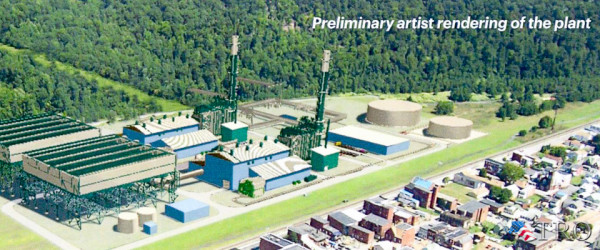
 The true colors of PennFuture, a radical anti-drilling group, are now revealed for all to see. In June, MDN warned you that Big Green groups like PennFuture are attempting to “weaponize” a recent PA Supreme Court ruling (see
  The on-again, off-again, on-again construction of the Mariner East 2 pipeline in Chester County, PA (near Philly)…is now off again. At least in West Whiteland Township. Sunoco Logistics Partners was using horizontal directional drilling (HDD) to install pipeline through an area where digging a trench would not work. The HDD work hit a water aquifer that feeds private water wells for homes in the area. Drilling mud used during the work leaked into the aquifer and resulted in cloudy water for some 15 households. MDN previously reported that Sunoco quickly addressed the issue and committed to paying for a municipal water line in the area (see
  In June MDN brought you news about a move by the Borough of Oakmont (suburb close to Pittsburgh, northeast side of the city) to regulate seismic testing in the Borough, essentially to prevent it from happening by Huntley & Huntley (see