
Marcellus/Utica Identity Crisis – What Should Our Region Call Itself?
 Being a marketing guy, MDN editor Jim Willis knows that crystallizing a concept into a few key words is critical. You have to be able to convey your meaning in as few words as possible–and those words must be pregnant with meaning. Jim was lucky enough to name this blog/news site Marcellus Drilling News, which (mostly) conveys its purpose–to report on happenings in the Marcellus (later adding the Utica) region. A very smart person who’s given a lot of thought about our industry is Kathryn “Katie” Klaber. Katie owns her own consulting firm–The Klaber Group. But before that, she was founder and president of the Marcellus Shale Coalition (a well-named organization). Katie lives and works in Pittsburgh. In a recent article for the Pittsburgh Business Times, Katie ponders over Pittsburgh (and our industry’s) “identity crisis”–by which she means our lack of good branding. Sometimes our industry and region is referred to as “Appalachia.” But that term often connotes the mountains of West Virginia, spreading out into Kentucky. Sometimes we are referred to as the “Marcellus/Utica basin,” which gets a lot closer to meaningful, but connotes drilling and leaves out the downstream. And sometimes we’re called “the Northeast.” But folks in Ohio consider themselves Midwesterners, not northeasterners. Why is it important to lock down an accurate, pregnant-with-meaning description for our entire industry (upstream, midstream and downstream), and our geographic region? According to Katie, it comes down to two words: capital investment. We need to brand ourselves and do it sooner rather than later, if we want to grow business in our neck of the woods…
Read More “Marcellus/Utica Identity Crisis – What Should Our Region Call Itself?”
 Here on MDN we talk a lot about big interstate natural gas pipelines–like Rover and NEXUS, Atlantic Sunrise and Atlantic Coast. But we don’t talk so much about the tiny (in diameter) gas pipelines that connect to people’s homes. In oil and gas industry parlance, those pipelines belong to the “downstream”–or the end users of natural gas. From time to time we’ve covered stories about NiSource and other utilities spending big money to replace aging local distribution pipelines (see
  If the only tool you have is a hammer, you are tempted to treat everything as a nail (Abraham Maslow, 1966). Such is it with radical anti-drillers who recently won a case at the PA Supreme Court by the skin of their teeth. The case dealt with the narrow issue of how PA can spend revenue raised by leasing and allowing drilling for oil and gas under state-owned land (see
  Franklin Kury was a young lawyer and PA House of Representatives member back in the late 60s/early 70s. He was, at that time, the author of Pennsylvania’s so-called Environment Rights Amendment (Article I, Section 27 of the PA Constitution). For 40 years the ERA didn’t have much of an impact–but then activist, liberal, leftist judges got ahold of it and (ab)used it to screw with the Marcellus Shale industry in the state. Things “all changed” on June 20 when the PA Supreme Court (ab)used the ERA to tell the Dept. of Conservation and Natural Resources (DCNR) it can’t use money raised from shale drilling to help fund itself–a bass ackwards view of things if ever we’ve heard of one (see
  In a story about PA’s “moribund” drilling industry beginning to turn around, the AP notes some news that we think it pretty significant. For the first six months of 2017, PA shale drillers have drilled 397 shale wells. That’s more than twice the number they drilled in the first six months of 2016. There are now 20 additional drilling rigs active in the Marcellus, and fracking crews are in “short supply.” This is all great news for the PA Marcellus, something to celebrate on the day after July 4th…
 As MDN reported in June, the Pennsylvania Supreme Court of Appeals, in a sharply divided 3-2 decision, sided with virulent anti-drilling group Pennsylvania Environmental Defense Foundation against the state in saying that any royalties generated from drilling on state-owned land MUST be used solely for conservation and the environment (see
  MDN has extensively covered the story of a family in Huntingdon County, PA radicalized by the Big Green movement into opposing the Mariner East 2 pipeline across their property. The Gerhart family, with the assistance of what Sunoco Logistics Partners calls “eco-terrorists,” have pledged to illegally block construction of the pipeline. So a few weeks ago Sunoco asked a Huntingdon County judge to grant an injunction against the Gerharts AND the interloping eco-terrorists–to have them forcibly removed if they attempt to stop construction which is about to begin (see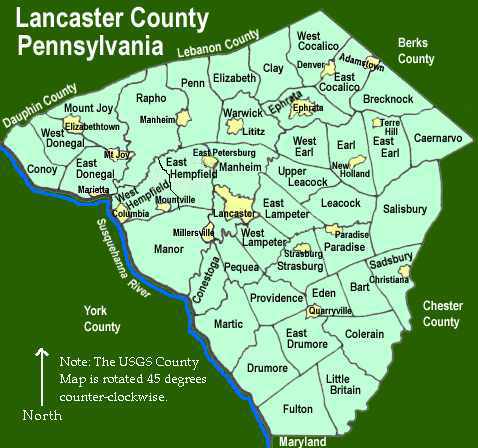

 In January, MDN reported on a well pad fire at Rice Energy’s Papa Bear well pad in Somerset Township (Washington County), PA (see
  Pennsylvania does not have a revenue problem–it has an overspending problem. Once again the Republican-majority legislature in PA is caving to the siren song/pressure of wild-spending, liberal Democrats and will pass a budget that is $2 billion over the revenue they can reasonably expect–sprinkled with giveaways like an extra $100 million for teachers unions–and beginning next week the Republicans will face a barrage of media stories and pressure to create a severance tax to help make up the difference. Already we’re seeing stories about the need for a “fair gas tax” and that a severance tax is “long overdue.” What about passing a “fair budget” that doesn’t overspend? What about “fiscal responsibility” that’s long overdue? Where are those stories? And, when will Republicans learn to quit playing the Dem’s game?…
 Pennsylvania does not have a taxing problem, as people like Gov. Tom Wolf pretend–it has a spending problem, as in they spend beyond their means. The last governor that tried to correct that problem–Tom Corbett–got handed one term in the big chair for his efforts at dealing honestly with it. Big Education and Big Labor knifed Corbett in the back, politically, after he cut the mammoth increase in their growth. (FEED ME FEED ME) If you want to know why PA is in budget trouble, look no further than it’s Secretary of the Dept. of Community and Economic Development, Dennis Davin. Every econ growth guy we’ve ever talked to knows that increasing taxes gets less of what you tax–it is an incontrovertible fact in economics. Yet Davin, who’s boss is utter failure Tom Wolf, is pushing hard for a huge tax increase on the Marcellus industry–the very industry that has singlehandedly kept PA out of an economic abyss. And yet the guy who should understand the issue the best, is pushing hardest for the tax. That tells you all you need to know about the Wolf Administration and it’s utter failure…
 It’s clear that radical environmentalists who (irrationally) oppose the use of fossil fuels believe the recent decision by Pennsylvania Supreme Court is a gift from Gaia (Mother Earth goddess). As MDN previously reported, last week the Pennsylvania Supreme Court of Appeals, in a sharply divided 3-2 decision, sided with a virulent anti-drilling group, the Pennsylvania Environmental Defense Foundation, against the state in saying that any revenue generated from leasing and drilling on state-owned land MUST be used solely for conservation and the environment (see
  One of the first steps before a company decides to drill for shale gas (or oil), is to conduct a seismic survey–bouncing sound waves through the rock layers a mile or more down–to “see” what the geology looks like. It helps drillers target locations with the best possibility of success, which is a good thing for everyone (no unnecessary “misses” when drilling a well). One of objectives of the original Act 13 law passed in PA in 2012 was to provide uniform zoning ordinances for the oil and gas industry, so drillers don’t have to work with a crazy quilt patchwork of zoning requirements in every new town in which they drill. That failed when seven selfish towns filed a lawsuit that ultimately went to the PA Supreme Court, where the towns won the right to pass their own zoning regulations for oil and gas drilling (see
  It was more than six months in the making, but finally the Pennsylvania Dept. of Environmental Protection has granted Shell a permit that allows the facility to discharge wastewater and storm water into the Ohio River. Which may sound like Shell just got a permit to pollute the Ohio River–but that’s not what is happening. Shell is building their mighty $6 billion ethane cracker on a site formerly used as a zinc smelter. The old Horsehead Corp. plant held a permit that allowed the plant to discharge wastewater with some total dissolved solids (TDS) into the Ohio. When Shell bought the site, they also inherited the Horsehead permit for wastewater discharge. Shell filed a plan back in December with the PA DEP to modify that permit for the forthcoming cracker plant (see
  Just when you thought you’ve seen how low some anti-pipeline fanatics will go, they surprise you and go even lower. Antis set up a fake graveyard with a half dozen authentic, 19th century tombstones, right next to a pipeline right of way for the Williams Atlantic Sunrise Pipeline in Lancaster County, PA. Williams is hypersensitive to ensure they don’t violate any “Native American” or other kinds of historic sites. So when they came across the fake graveyard, they thought it was real and proceeded as such, spending time and money to plan a route for construction that would protect the fake site. And antis, with full knowledge, lied to Williams’ people (not telling them is the same as lying in our book). And laughed their considerable derrieres off the entire time, wondering when those poor dunderheads at Williams would figure it out. Now Williams may have the last laugh, because what the antis did is fraud and prosecutable. So-called local Native Americans (i.e. Indians) were in on the “joke.” And now those Indian activists have the gall to say if Williams didn’t recognize something as fake, how will they recognize real Indian artifacts that need protecting? We ask a different question: Who will ever believe these so-called Native American activists again–when they are self-professed liars?…