 The TriState Infrastructure Council (TSIC) was founded in Pittsburgh in late 2016 to “serve a broad-based business community during the critical next few years by attracting and deploying investments in infrastructure projects in Ohio, Pennsylvania and West Virginia.” With infrastructure upgrades, the region will be able to realize economic growth resulting from petrochemical manufacturing and related industries in the Appalachian basin. One of the driving forces behind TSIC is a name you are likely familiar with: Kathryn Klaber. Katie Klaber founded and until a few years ago led the Marcellus Shale Coalition. She opted to focus on her consulting practice following the MSC and is now managing the TSIC. The TSIC organization was founded with a group of A-list companies located in the region. At this week’s Northeast U.S. Petrochemical Construction conference in Pittsburgh, Katie unveiled an exciting new project to map infrastructure in an 82-county region throughout the Ohio River Valley. The aim is to identify missing/key/critical infrastructure components and then work to set up public-private partnerships to get those components built. The TSIC is looking at “electric transmission and distribution, pipelines, natural gas and natural gas liquid storage capacity, reliable locks and dams, rail networks, roads and bridges, water and sewer, building sites, barge loading/unloading facilities, broadband, fiber optics, and air service, among others.” And yes, the Marcellus/Utica shale is the linchpin that holds it all together–makes it all possible–and the raison d’être for the TSIC. Here’s more on the new infrastructure database, the TSIC, and how they are giving the shale industry a big assist…
Read More “New Infrastructure Group Makes Gives Shale Industry Helping Hand”


 As they so often do, radical environmentalists are creating chaos and confusion–this time in Pennsylvania. As MDN reported, earlier this week the Pennsylvania Supreme Court of Appeals, in a sharply divided 3-2 decision, sided with a virulent anti-drilling group, the Pennsylvania Environmental Defense Foundation, against the state in saying that any revenue generated from leasing and drilling on state-owned land MUST be used solely for conservation and the environment (see
  Nearly five years ago, in July 2012, then-PA Gov. Tom Corbett announced that some of the Sunoco Marcus Hook Refinery assets had been purchased by Braskem America (see
  Green and Washington counties, south of Pittsburgh (Allegheny County), have long been considered the “core” of Marcellus Shale play in southwestern PA. The wells there get GREAT results–a mix of dry and wet gas (wet gas being natural gas liquids, like ethane, propane and butane). But one company, PennEnergy Resources, says the data shows that the same great Marcellus deposits are located underneath the great City of Pittsburgh itself, and in the towns north of the city (Allegheny County). And PennEnergy can prove it, with their own well results. Does that mean Pittsburgh itself may one day get drilled under?! Don’t hold your breath on drilling under Pittsburgh any time soon. However, according to Greg Muse, chief operating officer for PennEnergy, there’s plenty of gas to be drilled just north of the city–and the deposits are just as good as those south of the city. Muse also said PennEnergy is looking to either take the company public, merge with another company, or sell…
 In March of this year, the Team Pennsylvania Foundation released a report called “Prospects to Enhance Pennsylvania’s Opportunities in Petrochemical Manufacturing” (see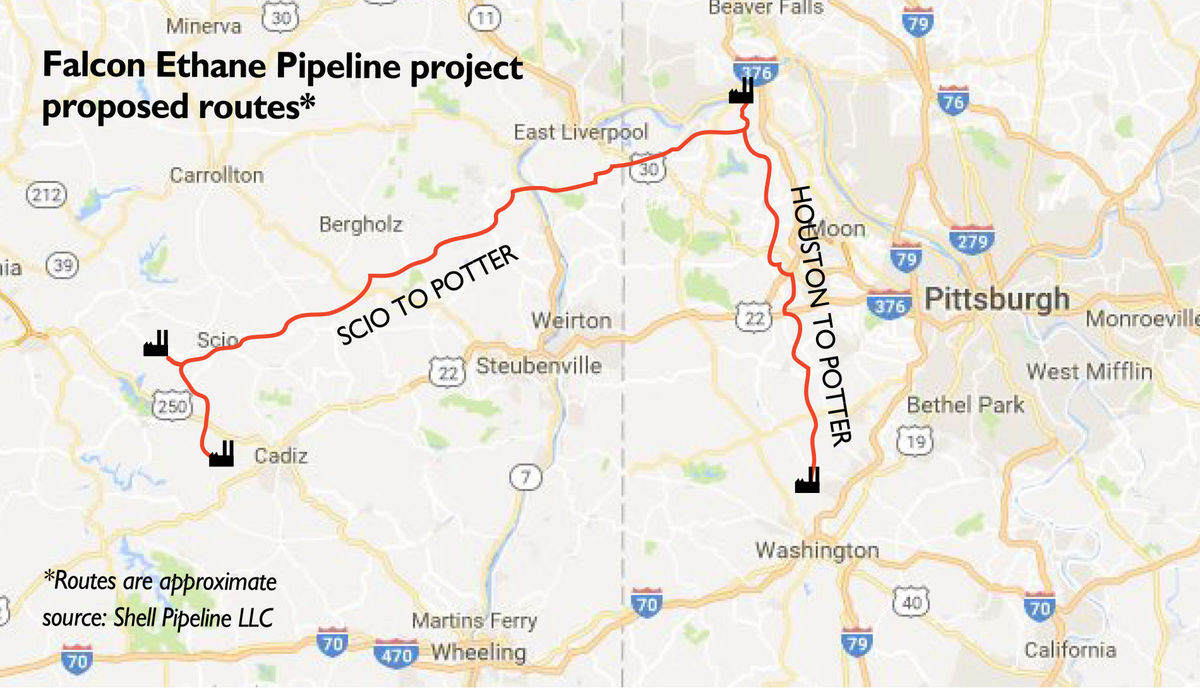
 It’s kind of humorous when a small group of insane anti-fossil fuelers participate in a march that they call “Stop the Madness.” Kind of meta, dontcha think? An anti reporter from the Pittsburgh Post-Gazette tagged along (who could tell the difference?) to “report” on a group of “about 100 protesters from 11 organizations” who rallied and marched from one Marcellus event to another being held in Pittsburgh on Tuesday. The protesters, dressed in clothes made from petrochemicals, wearing sneakers made from petrochemicals, and holding signs made from petrochemicals (after arriving at the “rally” and “march” in fossil fuel-powered transportation), rallied outside of the Northeast U.S. Petrochemical Construction conference–to protest petrochemicals, and then marched across town to the convention center to protest fracking outside of the DUG (Developing Unconventional Gas) East event. The group was a mish mash of the usual suspects–hard left nutters who pop up again and again to grab a headline bashing fossil fuels, before scarpering home using the fossil fuels they just bashed, going to houses and apartments heated and cooled using fossil fuels. Typical…
 Primoris Services Corporation, a pipeline building company based in Dallas, TX, has built a number of gathering pipelines in the Marcellus region. We’ve been covering some of the projects Primoris has been involved with since 2013 (
 In a sharply divided 3-2 decision (full copy below), the Pennsylvania Supreme Court of Appeals has sided with a virulent anti-drilling group, the Pennsylvania Environmental Defense Foundation, against the state in saying that any revenue generated from leasing and drilling on state-owned land MUST be used solely for conservation and the environment. The state cannot treat, as former Gov. Ed “fast Eddie” Rendell did, revenue from oil and gas drilling on state land as money that can be used for any old cockamamie political reason. That is, the money cannot go into the black hole of the “general fund” in Harrisburg. The three justices who rendered the decision say the law is clear on intent–that money must be used for environmental purposes. Fine. Except the foundation on which they decided the case is PA’s so-called environmental rights amendment. Even though this case is about how money from drilling will get used (a fairly narrow ruling), already antis at PA Big Green groups like THE Delaware Riverkeeper claim they will use this decision and the environmental rights amendment to try and block drilling on state lands because it “violates” the state constitution. That’s where they ultimately want to take this. Block it on state lands first, then go for private land next…
 As the Pennsylvania budget deadline looms (June 30th), the Democrats and RINO Republicans are out in full force pushing, like a broken record, the dead issue of a severance tax. For the next nine days (or more, if the budget doesn’t pass on time, which is likely), we will have to hear about the Grand Canyon budget gap that exists, and how only soaking drillers (and landowners) to use THEIR money, will fix it. Johnny one tune. Every argument we’ve read always says money from a severance tax is needed to help fund the general budget. So when we spotted an opinion column that argued for the severance tax so the state can use the money to build more pipelines to areas without pipelines, so more residents can use natural gas, we thought that was kind of unique and funny. No, building more pipelines is not a good reason to impose a severance tax. It’s nothing more than yet another way to try and get one passed, and once in place, change the things it funds. In other words, it’s a lie. This particular view was offered by the former president of the Pennsylvania Business Roundtable. He’s also someone who’s “spent four decades in and around state government.” In other words, a swamp dweller. And establishment insider–the establishment in this case located in Harrisburg. So we’re not surprised that he wants a Marcellus-killing tax. It’s just dressed up in pretty platitudes…
 The legal beagles of top energy law firm Babst Calland recently released their seventh annual energy industry report called, “The 2017 Babst Calland Report – Upstream, Midstream and Downstream: Resurgence of the Appalachian Shale Industry; Legal and Regulatory Perspective for Producers and Midstream Operators.” This latest annual review chronicles the comeback of the Marcellus/Utica and what challenges lie ahead. In an MDN exclusive, we have the first seven pages of the 74-page report (see below), along with details on how you can request a full copy. Worth the read! Here’s an overview…
 Whatever happened to the lawsuit filed by a Wayne County, PA landowner against the egregious overreach by the Delaware River Basin Commission (DRBC) in its ongoing stall/delay/block of any shale drilling within the Basin? In March, MDN reported that U.S. District Judge Robert Mariani ruled against the Wayne landowner in a lawsuit that challenged the right of the DRBC to stop fracking in the Delaware River Basin (see
  The TriState Infrastructure Council (TSIC) was founded in Pittsburgh in late 2016 to “serve a broad-based business community during the critical next few years by attracting and deploying investments in infrastructure projects in Ohio, Pennsylvania and West Virginia.” With infrastructure upgrades, the region will be able to realize economic growth resulting from petrochemical manufacturing and related industries in the Appalachian basin. One of the driving forces behind TSIC is a name you are likely familiar with: Kathryn Klaber. Katie Klaber founded and until a few years ago led the Marcellus Shale Coalition. She opted to focus on her consulting practice following the MSC and is now managing the TSIC. The TSIC organization was founded with a group of A-list companies located in the region. At this week’s Northeast U.S. Petrochemical Construction conference in Pittsburgh, Katie unveiled an exciting new project to map infrastructure in an 82-county region throughout the Ohio River Valley. The aim is to identify missing/key/critical infrastructure components and then work to set up public-private partnerships to get those components built. The TSIC is looking at “electric transmission and distribution, pipelines, natural gas and natural gas liquid storage capacity, reliable locks and dams, rail networks, roads and bridges, water and sewer, building sites, barge loading/unloading facilities, broadband, fiber optics, and air service, among others.” And yes, the Marcellus/Utica shale is the linchpin that holds it all together–makes it all possible–and the raison d’être for the TSIC. Here’s more on the new infrastructure database, the TSIC, and how they are giving the shale industry a big assist…
 You may recall our story about the daughter of a Huntingdon County, PA landowner, radicalized by Big Green groups (as evidenced by her association with well known protesters previously arrested), who took to a tree on her mom’s property in order to illegally stop crews working on tree clearing for the Mariner East 2 pipeline (see