
100+ PA Landowners Sue EQT re Gas Storage Field Payments
 According to Washington County, PA landowner Joe Raposky, EQT has been storing natural gas under his property in Finleyville without permission and without compensation since at least 2007. Last year Raposky asked EQT to compensate him and they refused. So Mr. Raposky has organized over 100 of his neighbors along with landowners who sit over top of other similar underground storage fields in the region, and on July 30 they filed a lawsuit against EQT. PA has some 60 gas storage fields spread across 26 counties in the state. The fields are used to temporarily store and then retrieve natural gas. Storage, which is not something we write about very much, is in fact a big deal when it comes to the natural gas market. Not all gas is used as soon as its extracted and sold along a pipeline. There are two main “seasons” in the natural gas industry–injection season, from April 1 through October 31, when a surplus is stored underground, and withdrawal season, from November 1 through March 31, when more gas is used than is produced. Storage fields like the one in Finleyville are an important part of the natgas puzzle. In some cases, landowners are only now becoming aware of the existing fields under their feet and they (rightly) want to be compensated for the use of their property. Is storage the next big bone of contention between landowners and drillers?…
Read More “100+ PA Landowners Sue EQT re Gas Storage Field Payments”
 Shell delivered some good news at last week’s Northeast U.S. Petrochemical conference in Pittsburgh: The Falcon ethane pipeline will get built next year (see
  This is a story that continues to bug us. The state of Pennsylvania, specifically the Dept. of Conservation and Natural Resources (DCNR), is grabbing money that we think belongs to private landowners. The DCNR has been, for years, claimed that under a centuries-old law that the state of PA “owns” the property under “navigable” waterways–including rivers and streams (see
 A debate is playing out in West Pike Run Township in Washington County, PA (near Pittsburgh) that we find interesting. A quick PA history lesson: Back in 2012 PA passed the Act 13 law to update oil and gas regulations to account for shale drilling. One of the updates was a uniform set of zoning requirements to protect residents and the environment. Unfortunately, seven selfish townships sued and eventually won (at the PA Supreme Court) challenging those regulations. So PA towns won the right to impose restrictions on drilling activities. In West Pike Run, the debate is over “setbacks”–how far does a well have to be from nearby structures, like homes and barns and businesses. State law imposes a minimum of 500 feet from the wellhead to an “occupied” structure–and 300 feet from the well to a body of water. In West Pike Run, antis want to up that number to 1,000 feet, which would effectively prevent any more drilling by EQT, the primary driller in the township. The town recently held a hearing on the proposed 1,000 foot setback, a hearing which has been continued to a future meeting on April 16…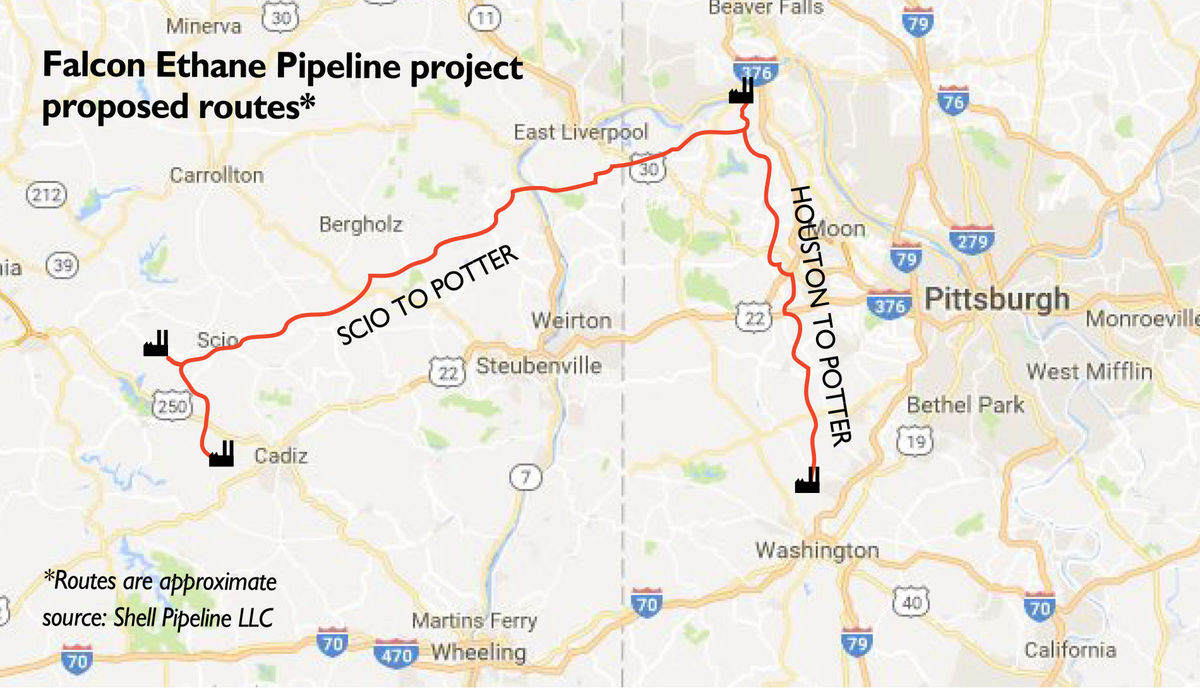

 There’s a real eyesore in downtown Washington, PA–a building that brings down the neighborhood. Even though the building is a blight for the entire area, it remains standing due to prejudice on the part of local residents, including a local Catholic church. There was a plan to renovate a former, run-down convent and turn it into a boarding house for Marcellus Shale workers in Washington, PA. We previously chronicled City Council’s opposition to the project (see
 In a disappointing development, the supervisors of Smith Township (Washington County), PA have voted to turn down MAX Environmental’s request to expand the Bulger landfill they operate in the town (see
  On Monday, Rice Energy was merged into EQT, creating the largest onshore natural gas producing company in these United States (see
  MAX Environmental has operated the Bulger hazardous waste landfill in Smith Township (Washington County), PA since 1958. One of the primary customers for the landfill over the past 10 years has been the Marcellus industry–dumping drill cuttings (leftover dirt and rock from drilling) at the landfill. Earlier this year, MAX sold itself to Altus Capital Partners–a private equity investment firm–for an undisclosed amount (see
  Last week MDN brought you news about a relatively new company called American Energy Partners, Inc., based in Allentown, PA, and their subsidiary company Gilbert Oil & Gas (see
  Last week MDN told you that Community College of Beaver County (CCBC) is operating a program in process technology that leads to an associate’s degree as preparation for a job at Shell’s $6 billion ethane cracker plant, being built now in Beaver County (see