Why TransCanada’s Lowball Pipeline Price is Not a Panacea
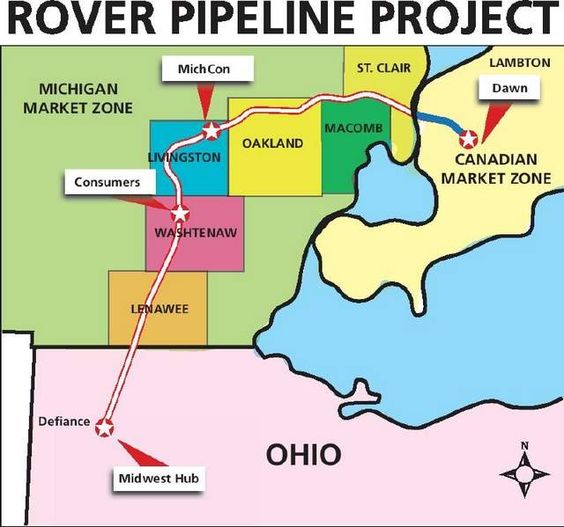
 TransCanada, one of Canada’s leading midstream/pipeline companies, cooked up a deal last year to pipe natural gas from Canada’s West Coast to the East Coast in order to fend off cheap supplies of Marcellus/Utica gas that will flow into Canada when/if the NEXUS and Rover pipelines get built (see TransCanada Pipe Drops Price 42% to Compete with Marcellus/Utica). TransCanada dropped their pipeline price to lure drillers by (theoretically) making it less expensive to get gas from Western Canada, some 2,400 miles away, than from the Marcellus, just 400 miles away. In October, TransCanada launched an open season to lock up customers for the new, lower-priced option. The open season was a bust because TransCanada insists on a 10-year commitment (see TransCanada Plan to Lowball M-U Gas Using Canada Pipeline a Bust). TransCanada rejiggered the terms being offered and reopened the open season. This time it worked (see TransCanada Says Plan to Lowball M-U Gas Worked, Shippers Sign Up). Even though natural gas from western Canada will soon flow to Ontario to compete with Marcellus/Utica gas coming from the Rover Pipeline (and perhaps NEXUS, if FERC approves it), analysts are warning that TransCanada’s plan is not a panacea for Canadian producers. Why? Because that gas will have to compete with a flood of Marcellus/Utica gas, and that means the prices will drop like a rock. Although western producers will be locked in for at least five years by signing with TransCanada, analysts are predicting that LNG exports will lure many of them away to sell gas for higher prices to overseas markets. And when that happens (in the next 5-10 years), gas flowing along TransCanada’s mainline will once again slow down to a trickle…
Read More “Why TransCanada’s Lowball Pipeline Price is Not a Panacea”
 A press release announcing fourth quarter and full year 2016 results for Empire Energy Group caught our eye. The release talks about assets owned by Empire in the Marcellus/Utica region–specifically in Pennsylvania and New York. When we got digging, we found some interesting information. First off, Empire has operations in both Australia and (primarily) here in the U.S. One interesting observation is that Empire sold some of its considerable leases in Australia to Aubrey McClendon back in 2015 (see
  A Bloomberg article caught our eye. It says natural gas being exported by Cheniere Energy (in southern Louisiana) is being sold to counties like Mexico, Japan and Jordan for over $7 per thousand cubic feet (Mcf). Why is that significant and how is it related to the Marcellus/Utica? It’s significant because gas right now is selling in the U.S. for an average of around $3/Mcf. In some places, like the Marcellus/Utica region, it sells for much less. Yesterday gas sold at the Tennessee Gas Pipeline Zone 4 Marcellus trading hub sold for $2.61/Mcf. If producers can sell their gas overseas at double the price–happy days are here again! How does that relate to the Marcellus/Utica? Some of the gas being sold by Cheniere comes from the Marcellus/Utica. And later this year, Dominion will have finished and will power up their massive LNG export facility in Cove Point, Maryland. When that happens, 100% of the gas exported will go to two countries: Japan and India. And it will likely be sold for prices like Cheniere is seeing–around $7/Mcf. That is really good news for the producers who have signed contracts with Cove Point…
 It sure seems like it’s taking a long time for President Trump and his team to announce and put forward his nominees for the Federal Energy Regulatory Commission (FERC). Shortly after taking office, Trump elevated one of the three sitting, Democrat Commissioners, Cheryl LaFleur to be Acting Chairman of the agency. That ticked off the then-current Chairman, Norman “crybaby” Bay, who promptly resigned (see
  The “best of the rest” – stories that caught MDN’s eye that you may be interested in reading. In today’s lineup: Harrison County, OH begins collecting ad valoreum tax on Utica wells for 2016; wacky enviro groups want Duke U to drop plans for clean-burning natgas plant; fuel pipeline from Chicago to Detroit goes online; Texas AG sues to block PHMSA natgas storage regs; Moody’s upgrades o&g sector in 2017; drillers, service firms may see surge of new IPOs in 2017; US crude oil production dropped last year; OPEC needs to restrain itself in 2018 like it is in 2017; low oil prices prove Obama wrong again; virtual gas pipelines; and more!
 A disappointing setback for the much-needed Constitution Pipeline–a $683 million, 124-mile pipeline due to run from Susquehanna County, PA to Schoharie County, NY carrying Marcellus gas. As you may recall, in April 2016, New York’s anti-drilling governor, Andrew Cuomo, decided he would cave to pressure from radical environmentalists and block the building of the federally-approved Constitution Pipeline (see
  There were early signs that Maryland’s newly elected “Republican” governor was weak on the subject of fracking, as we pointed out in 2015 when we said that then-new Gov. Larry Hogan, who was elected on a platform of supporting shale drilling, had decided to let a two-year moratorium on shale drilling become law without his signature (see
  Earlier this month MDN brought you a list of the existing and/or planned natural gas-fired electric generating plants in Ohio (see
  What if a landowner leased his or her land decades ago and a driller drilled a conventional natural gas well on the property, and that well has produced commercial volumes of natural gas for years–and still does. And what if the lease gives that driller the right to drill (or not drill) in any given rock lawyer. And what if that driller is content to simply let that conventional well keep producing and not drill further down, into the now commercially viable Utica (or Marcellus) shale layer? Does the landowner, whose land is located where the Utica/Marcellus exists, have any case for taking back the rights to the deeper shale layers the conventional driller refuses to go after? That’s a case that has now worked its way all the way to the Ohio Supreme Court. The question turns on whether or not “reasonable development” in a lease includes unexplored, deep formations…
 For some time we’ve tracked the progress of an LNG export plant planned for the eastern shore of Nova Scotia, the Bear Head LNG project. Of all the Canadian LNG export projects, Bear Head seems to have the most momentum. The project has received most of the necessary permits it needs to proceed. But it’s not been without its bumps along the way (see
  The International Energy Agency (IEA) works to ensure reliable, affordable and clean energy for its 29 member countries and beyond. IEA’s mission focuses on four main areas of focus: energy security, economic development, environmental awareness and engagement worldwide. A somewhat self-important group that issues reports periodically–particularly on mythical man-made global warming. The core of the man-made global warming argument is that mankind is burning fossil fuels, releasing loads of extra carbon dioxide into the atmosphere. The CO2 in the atmosphere acts as a canopy to trap the earth’s heat and to (someday soon) catastrophically warm the planet, killing off species, causing sea levels to rise, melting polar ice caps. Except none of that is actually happening (the Emperor has no clothes). Which we keep pointing out over and over. We won’t head down that rabbit trail again right now. CO2 levels are important for the eggheads at IEA. In conducting research for the next release of the IEA’s World Energy Outlook report (for 2017), researchers at the agency say worldwide CO2 levels were “flat” in 2016, even though economic activity (or the use of energy) increased. One of the major points in the IEA’s preview of what’s to come in the World Energy Outlook report is this: “The biggest drop [in CO2] came from the United States, where carbon dioxide emissions fell 3%, or 160 million tonnes, while the economy grew by 1.6%. The decline was driven by a surge in shale gas supplies and more attractive renewable power that displaced coal. Emissions in the United States last year were at their lowest level since 1992, a period during which the economy grew by 80%.” Translation: Shale gas is good for global warming, if you believe in global warming…
 A somewhat misguided couple who own land in Harrison County, OH and object to Rover putting a pipeline through their land have decided to break the law. Contractors working for Energy Transfer to clear trees and dig a trench to lay pipeline across their land have been working on their land, on an off, for the past three weeks. Sheila Bittinger and her husband Stanley say they’ve had enough and the couple parked several vehicles across the entrance to their property to prevent any more work on the pipeline. It sounds as if they want to get arrested and that they know this particular bit of “civil disobedience” will result in absolutely nothing. But they’re doing it all the same. If you watch the video (below) you get the impression these are honest, country folks who feel like they’ve gotten a raw deal. We wonder if these landowners have been manipulated by slick lawyers who see a big payday coming from a lawsuit against Rover Pipeline…