
OH Transload Facility Sits in Catbird Seat Between the Crackers
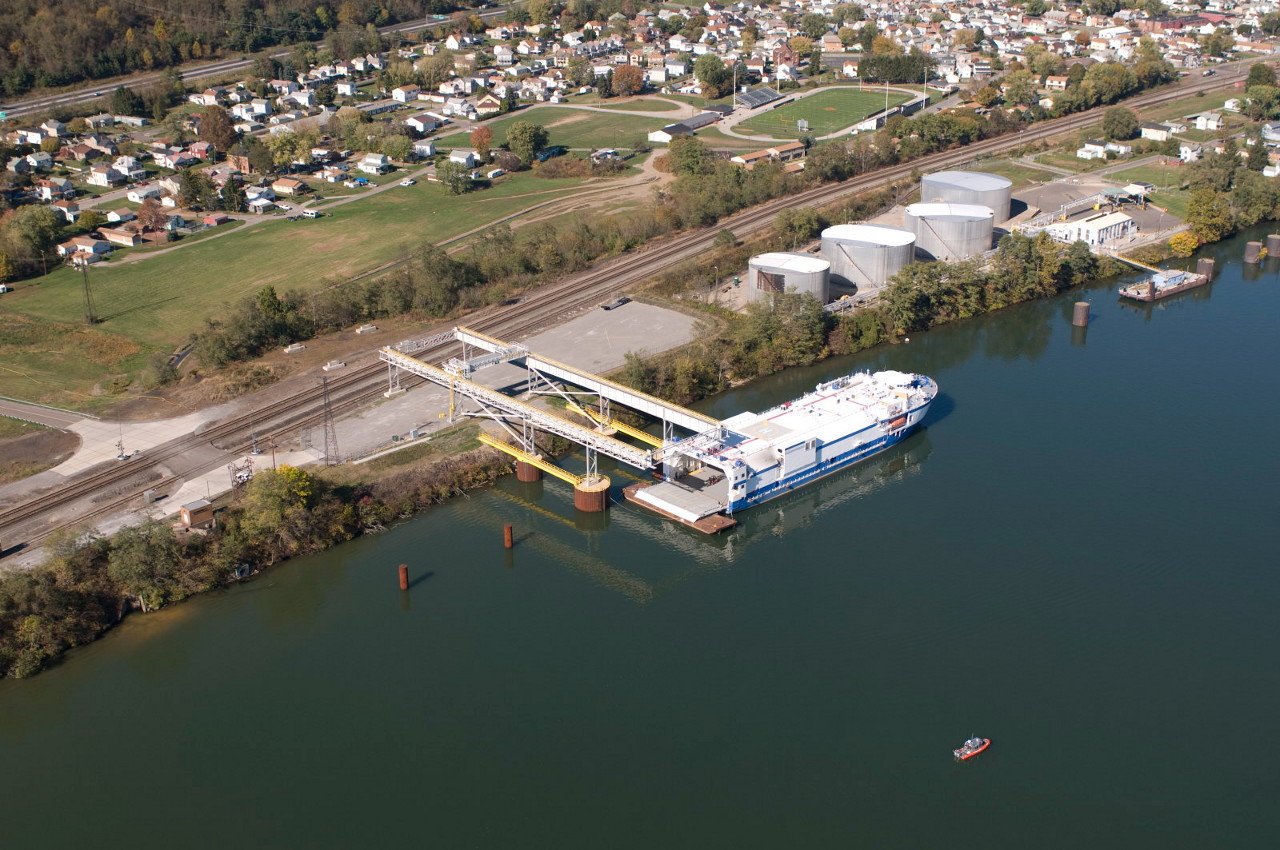
November 2012 was the first time we wrote about the transloading facility in Wellsville (Columbiana County) Ohio (see Drilling Mud Manufacturer Opens Plant in Wellsville, OH). A transloading facility is a place where things like pipes and grain and oil and gas and whatever comes in on one form of transportation, say a train or a barge–and gets unloaded and then is sent out via a different form of transportation, typically a truck. The Wellsville Intermodal Facility is one such transloading facility smack in the middle of Utica Shale country. The second time we wrote about the facility was January 2013 (see Columbiana Port Authority Close to Final Deal with Marathon). The third time we wrote about it was October 2013 (see Progress for Arrowhead NGL Transload Facility in Wellsville, OH). Today is the fourth time. Pier 48 Stevedoring operates a crane at the facility to load and unload barges. Pier 48 has been operating a 60-ton bridge crane used to move cargo containers (think truck trailers). However, Pier 48 just cut the ribbon on a brand new bucket crane, which can grab loose materials–even liquids–and hold it without leaking, to move whatever it is from a hold in a barge into a tank on land (or the reverse). The comment made during the ceremony that caught our eye is that this new crane has come at “an incredibly opportune time” because of the Shell ethane cracker plant being built 25 miles away, and a second potential cracker that may get built not far down the river in Belmont County. This new crane, and the transloading facility, sit in the catbird seat. With the coming cracker plants, manufacturers will locate in the region and need bulk shipping services for the materials they handle and the products they make…
Read More “OH Transload Facility Sits in Catbird Seat Between the Crackers”
 Last July Canadian-based TransCanada, famously known for wanting to build the Keystone XL oil pipeline from Canada to the Gulf Coast (a plan that Obama obliterated), didn’t want to be left out of the most important midstream story of the century, so they bought Columbia Pipeline Group this year, closing on the sale in July (see
  2 Corinthians 6:15: “What harmony can there be between Christ and the devil? How can a believer be a partner with an unbeliever?” The obvious answer to the Apostle Paul’s hypothetical question in that passage is, “There is no harmony. A believer can’t partner with an unbeliever.” Yet that’s just what is happening among the ranks of anti-fossil fuel fools. We’ll explain. On Monday the usual suspects, namely the misnamed and odious Food & Water Watch and 200 or so of their closest “friends”–including the Sierra Clubbers, Natural Resources Defense Council, et al ad naseum (people who never think for themselves)–sent a letter (full copy below) to Environmental Protection Agency Administrator Gina McCarthy asking her, begging with her, pleading with her, to pretty-please change the results of the EPA’s own scientific study, performed by dozens (hundreds?) of scientists who analyzed 950 studies on fracking, conducting nine of their own primary studies, and concluding that fracking doesn’t contaminate ground water supplies (see
  At last week’s Shale Insight conference, MDN editor Jim Willis had the opportunity to listen to three top legislators, one each from PA, WV and OH. We reported on their panel discussion, titled “Pennsylvania, Ohio and West Virginia Legislative Leaders: The Future of the Industry” (see

 You may recall that evil corporate raider Carl Ichan fired the CEO of Cheniere Energy, Charif Souki, in December 2015 (see
  The “best of the rest” – stories that caught MDN’s eye that you may be interested in reading. In today’s lineup: Pipeline companies worried about what people think; Eric Schneiderman’s #ExxonKnew coalition crumbling from within; Shale Crescent gains steam; stay skeptical about oil prices bouncing back; Congress quizes White House on strange climate change impacts claims; Mexico may open to U.S. drillers next year; and more!
 Last week MDN reported that Vantage Energy, a Colorado company with major operations in the Marcellus, was once again attempting to float an initial public offering of stock (see
 The legal beagles at the Norton Rose Fulbright law firm recently issued a post on their Hydraulic Fracking Blog with updates on five important bills currently before the PA House and Senate that will affect the Marcellus industry (drillers, midstreamers and landowners)–with details for what’s in the bills and the status for each bill. Likely the most controversial of the bills is House Bill (HB) 1391, which would guarantee PA landowners a 12.5% minimum royalty regardless of post-production costs. That bill is due for a procedural vote today. Other bills are in bottled up in various committees where they may or may not make it out for a full vote. The PA House is in session today, tomorrow, and then Oct 17, 18, 19, 24, 25, 26, and Nov 14, 15. That’s it–just 10 more days in session before the end of the year. The PA Senate is in session today, tomorrow, and then Oct 17, 18, 19, 24, 25, 26. Just 8 more days for the Senate. So whatever is going to happen must happen quickly. Here’s a rundown on the five important bills, including HB 1391 (“Amendments to Oil and Gas Lease Act”), HB 2275 (“Changes to Environmental Quality Board membership”), HB 2277 (“Amendment to Oil & Gas Act related to bonding requirements”), HB 2319 (“Amendment to Oil & Gas Lease Act”), and HB 2361 (“Pennsylvania Turnpike Right-of-Way Act”)…
 Several news sources are reporting that EmberClear has committed to fund and build a new $900 million, 1,000-megawatt electric generating plant in Harrison County, OH. The new plant will be fed by Utica Shale gas. Officials in the county have been working on a deal to lure the plant to the county since December of last year and stress it is a “long-term project” and “not a slam-dunk” because of extensive regulatory hurdles. If the project happens, it will generate 500 temporary construction jobs and 30 permanent jobs and use a huge amount of natural gas to power it (good for drillers!). MDN did some checking and found one potential cloud over the deal. EmberClear was, until July, a Canadian-based company. But it went bankrupt and after emerging from bankruptcy it changed its name to Ember Partners, now based in Houston, TX. Apparently the bankruptcy hasn’t slowed them down–but it does raise a question about the financial stability of the company and its ability to fund a big-money project like the Harrison Power Project. However, these projects are typically funded by one or several investors and not by the company that builds and operates the facility…
 We’ve written plenty about President Obama’s so-called Clean Power Plan (CPP), introduced last summer, a plan to force electric generators to convert to using more “renewable” sources of energy–and less fossil fuels (see
  Yet another desperate attempt by radical environmentalists to stop the much-needed PennEast Pipeline from getting built. Yesterday the New Jersey Conservation Foundation (NJCF) and Stony Brook-Millstone Watershed Association (SBMWA) asked (more liked begged) the Federal Energy Regulatory Commission (FERC) to withdraw the PennEast application, something called a “no alternative” action, and just let it die a stillborn death. Their argument to FERC seems to rely on the old tactic of “if you can’t dazzle them with brilliance, baffle them with bull$#@!.” Because a few sympathetic rads exist within government agencies like the EPA and Fish & Wildlife Service, and because those agencies were co-opted into sending negative comments about the project to FERC, the radicals at NJ Conservation and Stony Brook Watershed tell FERC it’s best just to scrap the whole thing. No sense in continuing. Move along–nothing else to see here. A nice try at bamboozling FERC, but it’s an agency wise to such deceptions…
 Williams continues to face challenges with its board of directors–the people hired to oversee the company and the path it will chart into the future. Nearly half of the Williams board (6 of 14 board members) were part of a cabal that tried to force the company to sell itself to Energy Transfer Equity–a deal that went horribly wrong. Following the aborted merger, six of Williams’ board members tried to engineer a palace coup to depose current CEO Alan Armstrong. The coup failed and the board members quit in July (see