
Southwestern Floats $1.1B of New Stock, Offers to Buy Back IOUs
 Earlier this week MDN told you that Southwestern Energy, a major Marcellus/Utica driller, has cut deals with its banks and debholders to extend out the due date on loans coming due (see Southwestern Energy Buys More Time with Banks, Debtholders). Southwestern continues to aggressively manage its money and balance sheet. Yesterday the company announced it is floating $1.1 billion of new stock and plans to buy back outstanding notes (IOUs). We don’t pretend to understand why they would extend the due dates earlier this week and now attempt to buy back the IOUs. Perhaps it’s different sets of debt? Someone with a finance degree help us out here! At any rate, here’s yesterday’s set of announcements from Southwestern…
Read More “Southwestern Floats $1.1B of New Stock, Offers to Buy Back IOUs”
 Finally Williams has admitted, in writing, that the attempted buyout/merger by Energy Transfer Equity (ETE) is, as we said yesterday, dead (see
 Can a single petrochemical facility, like Shell’s proposed ethane cracker plant in Beaver County, “rebirth” all of Pennsylvania’s moribund manufacturing base? That would be a resounding “Yes!” according to Marcellus Shale Coalition president Dave Spigelmyer and Pennsylvania Manufacturers’ Association president Dave Taylor. Writing a column in the Harrisburg Patriot-News, the two Daves make the case for just how big a hairy deal the coming Shell cracker in PA really is…
 Last December MDN ripped the mask off a group of extremely partisan, virulently anti-drilling Democrats who call themselves the innocent-sounding Multi-State Shale Research Collaborative (see
  Last weekend the United States Conference of Mayors held their annual conference in Indianapolis, IN. Following the meeting, a small group of 30 mayors–a few from larger cities like Pittsburgh and Charlotte, but most from small cities–signed a letter urging state and federal officials to allow local municipalities (like theirs) to ban fracking. It’s all couched in terms of “home rule” language, but the desire is to allow local governments to deny their citizens their Constitutional property rights. Near as we can tell, all 30 of the mayors signing the letter are liberal Democrats. The press release and letter were issued by the virulently anti-drilling Environment America, a Big Green group…
 The “best of the rest” – stories that caught MDN’s eye that you may be interested in reading. In today’s lineup: Pipeline work progresses in Stark County, OH; removing gas and oil leases from your land; red hot debate over tariffs on pipelines in New England; the importance of stripper wells; from natgas glut to shortfall in one year; EPA’s lack of respect for Supreme Court; and more!
 As we previously reported, last Friday a Delaware court ruled that Energy Transfer Equity (ETE) has the right to terminate its merger agreement with Williams (see
  Yesterday Eclipse Resources, a Marcellus/Utica pure play driller headquartered in State College, PA (but drilling mostly in Ohio) released a mid-year update on its drilling program. It’s good news, for a change! Earlier this year Eclipse said they would drill only one new well and that they were curtailing, or shutting in, production from some of their wells (see

 Three radicalized environmental groups–the Allegheny Defense Project, the Appalachian Mountain Advocates and Damascus Citizens for Sustainability–have filed a motion with the Federal Energy Regulatory Commission (FERC) to challenge FERC’s approval of three tiny pipeline expansion projects in Pennsylvania. Kinder Morgan’s Tennessee Gas Pipeline’s 300 line is proposing to expand three different segments of the line, serving different customers, and rightfully asked FERC to consider the three projects as separate and to not commingle them together. The radicalized groups are insisting FERC evaluate all three bundled together, in an attempt to slow down and hopefully stop progress on the projects…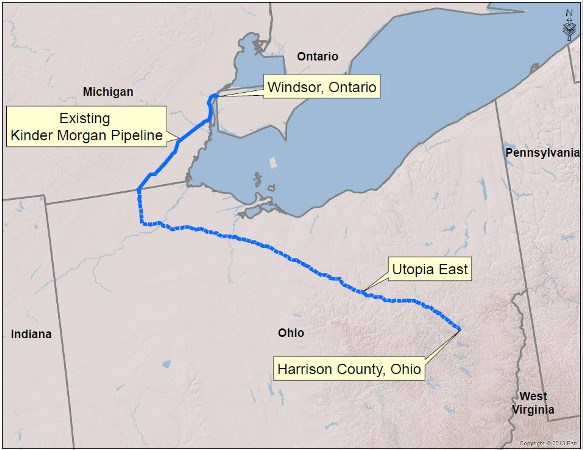
 Maryland is a lot like New York–populated with lefty liberals who love to tell other people how to live their lives. Maryland is at least, and perhaps more, “progressive” than New York. So it’s no surprise to us to read how the Dem libs are having a cow over proposed regulations that would allow fracking to begin in the state starting in October 2017. Maryland went through a years-long process, just like New York, and eventually released what would likely be the strictest drilling regulations in the nation, in late 2014 (see
  If you watch the evening news, you cannot escape the story of devastating floods in West Virginia last week. The floods raged across several counties and killed at least 23 people. Very sad. It seems it is during our darkest hours and trials that sometimes the brightest light shines. A group of 21 Marcellus/Utica companies have stepped up and have donated a collective $350,000 to the Red Cross to aide in flood disaster relief. Put a gold star next to their names. Here’s the list of companies that stand out for doing the right thing…