
Record Bets on Winter Gas: A Plain-English Guide for Landowners

A funny thing happened in the natural gas market on September 1. With gas trading below $3 per MMBtu, with U.S. storage on pace for an all-time record, and with the heating season still three months away, traders piled into Henry Hub natural gas futures in numbers never seen before. CME Group announced Tuesday that open interest in its Henry Hub contract hit 1,807,497 contracts — an all-time high. Records are usually set in November, right before winter. This one got set at the tail end of summer. Below, we unpack what that number actually means, and why it matters to a landowner in Greene County, PA, who has never traded a futures contract in his life. Read More “Record Bets on Winter Gas: A Plain-English Guide for Landowners”

 Two weeks ago, we told you Net Power had pivoted to building plain old gas plants and would worry about the carbon dioxide later (see
 MARCELLUS/UTICA REGION: Reality check for PA’s failed green energy mandates; Don’t squander Pennsylvania’s AI future; OTHER U.S. REGIONS: How Chevron’s project Kilby aims to rewire the Permian for the AI power era; Williams completes acquisition of Momentum Midstream; NATIONAL: U.S. natural gas futures meet resistance at $3; Prediction market Kalshi to file for US crude oil ‘perps’, source says; Why net-zero policies risk human catastrophe and carbon dioxide doesn’t; Guaranteeing affordable, reliable energy would help tackle our $40 trillion debt; Measuring meaningless climate actions; U.S. LNG exports rose 23% in the first half of 2026 because of higher capacity; INTERNATIONAL: Iran strikes keep oil near $91; Winter is approaching and Europe is running low on natural gas; China’s Order No. 837 adds project-delay risk to U.S. power supply chains; Qatar and UAE turn to rare LNG ship transfers as Hormuz crisis drags on; Climate Majority Project says scientists “freaking out”; Learn to stop worrying and love data centers.
 EQT is planning another pipeline — and this one is big. Through a brand-new subsidiary called Appalachian Transmission Gateway LLC (ATG), the Marcellus/Utica’s largest driller has opened bidding on the “POWER Pipeline,” a 42-inch, 50-mile line that would carry a full 1 billion cubic feet per day (Bcf/d) of gas from Greene County, Pennsylvania, west to the Clarington hub in Monroe County, Ohio. The open season quietly began Aug. 26 and runs through Oct. 26. We found no press release announcing it — the notice simply went up, and the trade press caught it a week later.
 Range Resources had a genuinely rotten 16 hours at its Laurel Hill B well pad in Cogan House Township, Lycoming County, last week. First, a gasket blew on a water filter pod and sent recycled frack water down the pad’s fill slope. Then, while the state inspector was standing there writing that one up, a water truck hauling more of the same stuff drove off the access road and rolled over. MDN obtained both DEP inspection reports, and they tell a more complete story than the headlines indicate.
 Yesterday, the Pennsylvania Independent Fiscal Office (IFO) released its quarterly Natural Gas Production Report covering April through June 2026 (full copy below). Three numbers, all pointing in the same direction: PA drillers spudded (started drilling) 89 new horizontal wells in 2Q26, down 16 wells (-15.2%) from the 105 spudded in 2Q25. Production volume was 1,925 billion cubic feet (Bcf), down 32 Bcf (-1.6%) from 1,957 Bcf in 2Q25 — the lowest quarterly volume since 4Q24. And the average Pennsylvania spot hub price was $2.11 per MMBtu, down 27 cents (-11.3%) from last year’s $2.38.
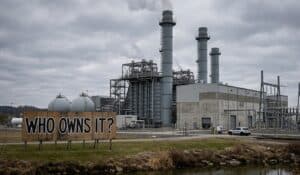 Fayette County, Pennsylvania, spent six months quietly chasing NextEra Energy’s giant gas plant, and now that it’s landed, county officials are publicly sharing their support. Two follow-up stories — one from the Pittsburgh Business Times, one from Salena Zito at the Washington Examiner — fill in a lot of what we didn’t have yesterday about the East Riverside Energy Center. Including who is actually going to own the thing. Hint: it isn’t NextEra.
 Anti-drilling group Protect PT has opened a new front against the biggest gas-fired AI project in Westmoreland County, Pennsylvania. On Aug. 25, Protect PT and two Upper Burrell residents — Allen Uhler and Guy Fuller — filed a land use appeal in Westmoreland County Court challenging the township supervisors’ approval of TECfusions’ work at the former Alcoa/Arconic research campus. Notably, the appeal doesn’t attack the gas turbines or the Marcellus wells feeding them. It attacks a piece of paper. Or rather, the absence of one.
 West Virginia State Treasurer Larry Pack released a report Tuesday that finally puts real numbers on a question a lot of Mountain State residents have been shouting past each other about: when a giant data center lands in your county, who actually gets the tax money? The answer, according to Treasury Strategic Analyst Mark Muchow, is that two projects alone — the Penzance Management campus in Berkeley County and Google’s project in Putnam County — would generate more than $103 million a year in property taxes, and roughly 62% of it stays home with county commissions and county school boards.
 Eight anti-fossil fuel groups gathered on the banks of the Delaware River on September 2 to hold a press conference defending the Delaware River Basin Commission’s ban on fracking. Here’s the part that made us laugh: they already won in July. Republican leadership never even offered the amendment that would have stripped the DRBC of its power to ban drilling. So why hold a rally to defend something that isn’t under attack? Because they’re nervous — and when you read what they’re claiming, you can see why.
 We finally have a number. Two weeks after a casing failure sent frack water gushing across the Infinity Natural Resources (NYSE: INR) Cooper well pad in Young Township, Indiana County, PA, the Department of Environmental Protection (DEP) has put an estimate on it: 336,000 gallons of frack flowback water released during the incident. An “undetermined amount” of that reached Whiskey Run, the small stream below the pad. Here’s what that number actually means — and what it still doesn’t tell us.
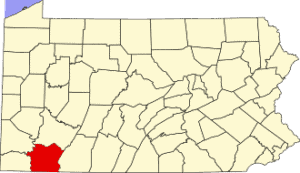
 A Dallas-based hyperscaler wants to build a 1.7-million-square-foot computing campus — plus its very own 450-megawatt natural gas power plant — on a reclaimed strip mine in Washington County, PA. The gas would come off a lateral tied to Energy Transfer’s Rover Pipeline, which runs right past the property line. Prime Data Centers made its first real presentation to the Hanover Township Board of Supervisors Monday night, in front of a fire hall packed past capacity with residents who are, to put it mildly, not sold. Three hours of testimony later, the supervisors scheduled four more hearings.