
PA DEP Hard at Work Analyzing 42 “Studies” re Increasing Setbacks
 In December, the Pennsylvania Environmental Quality Board (EQB) accepted a petition by radical green groups, including the Clean Air Council and Environmental Integrity Project, to “study” the issue of increasing setbacks for shale drilling so far that it would ban ALL new Marcellus/Utica drilling in the Keystone State, which is no exaggeration (see EQB Votes to Consider Ban on Marcellus Drilling Via Crazy Setbacks). In March, the Shapiro Department of Environmental Protection (DEP) told the EQB it is actively reviewing the rulemaking petition and will have a recommendation on setbacks for the board by the end of this year (see PA DEP Signals Recommendation on Shale Drilling Setbacks by Year End). Yesterday, the DEP provided an update on its progress. Read More “PA DEP Hard at Work Analyzing 42 “Studies” re Increasing Setbacks”
 The Rover Pipeline is a 711-mile, $6.3 billion natural gas transmission pipeline operated by Energy Transfer, transporting up to 3.25 billion cubic feet per day (Bcf/d) of Marcellus and Utica Shale gas. It connects supply areas in West Virginia, Pennsylvania, and Ohio to markets in the Midwest, Great Lakes, and Canada. As of April 29, 2026, Blackstone (via its Energy Transition Partners funds) has sold its entire 32.4% ownership stake in Rover to Ares Management. Blackstone originally acquired its ownership stake in 2017 to fund the construction of the pipeline.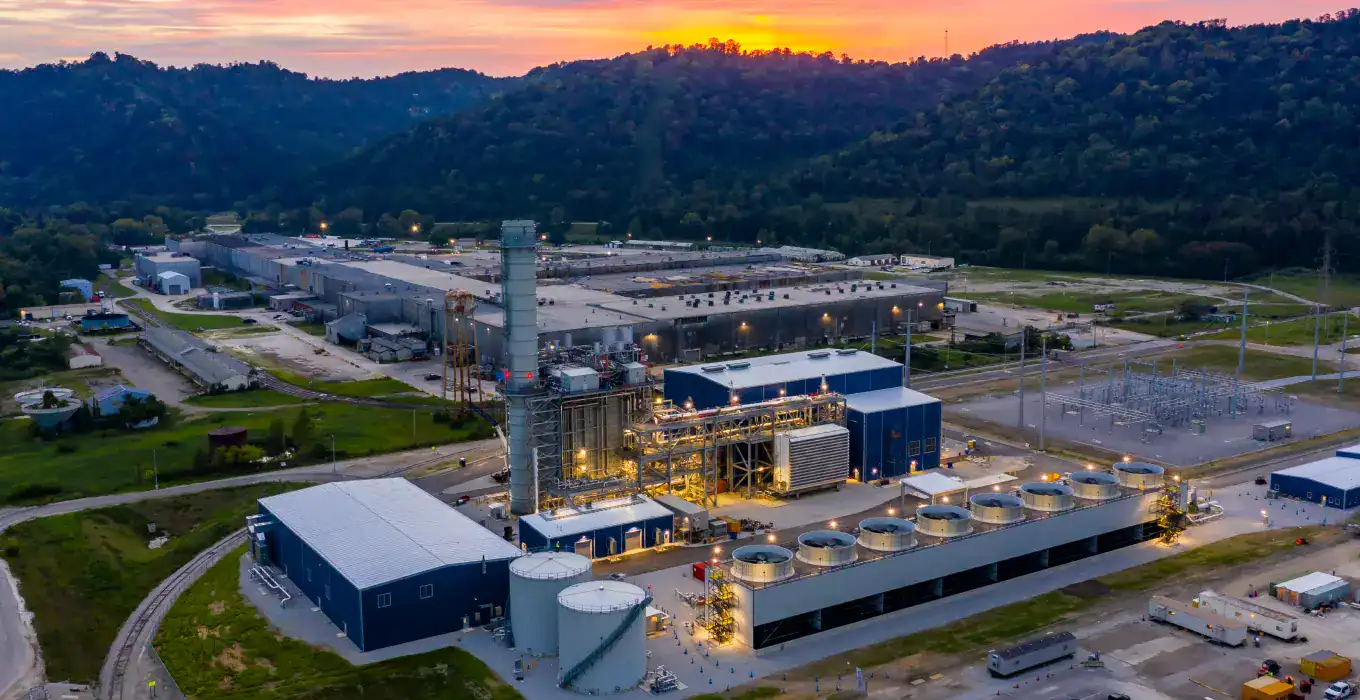
 OTHER U.S. REGIONS: Georgia Power revives Plant Wansley with natural gas and batteries; Woodside struggles to secure buyers for U.S. LNG as pricing backfires; NATIONAL: U.S. natural gas gains following storage data; Pipeline construction will follow natural gas demand growth; Florida AG James Uthmeier just ended the ‘green’ plastics cartel; Al Gore shifts on global warming – watch out for a new Ice Age; Democrats make it clear that if they retake power, U.S. energy security once again at risk; INTERNATIONAL: Oil settles lower after surge; OPEC+ delegates expect another symbolic supply hike; Could this be the beginning of the end for OPEC?; France unveils fossil-fuel exit plan at Colombia climate summit; European Commission completes inaugural hydrogen matchmaking round.
  Expand Energy turned in its first quarter 2026 update yesterday. Across all of its operations in the Marcellus/Utica and the Haynesville, Expand operated an average of 13 rigs during the first quarter, drilling 60 wells and turning 49 wells in line, resulting in net production of approximately 7.44 Bcfe/d (93% natural gas). In 2026, Expand Energy expects to run 11 to 12 rigs and invest approximately $2.85 billion, yielding an estimated daily production of approximately 7.5 Bcfe/d. We have a detailed breakdown below of how much of that activity is in the M-U. The Expand board fired its successful CEO, Nick Dell’Osso, in February (see
  Just yesterday, MDN told you that three left-wing judges from the 4th Circuit (“Circus”) who hate the Mountain Valley Pipeline (MVP) were back at it, badmouthing an extension of MVP into North Carolina, called Southgate (see
  We’ve been tracking a story that we consider an ongoing tragedy for more than a decade. American Water Management Services (AWMS) owns a wastewater injection well in Trumbull County, Ohio, that supposedly caused a low-level earthquake (that nobody could feel) in 2014. Actually, there are two injection wells located at the site, both operated by AWMS. They were both “temporarily” shut down by the Ohio Department of Natural Resources (ODNR) following the quake nobody could feel (see
  Although Pennsylvania Governor Josh Shapiro (J.S.) has just hired a lapdog to attack the PJM Interconnection grid as part of his campaign for president (see
  New York’s electric grid faces its lowest reliability margins in recent history this summer, with only 417 MW available under baseline conditions, according to the New York Independent System Operator (NYISO). This critical situation stems from extreme weather, an aging generation fleet, and a lack of new dispatchable resources. NYISO’s annual Summer Reliability Assessment (copy below) says an extended heat wave of three days or more, with temperatures around 95 degrees, could result in a capacity deficit of -1,679 MW, increasing to -3,370 MW at 98 degrees, potentially leading to blackouts. NYISO can implement emergency measures like purchasing energy or voluntary curtailment to mitigate shortfalls, but the overall margin for error is extremely narrow.
  Following the February 28 closure of the Strait of Hormuz, global and U.S. natural gas prices have sharply diverged. The shutdown halted roughly 20% of global LNG supplies, primarily from Qatar, forcing Asian and European buyers to scramble for replacement cargoes. Consequently, European TTF and Asian JKM benchmark prices surged 35% ($14.80/MMBtu) and 51% ($16.02/MMBtu), respectively. In stark contrast, U.S. Henry Hub prices fell 9%. Because U.S. LNG export terminals are already operating at near-maximum capacity, producers cannot significantly increase exports to capture these high global prices. This leaves ample gas domestically, insulating the U.S. market from international price volatility.
  In February, MDN brought you the big news that Devon Energy is buying out and merging with Coterra Energy, paying $21.4 billion in Devon stock (see
  Yesterday, Pennsylvania Gov. Josh Shapiro announced $267 million in state funding for energy projects, including $31.5 million for CNX Green Ventures to capture coal mine methane at the Enlow Fork mine in Greene County. Funded through EPA Climate Pollution Reduction Grants, the RISE PA program supports industrial decarbonization. CNX plans to drill boreholes, capture methane from mine ventilation, and pipe it for processing and sale as remediated mine gas.
  Last May, MDN brought you the news that the Ohio Department of Natural Resources (ODNR) was laying the blame for a series of low-level earthquakes in southeastern Ohio on fracking at a shale well in Noble County (see
  This is really big news. Yesterday, we spotted an article in the Financial Times that the Abu Dhabi National Oil Company (ADNOC), which is the state-owned oil company of the United Arab Emirates (UAE), is planning to invest “tens of billions of dollars” to build a natural gas business in the U.S., as it accelerates efforts to diversify, as the Iran war disrupts the energy industry. We’re glad we held on to that story and kept it for today, because on the heels of that story, another, bigger one broke: The UAE is resigning from OPEC and OPEC+ as of Friday, May 1. That’s huge!