
Update on Renovo Marcellus-Fired Plant in Clinton County, PA
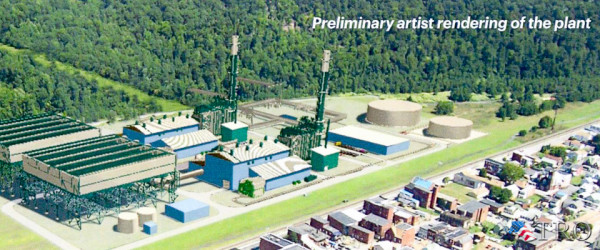
Good news about the Marcellus-fired power plant planned for Clinton County, PA called the Renovo Energy Center. According to the CEO of the Clinton County Economic Partnership, Mike Flanagan, the Renovo project “continues with plans to locate a power plant at the former Renovo Industrial Park.” According to reports, demolition and construction will likely begin later this year on the $850 million project.
Read More “Update on Renovo Marcellus-Fired Plant in Clinton County, PA”
 For years we have pointed out the botched strategy of New England politicians in blocking new pipelines to the region from the Marcellus. In the past during cold weather events, New England, which relies heavily on natural gas to generate electricity, has imported natural gas from our enemies in Russia in order to keep the lights on (see
  The price of natural gas, both the futures price at the Henry Hub NYMEX, and the spot price at hundreds of trading hubs across the country, continues to rise. The commodity price of natural gas has been the focus for a number of MDN posts in recent weeks. The question we’re often asked is, What will the price do over the next year or so? Will it stay this high? Will it decrease? We have two articles to share predicting what the NYMEX price of natural gas will be in the spring (and beyond). We think you’ll find both articles interesting. Let’s haul out the crystal ball…
 A healthy number of permits were issued to drill new shale wells across the Marcellus/Utica region last week. Pennsylvania issued 19 new permits in both southwest and northeast PA. Ohio issued 8 new permits, all of them to a single driller (Ascent Resources) for two well pads in two different counties. West Virginia issued 9 new permits–all but 2 of them were issued to Antero Resources in Tyler County.
 MARCELLUS/UTICA REGION: Pa. Dems running for Senate shun talk of fracking ban; EQT slides on 26M-share secondary offering; Steel Nation announces Director of Steel Nation Environmental; OTHER U.S. REGIONS: Red-hot natural gas markets help push North American LNG to Asia; NATIONAL: Senior Democrats’ push for powerful climate tool collides with political realities; EIA product highlight: Natural Gas Storage Dashboard; INTERNATIONAL: ‘Blah, blah, blah’: Greta Thunberg lambasts leaders over climate crisis; World’s largest oil, natural gas producers to increase carbon, methane cuts; Investors see natural-gas crunch spilling into crude market, lifting oil prices.
 Yesterday the “front month” October contract for the Henry Hub NYMEX price of natural gas soared 11% and settled at $5.706/MMBtu, the highest closing price since Feb. 21, 2014. Intraday trading went well over $6 per MMBtu. We keep seeing the word “contagion” as the main explanation for the soaring price. No, not the COVID contagion, but the psychological contagion of high prices globally. The price of natgas in Europe and Asia is skyrocketing (in the $25-$30/MMBtu range), which causes traders here to anticipate demand for our gas (via exports) will remain strong, driving up domestic prices. Ultimately fear drives the financial markets more than any other factor.
 A long-fought-over wastewater injection well in Plum Boro (Allegheny County, Pittsburgh suburb) finally opened for business earlier this year, having overcome all sorts of smears and slanders and lawsuits by the enviro-left (see
  States often get excited when the federal government deigns to hand out taxpayer money in dribs and drabs, a billion here and a billion there. Yet the best source of money to pump into an economy is private funds, invested by private companies. Private investment
 Yesterday we brought you the good news that two new LNG export facilities will, in all likelihood, begin full-scale operations by the end of this year (see
  Yesterday we told you that a program would air last night on the Fox Business channel featuring Cameron Energy, a conventional oil driller in western Pennsylvania (see
  Score another victory for the forces of evil, by which we mean leftwing, wackadoodle anti-fossil fuel extremists. Just a short time ago MDN received the statement below from PennEast Pipeline that states, in our words, they’ve given up. Throwing in the towel. Dead. PennEast will not get built. You can’t say we didn’t warn you this may happen.
 Spoiled rotten kids who never receive an occasional spank spank when they throw a temper tantrum while growing up, grow up to be spoiled rotten young adults. That’s what we’re seeing at the overpriced Ohio State University (OSU) where a group of petulant students is demanding the university stop construction work on a combined heat and power plant (CHP) project in the next 72 hours, or else…