
WI Gas Plant Plan Could Pull More Marcellus Gas Westward
 A Chicago-based developer wants to build a pair of natural gas-fired power plants in a Wisconsin farm town of 1,650 people — and together they’d crank out enough electricity to light up two million homes. It’s another data center story, and it’s another reminder that the demand pull for our Marcellus and Utica gas keeps stretching farther west. Invenergy has submitted engineering plans to Wisconsin regulators for two gas-fired plants in Brillion, Calumet County, about 15 miles from Appleton. The 750-megawatt (MW) Union Depot Energy Center would run around the clock. The 1.2-gigawatt (GW) Forest Junction Energy Center would be a “peaker” — a plant that fires up only when the grid is straining. Combined output: 1.95 GW. If built, Forest Junction would be the second-largest gas plant in Wisconsin. Read More “WI Gas Plant Plan Could Pull More Marcellus Gas Westward”
 A new report from two respected energy economists puts a number on something MDN readers have watched play out all year: PJM’s capacity market is broken, and it’s about to cost ratepayers billions — while creating a wide-open lane for reliable Marcellus/Utica gas. The National Center for Energy Analytics (NCEA) published “Regional Transmission Organizations: Problem or Solution?” on August 27. Authors Jonathan A. Lesser (president, Continental Economics) and Brent Bennett (policy director, Life:Powered/Texas Public Policy Foundation) dig into why RTOs (Regional Transmission Organizations) like PJM — the grid operator covering all or part of 13 mid-Atlantic states, including Pennsylvania, Ohio, and West Virginia — are struggling to keep the lights on at a price anyone wants to pay.
 MARCELLUS/UTICA REGION: Natural gas continues saving consumers billions on bills; Antero dodgeball tournament tops $1 million in charitable giving; Capito joins Diversified Energy for 25th anniversary celebration; OTHER U.S. REGIONS: Michigan justices took Fonda group cash before pipeline freeze; Judge rules shale oil antitrust case can proceed against major producers; The progress(ives) war on reliable and affordable electricity; NATIONAL: Natural gas futures edge down; SB Energy files for IPO to tap AI power thirst; Gas power plant boom collides with turbine shortages; Left and Right agree that data center bashing is unfair; Weatherford completes acquisition of NCS Multistage; SLB expands data center role with $3B Kelvion deal; INTERNATIONAL: Oil surges 5% on renewed tensions; EU decarbonization is a security threat for the West.
  A frack job gone sideways in Indiana County, PA, kept 14 volunteer fire companies on scene for more than 12 hours last month — and, according to a Pennsylvania Department of Environmental Protection (DEP) inspection report, sent an unknown quantity of frack flowback water off the pad and into a nearby stream. We don’t sugarcoat things at MDN, so let’s walk through what actually happened, what DEP says it found, and — just as important — what nobody has established yet.
  A federal judge in Syracuse dropped a legal anvil on New York’s $75 billion climate shakedown yesterday, ruling that the state’s Climate Change Superfund Act is preempted by federal law and cannot be enforced. It’s a complete win for West Virginia AG J.B. McCuskey, the 21 other state AGs who joined him, and the industry groups that piled on. We’ve been following this one since Gov. Kathy Hochul signed the bill in the waning days of 2024 (see
  A pile of poster boards in a YMCA gymnasium is not usually where you find the most important number in a $33 billion project. But on Aug. 27, at the Pike County YMCA in Waverly, Ohio, an SB Energy executive told a Columbus Dispatch reporter something that ought to get every Utica producer’s attention: the turbines are already bought. Not ordered. Not “in negotiations.” Bought — for the first phase of what will be the largest gas-fired power plant in American history.
  Back in May we told you Dominion Energy had brass you know what announcing a monster 3,000-megawatt (3 gigawatt) gas-fired power plant in Cumberland County, Virginia, while its much smaller Chesterfield peaker project was still stuck in the mud after three years of green lawfare (see
  Here’s a pipeline fight where the bad guys aren’t the greens. Last Friday, the U.S. Court of Appeals for the D.C. Circuit sided with the Federal Energy Regulatory Commission (FERC) and Enbridge subsidiary East Tennessee Natural Gas (ETNG), tossing out a challenge brought not by environmental radicals but by the pipeline’s own customers — a group of small-town gas utilities in Tennessee, Virginia, and Alabama who said they were being stuck with the bill for an upgrade they never asked for.
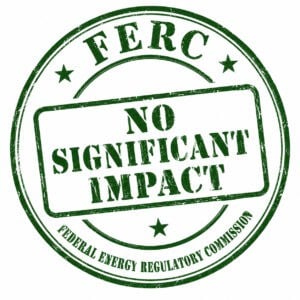 In April, we told you the Federal Energy Regulatory Commission (FERC) was taking a fresh look at the revived Constitution Pipeline and the associated Wright Interconnect project, and that the agency had to decide whether a relatively quick Environmental Assessment (EA) would do the job — or whether it would drag the projects through a full-blown, years-long Environmental Impact Statement (EIS). We got our answer on August 21. FERC staff issued the EA for both projects — 79 pages plus appendices — and the bottom line is the one supporters have been waiting on: building Constitution “would not constitute a major federal action significantly affecting the quality of the human environment.” In plain English — no significant impact. No years-long supplemental EIS is needed.
  The Marcellus/Utica finally moved last week — in the wrong direction. Ohio dropped a rig, taking the M-U to 34 and ending a three-week stall at 35. Nationally, the count didn’t budge at all, holding at 588. But that flat number hides something: oil rigs fell five while gas rigs gained five, and not one of those new gas rigs showed up here. Frac spreads slipped again too, down four to 180 — the second straight weekly decline.
  A group of North Fayette Township (Allegheny County, PA) residents who tried to block a Range Resources well pad has lost its appeal — not because a court weighed their evidence, but because they live too far away to sue. The Pennsylvania Commonwealth Court ruled August 25 that Stephen Bates and Heather Forster, who share an address more than two miles from the proposed pad, lack “standing” — the legal right to bring a case — to challenge the township’s approval in court.
  Last week, we covered Enterprise Products Partners signaling a “rate reset” on ATEX, the ethane pipeline that carries Marcellus/Utica ethane to Mont Belvieu (see
  Iroquois Gas Transmission System’s Enhancement by Compression (ExC) project has cleared FERC. It has cleared New York. The one thing standing between it and a shovel is a state air permit for two gas-fired compressor units in Brookfield, Connecticut. The Hartford Courant checked in on that fight yesterday — and buried the two most important facts halfway down the story. Quick refresher for anyone joining late: ExC is a $272 million upgrade that adds horsepower at three existing compressor stations — Dover and Athens in New York, Brookfield in Connecticut. No new pipe. Just more compression, squeezing an additional 125 MMcf/d (125 million cubic feet per day) through the existing 414-mile line into New York City and New England. That’s roughly a 10% throughput gain on a line that already exists, feeding two of the most gas-starved, highest-priced energy markets in the country. (The Courant puts the project at $275 million; we’ve used the $272 million figure Iroquois has cited. Small gap, worth pinning down.)
 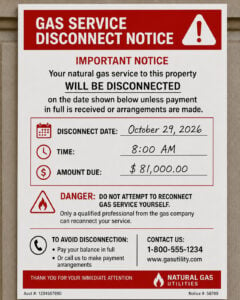 Ohio pumped roughly 2 trillion cubic feet of natural gas out of the ground last year, most of it from the Utica Shale. And yet 43 families in Washington County are being told to find another way to heat their homes by October 29 — because the wells that feed their gas line are running out of gas. The Marietta Times and the Parkersburg News & Sentinel both reported last week that Knox Energy has notified 43 customers in the Belpre area that their natural gas service ends October 29. The reason isn’t a billing dispute or a rate case. It’s geology.