
Former NY AG Accuses Current AG of Corruption re Exxon Witch Hunt
 It seems like forever we’ve been telling MDN readers that the Attorney General in the State of New York, Eric Schneiderman, is corrupt. We’ve written dozens of stories about Schneiderman (see them here). Schneiderman has targeted shale companies, pipeline companies, and his biggest gambit to date: ExxonMobil. Schniederman, in collusion with Big Green groups and several other far-left Democrat AGs, launched an investigation into Exxon last year, claiming Exxon “knew” that mythical man-made global warming is real and that their products (oil and gas) contribute to said global warming and that they (Exxon) have hidden their “research” from investors for years. Schneiderman has changed his story several times about why he launched the investigation–and what he’s looking for. He has demanded all sorts of internal documents from Exxon. In return, Exxon has demanded emails and documents from Schneiderman–to expose his collusion with Big Green. Schneiderman has refused such court orders. The man is an out-of-control menace. But it’s one thing for MDN to say it. “There goes Jim again, harping on an issue like Schneiderman, you know how Jim tends to exaggerate.” So if you don’t believe us when we say Schneiderman is corrupt, perhaps you’ll believe a former Attorney General of New York, Dennis Vacco, when he says Schneiderman is corrupt…
Read More “Former NY AG Accuses Current AG of Corruption re Exxon Witch Hunt”
 Cabot Oil & Gas, one of our favorite Marcellus drillers, released its third quarter 2017 update on Friday. Some of the things we learn from the report and the analyst phone call held by Cabot’s top brass: Production grew another 12% during 3Q17. In the Marcellus, Cabot’s natural gas production averaged just over 2 billion cubic feet per day gross (Bcf/d). If you use U.S. Energy Information Administration numbers from the most recent monthly drilling report, Cabot’s 2 Bcf/d equals 8% of all Marcellus production, and 3.3% of all shale gas production in the U.S! That’s truly amazing, considering it all comes from Susquehanna County (with a couple of wells in neighboring Wyoming County), in northeast PA. Profitability returned in 3Q17 with net income of $32 million, versus a net loss of $16.7 million in 3Q16. In the Marcellus, Cabot drilled and completed 13 net wells and placed online into production 15 net wells. They now have 49 “fourth generation” wells online and producing at an average of 4.4 Bcf per 1,000 feet. They also have 12 “fifth generation” wells online. One of the highlights for Cabot during 3Q17 was the announcement that Williams is now building their $3 billion, 198-mile Atlantic Sunrise natural gas pipeline project. Cabot says when the pipeline is done in mid-2018, Cabot will flow 1 Bcf/d of gas to new markets. Cha ching! New markets equal higher prices and more profitability for the company. Below is the full 3Q17 update, followed by remarks from CEO Dan Dinges made during the analyst call…
 Southwestern Energy, one of the biggest drillers in the Marcellus/Utica, delivered their third quarter 2017 update on Friday. Financially speaking the company displayed a remarkable turnaround. In 3Q15 Southwestern lost $1.8 billion! In 3Q16 Southwestern lost $735 million–trimming loses in half. In 3Q17, the company made a profit of $43 million, a swing of more than 3/4 of a billion dollars year over year and a swing of nearly $2 billion if you go back to 2015. Production in the Marcellus/Utica soared in 3Q17, up 26% over last year–to 153 billion cubic feet equivalent (Bcfe). That works out to 1.7 Bcfe per day. Southwestern has a lot of irons in the fire. They’ve drilled their second Utica well (happy with the results). They’re actively drilling in northeast PA, southwest PA and West Virginia. Overall, across the entire Marcellus/Utica patch, Southwestern drilled 43 wells, completed 25 wells and brought online into production 33 wells–in the past three months. The company also began work on a water infrastructure project–in the Panhandle area of West Virginia. The water project is expected to reduce well completion costs by $500,000 per well beginning in late 2018, and lower Southwestern’s break-even gas price by $0.25 per Mcfe. Yeah, a lot of irons. And they own a lot of acreage throughout the play. But the company does a good job in juggling all of the competing priorities. Below is the full 3Q17 update, followed by comments from Southwestern’s senior VP of E&P operations, John Bergeron…
 It looks like all of the agitating and nasty letters and lobbying by corporate raiders has had an effect on EQT. In June, EQT and Rice Energy announced that EQT will buy out and merge in Rice Energy, to create (in EQT) the largest natural gas-producing company in the United States (see
  The U.S. District Court in Akron, OH has just made a major ruling that affects all Utica landowners and drillers. In 2015, the Ohio Supreme Court accepted a case that will sound familiar to readers of MDN. The case, known as Lutz v. Chesapeake Appalachia, is about whether or not drillers (Chesapeake in this case) are allowed to deduct certain post-production costs from landowner royalty checks. The Ohio Supremes were asked to decide whether Ohio follows the “at the well” rule, which permits the deduction of post-production costs, or if the state follows the “marketable product” rule, which limits the deduction of post-production costs under certain circumstances. The Supremes came down off Mount Olympus in November 2016 to render their verdict (see
  Yesterday one of the biggest Marcellus/Utica drillers, EQT, issued their third quarter 2017 update. EQT will soon be THE biggest Marcellus/Utica driller, indeed the biggest shale gas producer in the United States (surpassing Chesapeake Energy), once a deal to buy Rice Energy consummates later this year. But what about just EQT in 3Q17? The company reports making a profit of $23.3 million during the quarter, versus losing $8 million in the same quarter last year. EQT produced 205.1 billion cubic feet equivalent (Bcfe) of natural gas during the quarter–which works out to be 2.3 Bcfe per day. Here are some interesting stats from the update: Since EQT began drilling shale wells, they have drilled (called “spud” in the industry) 1,288 shale wells. Of those wells drilled, 1,060 are online, making the company money. Below we have the full update, a copy of the transcript from the analyst phone call, the latest slide deck loaded with charts and graphs, and a bit of amusing analysis about the update/phone call…
 Yesterday EQT provided an update for both its drilling and midstream operations. On the midstream side, EQT had an interesting comment about it’s biggest project on the books–the Mountain Valley Pipeline (MVP). MVP is a $3.5 billion, 303-mile natural gas pipeline that will run from Wetzel County, WV to the Transco Pipeline in Pittsylvania County, VA. The Federal Energy Regulatory Commission (FERC) issued a final approval for the project two weeks ago (see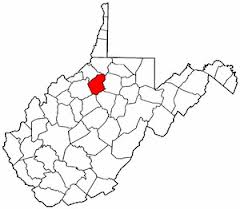
 In late September MDN connected the dots and was the first to tell you that Blue Ridge Mountain Resources, the renamed Magnum Hunter Resources, had sold its ownership stake in Eureka Midstream (formerly Eureka Resources) to South Korean conglomerate SK Group (see
  Range Resources released its third quarter financial and operational update earlier this week. Range is one of the premier drillers in the Marcellus (and Utica) shale region. In fact, Range drilled the very first Marcellus well back in 2004. The Range update is full of interesting details. First and foremost, the company turned a profit of $112 million in 3Q17, contrasted to losing $361 million in the same period last year. That’s nearly half a billion dollar swing in one year. Impressive. Also impressive is that Range’s total production came a whisker away from 2 billion cubic feet equivalent per day–which is up 32% over the same period last year. During 3Q17 two Marcellus “super-rich” pads were brought on line. The wells on those pads had an average per well 24-hour initial production (IP) rate of 41.3 million cubic feet equivalent (Mmcfe) per day. Impressive. As part of the update, Range held a call with financial analysts to discuss company performance. As these types of calls usually do, this one had a Q&A at the end. One analyst asked if Range would be willing to sell some of it’s non-core assets in southwest PA. Range CEO Jeff Ventura said yes, the company would consider such a move, under the right kind of terms. Here’s the full update from Range…
 Platts held their Appalachian Oil and Gas Conference in Pittsburgh earlier this week. One of the more interesting comments at the event came from Alan Farquharson, senior vice president of Range Resources. Farquharson gave an interview to a Platts reporter and said natural gas production in the Marcellus/Utica can’t continue its rapid increase indefinitely. Farquharson said drillers are going to hit “sweet spot exhaustion,” by which he means they will soon run out of Tier 1 locations to drill, requiring they branch into Tier 2 and Tier 3. As they drill in those other locations, well production will decrease, and along with it regional output will decrease. Range was the very first driller to sink a Marcellus well, back in 2004, so they know a thing or two about the play. When Range talks, everyone listens. Here’s more of Farquharson’s provocative comments from earlier this week…
 As we have said for years, ever since the Pennsylvania legislature modernized and updated drilling regulations to account for shale drilling in 2012, known as Act 13, anti-fossil fuel nutters have attempted first to destroy Act 13, and later subvert it. Act 13 originally provided for uniform zoning across the state with respect to siting wells. But seven selfish townships sued and eventually won (at the PA Supreme Court) the right to retain their own zoning regulations with respect to oil and gas wells (see
  Cunningham Energy is a small oil driller based in West Virginia. In 2015, Cunningham struck oil in the Big Injun sandstone formation in Clay County, WV (see
  EQT’s Equitrans (pipeline) Expansion Project is on track to begin construction by the end of this year–likely sometime in November. We first covered this project in 2015 (see
  The Pennsylvania Supreme Court said last week it will accept a case about strippers–stripper wells, that is. In brief, in 2012 Pennsylvania passed the Act 13 drilling law that includes a fee on wells targeting shale layers, including the Marcellus. Snyder Brothers, headquartered in Kittanning, PA, drills mostly conventional (vertical only) wells in southwestern PA. In 2011-2012 they drilled 45 vertical-only wells, but targeting the Marcellus, all of the wells fracked. Initially those wells produced more than 90 Mcf/day, but by December of the year they were drilled, they produced less than 90 Mcf/day. The way the 2012 Act 13 law is written, if a well produces less than 90 Mcf/day during “any” month it is considered a stripper well and exempt from paying the impact fee. The state’s Public Utility Commission (PUC) assessed the fee anyway because for 11 months the wells produced more than 90 Mcf/day. Snyder Bros. sued and after an appeal of the case, Snyder Bros. won their case in March, exempting those wells from paying impact fees (see