
EQT Gives Up an Automatic Win in Elizabeth Twp Permit Fight
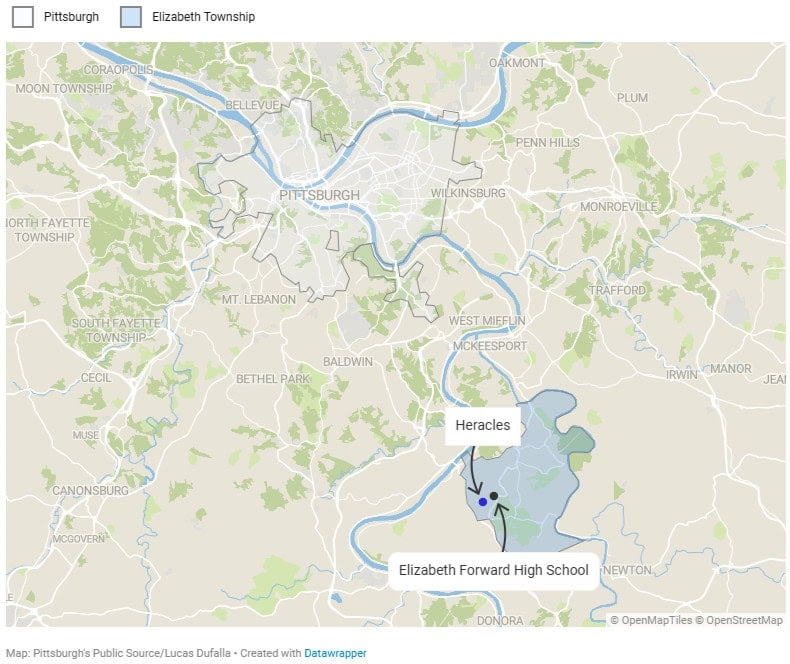
Elizabeth Township’s (Allegheny County, PA) Board of Commissioners was supposed to vote by August 21 on EQT’s conditional use permit for the six-well Heracles pad near Elizabeth Forward High School. Instead, at an August 17 workshop meeting, commissioners announced they’d cut a deal with EQT to push the decision into September — saying they need more time. Here’s the part the news coverage skipped: under Pennsylvania’s Municipalities Planning Code, blowing that 45-day deadline would have handed EQT an automatic, deemed approval. The clock was running in EQT’s favor. EQT gave it up voluntarily. That’s not a company scrambling for cover — that’s a company building a record it expects to defend on appeal. Read More “EQT Gives Up an Automatic Win in Elizabeth Twp Permit Fight”

 Norway’s Equinor — the company we all used to call Statoil — announced Monday it is buying a majority interest in the Lackawanna Energy Center (LEC), the big Marcellus-fired power plant in Jessup, PA, just outside Scranton. Equinor is paying $940 million for 87.71% of the Class A shares in the 1,483-megawatt plant, buying them from funds managed by Global Infrastructure Partners (GIP), which is now part of BlackRock. Invenergy, which built LEC and has run it since day one, stays on as operator. MDN has followed this plant since it was nothing but a proposal and a pile of angry town council meetings (see
  Devon Energy just told the market it’s willing to write big checks to get stranded natural gas to better markets. The gas in question is in West Texas, not Susquehanna County — and that says something about where the old Cabot Oil & Gas assets stand in the new Devon. On Monday, Devon announced a positive Final Investment Decision (FID — meaning the money is committed and the shovels are coming) on the Solitude Pipeline System, a WhiteWater-led joint venture building two 48-inch natural gas pipelines from the Permian Basin to Katy, Texas.
  In March, MDN told you that Butler County landowners were appealing after a federal judge tossed their royalty class action against XTO Energy (see
  Competitive Power Ventures (CPV) and EQT Corporation have signed a 10-year gas supply agreement that locks up the entire fuel appetite of the CPV Shay Energy Center, the $3 billion, 2,100-megawatt (MW) combined-cycle plant headed for Doddridge County, West Virginia. It’s the deal that turns Shay from a project on paper into a project with a fuel contract.
  Epsilon Energy (NASDAQ: EPSN), the non-op partner that bankrolls a chunk of Expand Energy’s Marcellus drilling in Susquehanna County, PA, reported Q2 2026 results last week showing Pennsylvania gas production down sharply — but for a reason that’s actually good news for the wells coming next. Epsilon also sold off a package of small Marcellus overriding royalty interests for $3.9 million and confirmed five new wells are headed for completion by December, which should boost both production and Auburn Gas Gathering System throughput.
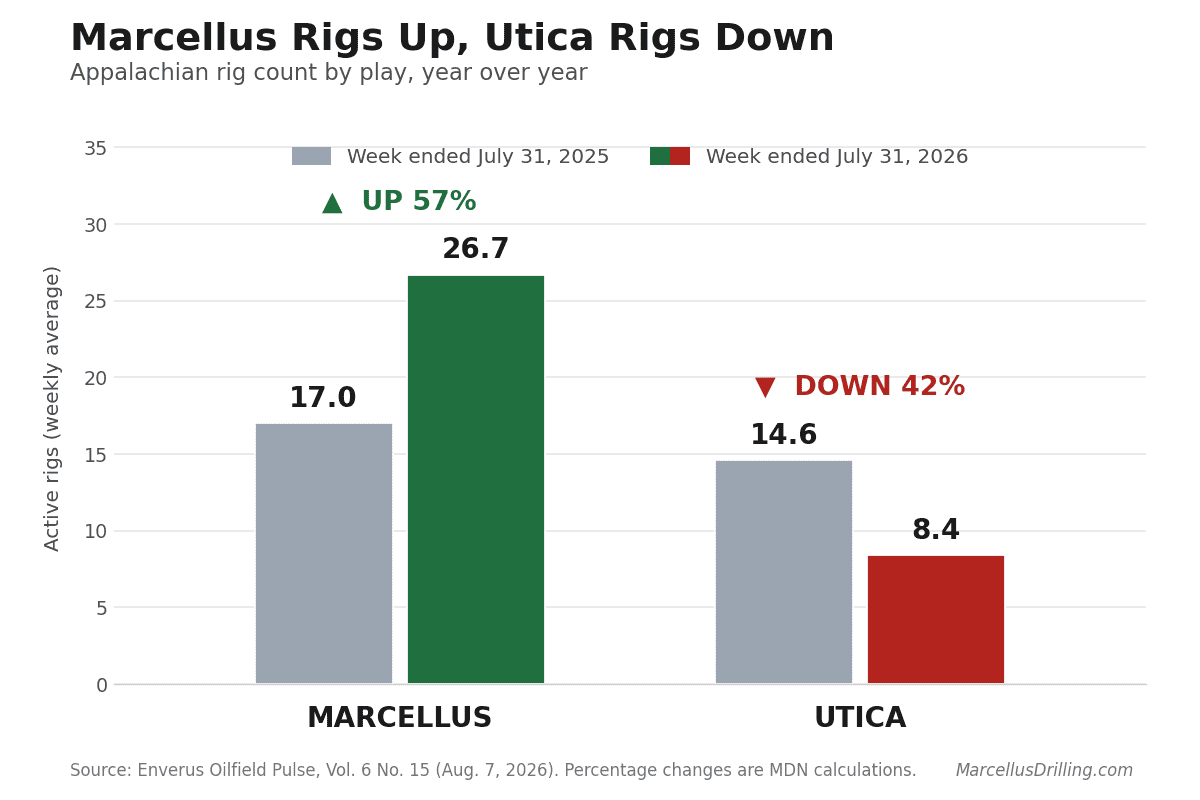
  The Marcellus/Utica region received 8 new drilling permits last week, August 3 – 9, down 7 from two weeks ago. Pitiful. (Cue Linda Ronstadt’s “
 WhiteHawk Minerals (NYSE: WHK), the Philadelphia company that has quietly become one of the largest mineral and royalty owners in the Marcellus, filed its first full quarterly report as a public company this week: $111.8 million of new acquisitions, record production of 70.0 MMcfe/d, and its first real dividend at $2.00 per share annualized. But the most interesting thing WhiteHawk said all week wasn’t in the press release. It came out of CEO Daniel Herz’s mouth on Thursday’s earnings call — some of the biggest drillers in Appalachia are now partnering with WhiteHawk to buy minerals ahead of the drill bit.
 Remember when Dan Rice IV (older brother of EQT CEO Toby Rice) sold his landfill-gas company Archaea Energy to BP for $4.1 billion back in 2022, pocketing the Rice family somewhere between $720 million and $975 million in the process? Well, what goes around comes around: BP told investors this week it’s now looking to sell Archaea. On the company’s Q2 2026 earnings call, new BP CEO Meg O’Neill said Archaea has turned out to be a “capital-intense” way to play the biogas market, and BP would rather go “capital-light” going forward. Translation: RNG isn’t the money-printer BP thought it would be four years ago, and Big Oil’s would-be savior molecule is getting shopped to the highest bidder.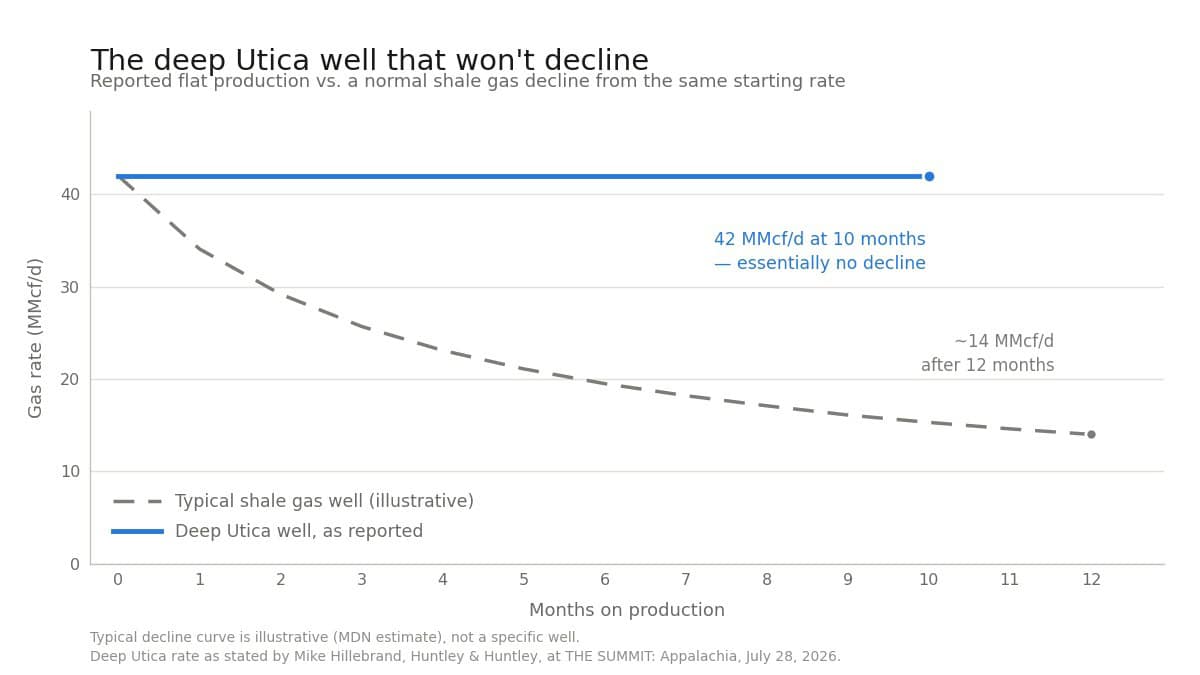
 Infinity Natural Resources (INR), the Morgantown, WV-based pureplay Marcellus/Utica driller, dropped its second quarter 2026 numbers on Monday and walked analysts through them Tuesday morning. The short version: production jumped 75% year over year to 348.5 million cubic feet equivalent per day (MMcfe/d), adjusted EBITDAX hit a company-record $114.7 million, the first wells from the Ohio Utica package INR bought from Antero came online ahead of plan — and INR quietly drilled and cored its first deep dry gas Utica well in Pennsylvania. Full-year guidance was reaffirmed. Not a bad quarter for a company that was still private 18 months ago.
  Devon Energy and Williams spent the last week of July doing something that doesn’t show up on a reserve report: teaching northeastern Pennsylvania teenagers how the gas business actually works. Then, on July 30, the Pennsylvania Chamber Foundation named both companies “Greatest Places to Intern in PA.” Six days later, Devon CEO Clay Gaspar told analysts he’s fielding “no shortage of incoming phone calls” about which assets he might sell — with the Marcellus at the top of everybody’s list. Which raises a question nobody on Wall Street is asking: who inherits the workforce machine?
  If you’ve been to an energy conference in the last year, you’ve heard someone say EQT is forecasting 100 Bcf/d of new natural gas demand by 2030. It happened at