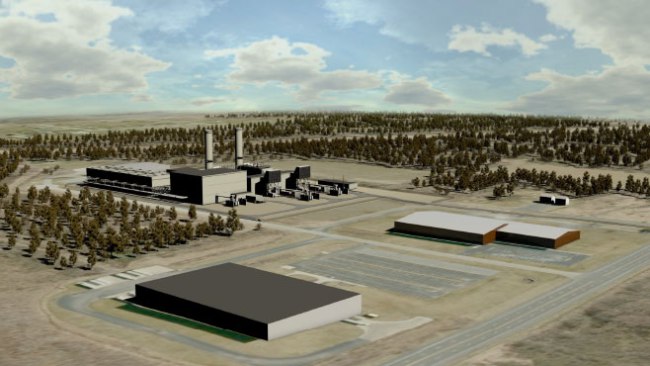
Marcellus/Utica Region Could Support 4 More Crackers, but Will It?
 In March of this year, the Team Pennsylvania Foundation released a report called “Prospects to Enhance Pennsylvania’s Opportunities in Petrochemical Manufacturing” (see PA Study Finds Marcellus/Utica Can Support 4 More Ethane Crackers). The report is derived from a comprehensive study conducted by powerhouse oil & gas consulting firm IHS Markit. According to the report, Pennsylvania can easily handle another two ethane cracker plants (aside from the already under construction Shell cracker), and Ohio and West Virginia can handle another two cracker plants between them, for a total regional capacity of another four ethane cracker plants. But realistically, will another four actually get built in our region? That was the topic addressed during the Northeast U.S. Petrochemical Construction conference held earlier this week in Pittsburgh. PA officials talked openly and honestly about the challenges in attracting more crackers–and about their mission, which is “the development of sites” to attract more crackers. It was an interesting, and candid, discussion with helpful information about what crackers look for in a potential site…
Read More “Marcellus/Utica Region Could Support 4 More Crackers, but Will It?”
 The TriState Infrastructure Council (TSIC) was founded in Pittsburgh in late 2016 to “serve a broad-based business community during the critical next few years by attracting and deploying investments in infrastructure projects in Ohio, Pennsylvania and West Virginia.” With infrastructure upgrades, the region will be able to realize economic growth resulting from petrochemical manufacturing and related industries in the Appalachian basin. One of the driving forces behind TSIC is a name you are likely familiar with: Kathryn Klaber. Katie Klaber founded and until a few years ago led the Marcellus Shale Coalition. She opted to focus on her consulting practice following the MSC and is now managing the TSIC. The TSIC organization was founded with a group of A-list companies located in the region. At this week’s Northeast U.S. Petrochemical Construction conference in Pittsburgh, Katie unveiled an exciting new project to map infrastructure in an 82-county region throughout the Ohio River Valley. The aim is to identify missing/key/critical infrastructure components and then work to set up public-private partnerships to get those components built. The TSIC is looking at “electric transmission and distribution, pipelines, natural gas and natural gas liquid storage capacity, reliable locks and dams, rail networks, roads and bridges, water and sewer, building sites, barge loading/unloading facilities, broadband, fiber optics, and air service, among others.” And yes, the Marcellus/Utica shale is the linchpin that holds it all together–makes it all possible–and the raison d’être for the TSIC. Here’s more on the new infrastructure database, the TSIC, and how they are giving the shale industry a big assist…
 In reading a fascinating story about European chemical plant giant Ineos, the article took an unexpected turn when it said Ineos, indeed all of Europe’s petrochemical industry, is “vulnerable as never before because of the shale oil and gas boom in the US, which has made energy costs there just a fraction of those in Europe.” The article specifically names and credits the Marcellus with producing feedstock that is far cheaper than can be found in Europe–and chemical plants are now choosing to relocate and manufacture their products in the U.S. rather than Europe. The inescapable conclusion: if the United Kingdom (and Europe) refuses to frack, they’re hosed. Ineos, which has figured this out, has “quietly” purchased “some interesting onshore fracking licences” in the UK, and they intend to use them…
 Something truly amazing is happening in rural Susquehanna County, PA, nestled in the northeastern corner of the state (shares a border with Broome County, NY, where MDN is located). At a special event yesterday held in Montrose, the county seat, Cabot Oil & Gas announced a major milestone. Cabot has, over the past ten years, paid out $1 billion in royalties and another $500 million in lease bonuses. Did you catch that? In a single decade, Susquehanna County has received a $1.5 BILLION economic stimulus in private money flooding into the county–from just one of the major drillers working in the county. And that doesn’t include $3.1 billion spent on equipment and crews to do the drilling (a number we verified with Cabot)! There are other companies drilling in Susquehanna County as well. In very real, practical terms, that means school taxes have not gone up–in years. Property taxes have actually gone DOWN. Mortgages have been paid off. Kids have gone to college–without incurring years of debt hanging over them when they graduate. Story after story was shared of how Cabot’s drilling program has resulted in radically changed (for the better) lives in Susquehanna County. Cabot has pulled some 3 trillion cubic feet of natural gas out of what Cabot rep George Stark says is “the sweetest spot to be” in the country. Little known factoid: A single company (Cabot) drilling in one county (Susquehanna) produces nearly 3% of the entire natural gas output in the United States. Amazing! You know what’s even more amazing? Binghamton media blocked all reporting about this major news….
 PennEast Pipeline has just released a list of 11 non-profit organizations receiving grants of “up to” $5,000 from the pipeline company. It’s not the first time (
 A comprehensive study by Cleveland State University researchers shows just how mind-blowing the economic investment in Ohio has been from the Utica Shale. The just-published study, titled “Shale Investment Dashboard in Ohio” (full copy below), finds that between upstream ($39 billion), midstream ($8 billion) and downstream ($3 billion), all related to the Utica Shale, there has been an incredible $50 billion invested in Ohio since Utica drilling began in 2011. It’s really hard to overstate just how big a deal this is. Can you image a $50 billion economic stimulus from the government? No way! It would never happen. And if it did, the money would come out of YOUR pocket–from taxpayers. But this $50 billion ALL came from the private sector. Good ole capitalism. Free enterprise. Private ownership. Private property. Love it! It’s what our great country was built on. Let’s dig into the numbers and relish this fantastic news…
 When (not if) the Atlantic Sunrise Pipeline begins construction this summer in Lancaster County, PA, area businesses plan to take advantage of the economic boon that will arrive along with some 250 workers who will build it. Atlantic Sunrise is a $3 billion, 198-mile pipeline project running through 10 Pennsylvania counties to connect Marcellus Shale natural gas from northeastern PA with the Williams’ Transco pipeline in southern Lancaster County. Construction in Lancaster County will last approximately nine months and is projected to inject $75 million in the local economy. What kinds of businesses will benefit? Some include “housing, rental equipment, food sources, welding supplies, waste disposal, construction material, security, fuel, water trucks, concrete services, buses and transportation, auto repair, laundry services, drain tile work and hauling services.” And that’s only some of the services needed. Campgrounds are another business expected to experience a big uptick in demand. According to Williams spokesman Christopher Stockton, “We are encouraging all our construction contractors to utilize local service providers as much as possible.” That’s good news for local businesses. Here’s how local businesses in Lancaster County (and elsewhere) can sign up to get their piece of the Atlantic Sunrise action…
  We’ve written a number of times about DUCs–otherwise known as drilled-but-uncompleted wells. When a shale driller drills a new well, it doesn’t always happen all in one go. You first drill the hole down, and then curve the drillbit and drill the horizontal portion–called the lateral. Then you pull the drill bit out of the ground and (at some point) the fracking process begins. Fracking doesn’t always happen right away. Sometimes wells are initially drilled but not fracked–essentially putting them in inventory to be fracked later. Those wells are DUCs. Since a lot of the cost to develop the well has already been spent in preparing the site and drilling the hole, to come along at a later time and frack is much “cheaper” if you (as a driller) want to bump up your production. Price of gas low right now? Drill the initial hole, mothball the project, and come back later when the price of gas goes up and finish it off and hook it up to production. The DUC inventory is a closely watched number. Analysts at Platts have been watching and have noticed something interesting. In most shale plays–particularly oil plays like the Permian in Texas–drillers are sinking initial holes as fast as they can and the DUC inventory numbers are going up up up. The Permian has seen 476 new DUCs added since January! But in the Marcellus, only 3 new DUCs have been added since last December. Which is “puzzling.” What does it mean?…
 Believe it or not, Shell previously hired a third-party consultant to perform a traffic study in the area where Shell plans to build a $6 billion ethane cracker in Beaver County, PA. Based on the findings and recommendations of that study, Shell has begun to secure parking spots for construction workers that will descend on that location to build the plant–beginning later this year. One of the recommendations is to limit the number of parking spots to no more than 1,500 at any one location. Shell currently has three locations lined up and (mostly) ready to go, enough for 3,100 parking spots. At its peak, the project will employ something like 6,000 workers. So either Shell will line up more spots, or maybe workers will carpool…
 An economic report released yesterday by the American Chemistry Council (ACC) shows that the Appalachian region could become a second center of U.S. petrochemical and plastic resin manufacturing, similar to the Gulf Coast. ACC President and CEO Cal Dooley presented the findings at a Capitol Hill press event with lawmakers including Senator Shelley Moore Capito (R-W.Va.), Senator Joe Manchin (D-W.Va.) and Rep. David McKinley (R-W.Va.). “The Appalachian region has distinct benefits that could make it a major petrochemical and plastic resin-producing zone,” Dooley said. “Proximity to a world-class supply of raw materials from the Marcellus/Utica and Rogersville shale formations and to the manufacturing markets of the Midwest and East Coast has already led several companies to announce investment projects, and there is potential for a great deal more.” What will it take to turn our region into another Gulf Coast petchem powerhouse? According to the report, an NGL (natural gas liquids, i.e. ethane) storage hub. You may recall Sens. Capito and Manchin recently introduced a bill to study an Appalachian NGL storage hub (see
  As we have endlessly covered, Shell is in the midst of building a $6 billion ethane cracker plant in Beaver County, PA (see
  A couple of weeks ago the American Petroleum Institute (API) released a new study that shows private investment in U.S. natural gas and oil infrastructure could (and likely will) create over 1 million new U.S. jobs. That is an incredible number! The study also shows that private investment may exceed $1.3 trillion for new oil and natural gas infrastructure. Wow! Over the past five years, U.S. oil and gas infrastructure development proceeded at a rapid pace. Many have wondered whether the trend can continue. API wondered too, so they contracted the experts at ICF to undertake a study that investigates the amount of oil and gas infrastructure development possible in the U.S. through 2035. The result is the report, “U.S. Oil and Gas Infrastructure Investment Through 2035” (full copy below). The report focuses on the amount of infrastructure needed for two different scenarios, a Base Case and a High Case, each of which are plausible scenarios for future market conditions. While the Base Case represents a most likely scenario, the High Case is included to assess infrastructure development in a more robust environment that is fostered by a larger hydrocarbon resource base and more rapid advancements in technology. The study looks at capital expenditures associated with, and the resulting economic consequences of, oil and gas infrastructure development…