
DCP Midstream to Import Propane from Europe for Chesapeake Region

This, for us, is a “man bites dog” kind of story. Something unexpected and unusual. The Marcellus/Utica region produces an abundance of methane (i.e. natural gas). However, when methane comes out of the ground, other hydrocarbons come out of the ground too–so-called natural gas liquids (NGLs) like ethane, propane, butane, etc. So we not only produce a boatload of methane, we also produce a lot of those other hydrocarbons too. In fact, there is and has been a plan on the boards for years to build a propane storage facility along the shores of Seneca Lake in New York to handle northeast propane production (see today’s story, Crestwood Sells Salt Operation in Watkins Glen, Keeps LPG Storage). So imagine our surprise to read a story about DCP Midstream, which operates an NGL export terminal in Chesapeake, Virginia, plans to use that terminal during the slow winter months to *import* propane–from places like Europe. Really?! You can’t get it from the Marcellus/Utica? Or ship it in from the Gulf Coast? DCT says some of its customers in “the Chesapeake region” want more propane, and DCT aims to deliver by shipping it all the way from another continent…
Read More “DCP Midstream to Import Propane from Europe for Chesapeake Region”
 Mountaineer NGL Storage wants to build a new underground NGL storage facility in Monroe County, Ohio, near Clarington, along the Ohio River (see
  Shale Insight 2017 is now in the books. Another year, another great show. MDN editor Jim Willis is back in the office, chained to his computer. Next week Jim will share notes he took at the conference. For now, below are highlights from other news source from Day Two of the event. Unfortunately Jim had to leave before the closing keynote, given by former Trump White House Press Secretary Sean Spicer. But others were there to hear what Spicer had to say. Day Two began with a focus on the Shell ethane cracker. Members of the Shell team were on hand to describe how this critical project affects the region, and where it fits in the Marcellus/Utica landscape. One of the Shell team members said the skyline at the Beaver County site will change dramatically over the next 12 months as the buildings housing the various components are built. It was a fascinating talk with lots of information. Below is a roundup from Day Two…
 A research team from West Virginia University spent the past year studying geologic regions in 50 counties in the Marcellus/Utica Shale region to see if our region would support a proposed $10 billion ethane storage hub. The conclusion was delivered last week at a meeting in Southpointe, PA: Heck yeah! Some 100 geologists, chemical engineers, oil and gas people members of academia gathered to hear about the results. WVU researchers released their findings in a published 181-page report titled “A Geologic Study to Determine the Potential to Create an Appalachian Storage Hub for Natural Gas Liquids” (full copy below). Among the study’s findings: A shale ethane storage hub could help create $36 billion in investment and more than 100,000 permanent jobs. It’s HUGE! Our region currently produces three times the amount of ethane that can be used by the mighty Shell ethane cracker, pointing out the need for more cracker plants. Here’s the exciting news that we need an ethane storage hub, and we need it bad…
 When a driller sinks a hole in the ground looking for one hydrocarbon–like natural gas–other hydrocarbons also come out of the ground. Sometimes its oil. Sometimes condensate. Sometimes natural gas liquids (NGLs), including ethane, propane, butane, pentane, etc. In northeast and central Pennsylvania where the Marcellus Shale is prolific, most of what comes out of the ground is just methane–or natural gas. However, in the southwestern portion of PA, and in the northern panhandle of WV and on into eastern OH, it’s a different story. They are considered “wet gas” areas because (depending on the county) the wells are prolific NGL producers. Most NGLs, like propane, fetch much higher prices than plain old methane. Typically ethane is the NGL that mostly comes out of the ground, but for many drillers ethane can’t (yet) be sold, so it’s considered a “waste” product, mixed into the methane stream to get rid of it. But that’s changing. There are now pipelines to carry ethane to facilities in both Philadelphia and to a cracker plant in Canada. There’s even a pipeline for ethane (and other NGLs) that goes all the way to the Gulf Coast (ATEX, Appalachia to Texas). Some of the largest Marcellus/Utica drillers now have markets for their NGLs, so they are ramping up production and selling more NGLs. In fact, six of the eight largest M-U drillers increased their NGL production in the second quarter of 2017 compared to 2Q16. Which six increased, and which two decreased NGL production last quarter?…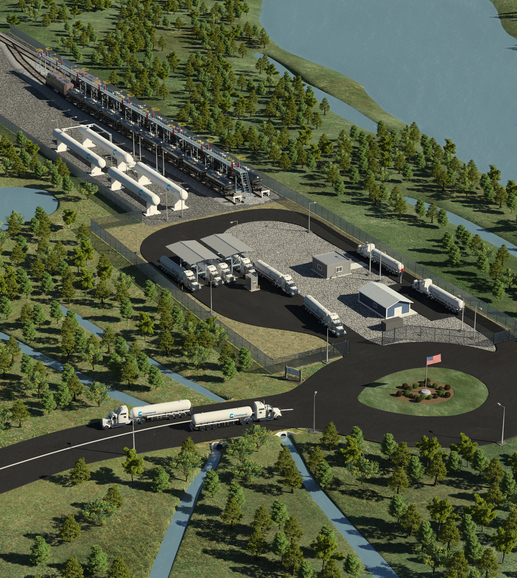

 Pipeline projects are facing still opposition from nutty/radical environmentalists who seem to have plenty of money to litigate and attempt to tie up projects for as long as possible. Ultimately, at least in most cases, pipelines prevail and get built. But it does take longer, no doubt about that. In the meantime, railroads have stepped in to take up some of the slack. We’re suckers for a good railroad story. We spotted one about rail giant CSX and how the company has seen an uptick in hauling natural gas liquids in the Marcellus/Utica region. Stuff like propane (LPG, or liquefied petroleum gas). CSX is also seeing an uptick in hauling frac sand. All of which points to one thing: drilling in the Marcellus/Utica has/is picking up…
 West Virginia’s U.S. Senators, Shelley Moore Capito (Republican) and Joe Manchin (Democrat), continue to be a driving force in advocating for a $10 billion NGL storage hub to be located in WV, PA or OH. Back in May, Capito and Manchin introduced a bill to study such a project (see
  Can proposed NGL storage facilities in the Marcellus/Utica benefit the environment? The answer is a resounding, YES! How? First you must understand what an NGL is, and why we have so much of it in the northeast. NGL stands for natural gas liquid. When you drill a hole in the ground to extract oil, or natural gas, you almost always get not only oil, but natural gas (and vice versa). In addition, you also get NGLs. They are all hydrocarbons with slightly different atomic configurations. NGLs include propane, butane, isobutane and ethane. Aside from natural gas (or oil), the most common hydrocarbon coming out of a well is ethane. Ethane, as it turns out, is quite useful. It can be “cracked” chemically and turned into ethylene, which is the raw feedstock for manufacturing plastics, among other things. We have at least one ethane cracker plant coming in our neck of the woods–Shell’s cracker plant in Beaver County, PA (near Pittsburgh). Another one is likely to get built by PTT Global Chemical–in Belmont County, OH. Other smaller plants that process ethane are also likely to get built. They all need a ready supply of ethane. Enter storage hubs–huge underground caverns to store NGLs until they can be used. Mountaineer NGL Storage is close to beginning work on such a facility (see
  We spotted an editorial in the Charleston (WV) Gazette-Mail written by Kevin DiGregorio, executive director of the nonprofit Chemical Alliance Zone (CAZ). According to the CAZ website, the organization “works with partners across West Virginia to boost and maintain investments and jobs in the chemical industry and related industries, including natural gas, manufacturing, and technology in general. We create, initiate, and facilitate business opportunities, leading to opportunities for you, your business or organization, and the State of West Virginia.” In other words, Mr. DiGregorio and the CAZ are at the nexus of many deals to bring petrochemical businesses to the Mountain State. So if anyone should know what may be “up the sleeve” and soon to be revealed, it’s Mr. DiGregorio. He hinted at it in his column. Writing that everyone has heard about the potential for a Braskem ethane cracker plant in Parkersburg (a project that appears to still be alive), Mr. DiGregoorio then says, “What you haven’t heard are all of the other potential (and confidential) projects that many of us are working on that might lead to new facilities and high-paying STEM (science, technology, engineering, mathematics) jobs that take advantage of methane and NGLs (ethane, propane, butane) to make various chemicals and plastics.” Wow! He seems to be saying there are a lot of projects in the works for WV in the downstream–those businesses that use the output from the shale industry…
 Nearly five years ago, in July 2012, then-PA Gov. Tom Corbett announced that some of the Sunoco Marcus Hook Refinery assets had been purchased by Braskem America (see