
Fossil Fuels Save Millions of Lives During Coronavirus Outbreak
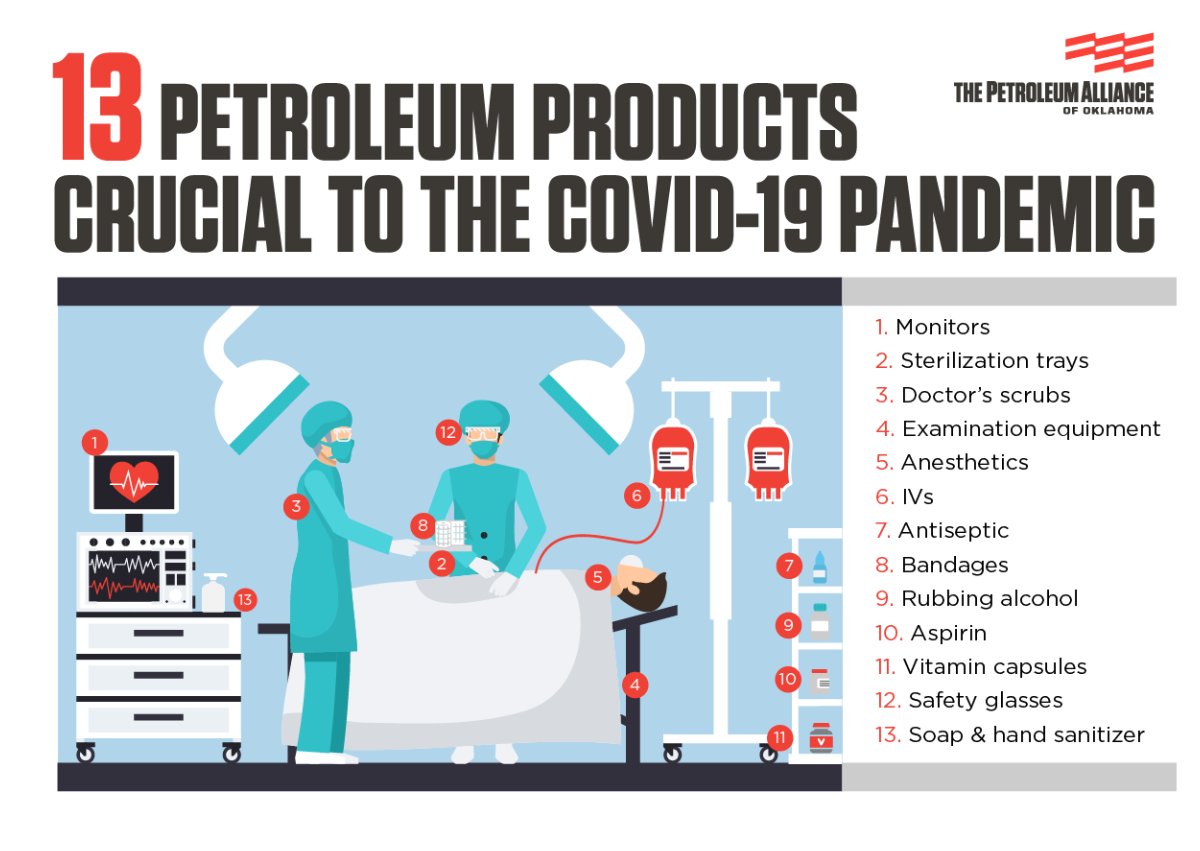
MDN previously made comments scattered over several posts pointing out that without plastics, which come from oil and gas, the world (in particular the U.S.) would have already experienced mass deaths from the COVID-19 coronavirus pandemic far worse than what we have. In other words, the world can thank frackers and the petrochemical industry for saving lives. We spotted a column by Dan Markind, a Philadelphia attorney who publishes columns about the Marcellus/Utica on the Forbes magazine website, noting that the world has “turned to fossil fuels” in order to fight the coronavirus. Dan does a great job of pulling all the threads together to make the case that oil and gas and the plastics created by them have helped save the world from an even worse fate.
Read More “Fossil Fuels Save Millions of Lives During Coronavirus Outbreak”
 The Delaware River Basin Commission (DRBC) has been co-opted by Big Green groups to do their bidding. The latest example is a letter sent by DRBC to the Federal Energy Regulatory Commission (FERC), arrogantly telling FERC that the DRBC has the power to review the PennEast Pipeline project–to pass judgment on whether or not (and how) it gets built. That authority lies SOLELY with FERC.
 Last December the U.S. Fish and Wildlife Service (FWS) filed a request with the Federal Energy Regulatory Commission (FERC) asking for an extra 60 days to revise an Endangered Species Act (ESA) review of the Mountain Valley Pipeline (MVP) project. In February they asked for another 45-day extension (see
 Is this an April Fool’s joke? Bloomberg is reporting comments from Damien Courvalin, Head of Energy Research & Senior Commodity Strategist at Goldman Sachs, saying U.S. shale oil drillers will emerge from the current oil price crash as “a winner.” This is the opposite of every other analyst we’ve read. What does Courvalin see that’s different from everyone else?
 President Trump had a phone conversation with Russia’s dictator Vladimir Putin on Monday. The topic? The Saudi-Russian oil price war, which Trump calls “crazy.” The result of the call was to tee up each country’s top energy officials, getting them to discuss ways to prop up the price of oil. Energy Secretary Dan Brouillette will talk with Russian Energy Minister Alexander Novak about “ways the world’s largest producers can address volatility in the global oil markets during this unprecedented period of turmoil.”
 Why is the Trump Administration not taking decisive action to address the crash in the oil price brought on by the Saudis and Russians? Agreeing to “talk about it” with the Russians, as we outline in another post today, is not action. Neither is buying up some extra barrels of oil for the strategic petroleum reserve. We think David Blackmon, a longtime oil industry worker and observer hits the nail on the head in a new column just published by Forbes. The reason the government isn’t addressing the oil price crash issue right now is…
 In 2015 a group of Ohio landowners did what landowners had previously done in Pennsylvania, Texas and elsewhere–they filed a proposed class-action lawsuit against Chesapeake Energy claiming Chessy had screwed them and about 1,000 other Ohio landowners out of a collective $30 million in royalty payments (see
  Even amid the coronavirus pandemonium and economic destruction happening everywhere, important oil and gas (and petrochemical) projects continue to make progress. In particular, the PTT Global Chemical plan to build an ethane cracker plant in Belmont County, OH still shows signs of life. In February PTT’s CEO signaled that a final investment decision on whether (or not) to build a multi-billion dollar ethane cracker in Belmont County, OH is coming by “mid-year 2020” (see
  Anti-fossil fuelers are on a holy mission to stop a 3.37-mile, 8-inch pipeline from being built under the Potomac River by Columbia Gas (see
  After we picked ourselves up off the floor from laughing so hard, it dawned on us the far-left radicals at THE Delaware Riverkeeper, Clean Air Council and PennFuture have done both the PennEast Pipeline and Adelphia Gateway pipeline projects a HUGE beneficial service. Those three nutty groups commissioned and have just released a new “study” (copy below) that uses data to show PennEast and Adelphia together, WHEN (not if) they get built, will mean that PA drillers have to drill and connect another 1,913 to 3,061 new shale wells to feed them. Well duuuh! Of course it means that!! And that’s a GREAT thing for all of PA. More economic stimulus. More jobs. More tax revenues flowing to local municipalities. (Do these groups know they’ve just handed us a new argument in favor of these pipelines?)
 Is this the beginning of a pullback from LNG projects? Scared of the impacts of the coronavirus and the price of oil crashing, Royal Dutch Shell is pulling out of a 50/50 joint venture partnership with Energy Transfer (ET) to build a new LNG export facility in Lake Charles, Louisiana. In corporate speak, Shell says, “This decision is consistent with the initiatives we announced last week to preserve cash and reinforce the resilience of our business,” and “the time is not right for Shell to invest.” Translation: We’re scared. And who can blame them? All of a sudden there are LNG cargoes sailing the oceans with no place to unload (see
  Tenaska is #3 on the list of North American gas marketers–buying and selling more natural gas throughout the country than every other company save two (BP and Macquarie, see
  Pennsylvania Gov. Tom Wolf was less than honest when he vetoed House Bill (HB) 1100–a bill that would generate thousands of new jobs and cause money to pour into the PA economy by granting tax breaks (for a limited time) to companies willing to build *brand new* petrochemical plants ($450 million minimum investment) that use natural gas as the feedstock. In vetoing the bill on Friday, Wolf more or less blamed the coronavirus–even though he had promised to veto this bill in February, a month before the pandemic began in U.S. (see
  Last May MDN told you about JAX LNG in Jacksonville, Florida–a joint project between Pivotal LNG (a subsidiary of Southern Company Gas) and NorthStar Midstream (a pipeline company in the Bakken Shale), touted as the “first” small-scale LNG plant to be located along the shoreline, allowing it to fuel up LNG ships–ships that use LNG as fuel, instead of diesel–and also allowing the LNG to be loaded onto trucks and trains for transportation to power plants and industrial/commercial operators (see
  Nearly two weeks ago Shell, at the prompting of local officials, shut down construction of the mighty ethane cracker plant the company is building in Beaver County, PA (see