
Anti-Drilling/Fossil Fuel | Chester County | Crime | Energy Services | Energy Transfer Partners | Industrywide Issues | Pennsylvania | Pipelines
Antis Arrested for Trespass Near ME Pipe Claim “Intimidation”
 The husband and wife team of Mark and Melinda Clatterbuck are at it again–getting themselves arrested for illegal trespass and disorderly conduct at a pipeline site. They previously got themselves arrested in Lancaster County, PA when protesting the Williams Atlantic Sunrise pipeline project (see Lancaster Pipeline Protesters ‘Do the Hokey Pokey’ & Get Arrested and 2 Lancaster Radicals Arrested Stopping Atlantic Sunrise Pipe Work). Now that Atlantic Sunrise is built and in the ground and flowing gas, they’ve moved on to protesting against Energy Transfer’s Mariner East 2 project near Philly.
Read More “Antis Arrested for Trespass Near ME Pipe Claim “Intimidation””
 In October MDN told you Mountain Valley Pipeline (MVP) had been bullied by the Attorney General in Virginia into agreeing to pay a $2.15 million fine and subject itself to stricter monitoring–an ongoing anal exam–as they complete construction of the pipeline in the state (see
  Columbia Gas of Ohio says it can’t build local natural gas delivery pipelines fast enough to meet the demand for new customers. “We’re adding new customers, commercial, industrial, residential, in every quadrant of the region” according to Columbia Gas President Dan Creekmur. And he doesn’t it see it stopping any time soon. So the company is spending big bucks (nine figures) to build new local gas pipelines–this year!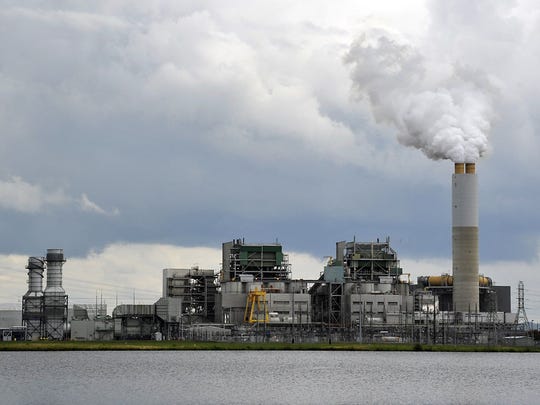
 On Wednesday, President Trump presided over the swearing in of Dan Brouillette to serve as the 15th U.S. Secretary of Energy. Vice President Mike Pence administered the oath of office. President Trump nominated Brouillette in November following the announcement of former Secretary Rick Perry’s resignation. He was confirmed last week by the U.S. Senate with a vote of 70-15. The second day on the job as Secretary, Brouillette came out swinging–at both New York and Russia.
 We’re always on the lookout for new and better ways to counter the blizzard of lies and smears against shale energy and fossil fuels coming from Big Green and its empty-headed, regurgitating supporters. Honestly, how can you counter the pile of crap they spread via mainstream media day in and day out? Perhaps our Canadian cousins to the north can show us the way. The Province of Alberta (the official government of Alberta) has opened an “energy war room” to push back against all the lies being spread about fossil fuels–in particular lies about Canadian tar sands from which a great deal of oil is extracted.

 There is a double standard in existence in New York. A CORRUPT double standard. And the corruption comes from Andrew Cuomo. In 2014 judges on NY’s highest court, the Court of Appeals (all them appointed by the governor) voted to uphold a disastrous energy policy that grants town boards of local municipalities the right to ban fracking, should the state ever allow it, in an entire community (see
  MDN editor Jim Willis had the pleasure of attending yesterday’s S&P Global Platts “Global Energy Outlook Forum” yesterday in New York City. Each year Platts hosts this event, assembling some of the best thinkers and industry participants from across all energy sectors to discuss what happened during the previous year, and what’s on the way next year and down the road with respect to energy. All kinds of energy.
 If there is one defining characteristic of a truly conservative Republican, it is that he or she does not like higher taxes. On anything. Conservatives know that higher taxes equal less freedom of individual choice. And higher taxes feed (and perpetuate) the bureaucratic Big Government machine. A lower taxes philosophy is baked into the true conservative’s DNA. Yet a group of brainwashed college students professing to be Republican and conservative (they’re neither) has just launched a group called Young Conservatives for Carbon Dividends to lobby for an insane carbon tax.
 As it turns out, Exxon didn’t know. You may recall the hue and cry from radical anti-fossil fuelers that #ExxonKnew–knew they were toasting mom earth by extracting and encouraging the burning of oil and natural gas. The New Attorney General’s office launched an investigation, and then a lawsuit, charging the same thing. The NY AG claimed Exxon had defrauded shareholders by covering up knowledge of global warming. The first lawsuit to go to trial against Exxon for causing global warming was in NY, where the AG (Letitia “Tish” James) headed up a disaster of a lawsuit. She (and her office) was thoroughly and completely humiliated by a NY judge who said she never proved anything. Her team’s performance was worse than that of a first-year law student.
 In a new report titled “Getting Greener: Cost-Effective Options for Achieving New York State’s Greenhouse Gas Goals,” the Citizens Budget Commission (of New York) attributes the 13% greenhouse gas (GHG) emissions drop New York State saw between 1990 and 2016 to an increased usage of natural gas and nuclear power. According to the nonpartisan Commission, New York is “already green” and if it wants to stay that way, it needs MORE natural gas, not less!
 The National Whistleblower Center (NWC), a corrupt and partisan (Democrat) nonprofit group, has laughingly launched what it calls a “Climate Corruption Campaign” to “enlist whistleblowers in the fight against fraud and other crimes in the three industry sectors responsible for the vast majority of the world’s carbon pollution: oil and gas, coal, and industrial logging.” What a sick joke.
 The U.S. Supreme Court yesterday refused to hear a case that challenged a ruling in the Hoopa Valley Indian Tribe case–a ruling/case that has HUGE implications for Williams’ Constitution Pipeline running through New York State. The Supreme Court rejection is a crushing defeat for Big Green groups Trout Unlimited and California Trout, and very good news for the Constitution project.
 Williams, the pipeline giant, held its annual analyst day in New York City last Friday. The company’s top brass was there to wow and woo investors with the company’s plans for 2020 and beyond. In reading about the session, we picked up on some startling statistics. Stats like Williams now provides 30% of all LNG feed gas in the U.S. And most of that (all of it?) comes from the Marcellus/Utica.