
Ohio Tax Commissioner Putting New O&G Pipelines at Risk
 The Ohio Tax Commissioner is facing a lawsuit from Rover Pipeline over an aggressive property tax assessment that inflates the project’s market value. The dispute centers on the state treating $2.2 billion in weather-related construction overruns and an unrealistic “infinite lifespan” assumption as value-adding assets. Critics argue that this approach violates constitutional principles of fair market valuation, under which taxes should reflect what a willing buyer would pay rather than total development costs. Read More “Ohio Tax Commissioner Putting New O&G Pipelines at Risk”
 On July 25, 2025, House Natural Resources Committee Chairman Bruce Westerman (R-AR) and Rep. Jared Golden (D-ME) introduced the Standardizing Permitting and Expediting Economic Development (SPEED) Act to streamline federal environmental reviews for energy and infrastructure projects, addressing delays blamed for hindering U.S. construction (see
  A big, fat, red flag has just been waved by researchers at Auburn University and Stanford University regarding the future of hydrogen as a nirvana energy source.
  The Marcellus/Utica rig count gained 1 rig two weeks ago in the Ohio Utica. The combined count hit 39 total rigs. Last week, the M-U maintained that count—the most rigs it has operated in more than a year. Pennsylvania has held at 18 active rigs for five consecutive weeks. Ohio picked up 1 rig two weeks ago and now operates 14 rigs. West Virginia maintained its 7 rigs, which it has operated since May 30. There were 24 rigs targeting the Marcellus and 15 targeting the Utica, for a combined 39 rigs in the M-U. The national count did not fare so well, losing 6 rigs, down to 542 active rigs, the lowest national count since September.
  Two weeks ago, MDN brought you the news that Antero Resources, the country’s fifth-largest natural gas producer and largest producer in West Virginia, had cut a deal to buy WV driller and midstreamer HG Energy II for a combined (upstream & midstream) $3.9 billion (see
  In 2018, Equitrans Midstream, the builder of the 303-mile Mountain Valley Pipeline (MVP), proposed extending the MVP pipeline (after completion) by an additional 75 miles from the current terminus in Pittsylvania County, VA, to Alamance County, NC, to provide natural gas for heating and electric power generation. The 75-mile extension was called MVP Southgate. In December 2023, Equitrans announced it was significantly changing the project, cutting it by more than half and increasing the amount of gas flowing through it (see
  Natural gas liquids (NGLs) include “heavier” hydrocarbons that come out of the ground along with methane (CH4). The most prevalent NGL by volume is ethane (C2H6). Another common NGL is propane (C3H8). And yet another is butane (C4H10). Depending on the location, all of those NGLs are produced in abundance in the Marcellus/Utica region. So, it should not come as a surprise that manufacturing plants that use NGLs as feedstock would decide to locate facilities in the region to leverage low-cost NGLs. India-based Thirumalai Chemicals Ltd. (TCL) is moving into pre-commissioning and startup activities at its new manufacturing facility in West Virginia (near Moundsville, Marshall County) and is progressing toward startup operations.
  The Greene County Planning Commission recently voted 8-1 to approve Phase 1 of “Project Hummingbird,” a massive data center complex proposed for the former Robena Mine site in Monongahela Township. This initial phase focuses on land grading, reclamation, and site preparation for a “power island” featuring two natural gas turbines totaling 910 megawatts (MW) and a water treatment plant. The plant will use Marcellus/Utica gas to power it.
 In April, Knighthead Capital Management, Homer City Redevelopment (HCR), and Kiewit Power Constructors Co. announced a plan to convert the former Homer City Generating Station, previously the largest coal-fired power plant in Pennsylvania (Indiana County, 50 miles east of Pittsburgh) into a more than 3,200-acre natural gas-powered data center campus, designed to meet the growing demand for artificial intelligence (AI) and high-performance computing (see
  In August 2014, the Marshall County, WV board of commissioners voted to approve a plan to build a Marcellus Shale-powered electric plant in the county (see
  Data centers—large facilities full of computers—have been in the news a lot over the past year. The internet and tech companies like Facebook, Google, and Amazon gave rise to data centers. But a new/renewed emphasis emerged a year ago with the unveiling of artificial intelligence (AI), which is now being used by a large portion of the population. Did you know that there are currently 4,149 active data centers in the U.S.? And that another 2,788 have been announced/planned, primarily related to AI? That’s from a fantastic new report from the American Edge Project (AEP) and the Technology Councils of North America (TECNA). Earlier this week, they released “America’s AI Surge: Powering Investment, Jobs, and Growth in Every State” (full copy below). We’ve extracted information specific to the Marcellus/Utica region from the report.
  In April, Knighthead Capital Management, Homer City Redevelopment (HCR), and Kiewit Power Constructors Co. announced a plan to convert the former Homer City Generating Station, previously the largest coal-fired power plant in Pennsylvania (Indiana County, 50 miles east of Pittsburgh) into a more than 3,200-acre natural gas-powered data center campus, designed to meet the growing demand for artificial intelligence (AI) and high-performance computing (see
  In June 2023, Dominion Energy announced plans to build four small “peaker” electric generating plants in Chesterfield County near Richmond (see
 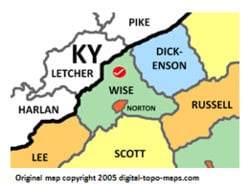 Great news about another new gas-fired power plant coming to Virginia—a plant that will use Marcellus/Utica molecules. Red Post Energy Group and Wise Innovation Hub Venture (OASIS) have signed a Letter of Intent to develop power infrastructure for a major technology and data center hub in Wise County, Virginia, in the southwestern corner of the state. Known as the Maverick Project, this phased initiative aims for a total capacity of 600 megawatts, beginning with an initial 100-megawatt phase.
  This is sad and unexpected. Five weeks ago, MDN reported that Energy Transfer was holding off on a final investment decision (FID) for its Lake Charles LNG export project until 80% of the project had been sold to equity partners (see