
OH Supreme Court Rules Independent Landmen Need Real Estate License
 Sometimes the law, and justice, is mysterious to us. Last November we told you about an Ohio Supreme Court case with profound implications for both landmen and for the drillers who employ and use them (see OH Supreme Crt Considers Whether Landmen Need Real Estate License). The case, Dundics v. Eric Petroleum Corp., was appealed to the Ohio Supreme Court by Dundics who was not happy with the outcome in lower courts that ruled landmen must have a real estate license in order to get paid for their valuable services. Even more to the point, if you don’t have a real estate licence, the company hiring you (like Eric Petroleum) can decide to not pay you–and it’s OK! The Supremes ruled at the end of August to uphold that principle. That is, if a landman is compensated via a commission and/or royalties for the deals he or she brokers, that person needs to have a real estate license. And if they don’t have such a license, they are considered (under the law) to be committing fraud. (It is our understanding that if the landman is paid a “day rate,” that is, paid a flat rate by the day, or if the landman is an employee of the drilling company, someone whose compensation is not directly tied to the number and value of deals, that landman does not need a real estate license. Please verify that!) The Ohio Supremes decided, in essence, that when you accept a commission or are paid a percentage of each deal, you must have a real estate license. In the case of Dundics v. Eric Petroleum, Mr. Dundics was repeatedly assured (according to the court documents we read) by Eric Petroleum that he (Dundics) would be compensated according to an agreed-on formula. But Dundics didn’t have a real estate license, so Eric Petroleum abrogated the agreement–with the court’s blessing…
Read More “OH Supreme Court Rules Independent Landmen Need Real Estate License”
 Two weeks ago MDN told you that liberal Democrat State Rep. Glenn Holmes (from Girard, Trumbull County, OH) is attempting to use a hammer to kill a fly (see
  MDN previously told you about a new natural gas-fired plant planned for the socialist paradise of Rhode Island, home to old money and people who oppose change of any kind (see
 Last week we told you that the forces of good had overcome the forces of evil–evil being the Sierra Club and the Southern Environmental Law Center (SELC) and their mission to stop the Atlantic Coast Pipeline (ACP) from getting built (see
  The price tag to build the 303-mile Mountain Valley Pipeline is going up. When first announced, the project, which will run from Wetzel County, WV to the Transco Pipeline in Pittsylvania County, VA, was originally estimated to cost $3.5 billion. That number was tweaked this summer to $3.7 billion. Now MVP (i.e. EQT Midstream) says it will cost a whopping $4.6 billion–more than a billion dollars higher than the original estimate. Why the big hike? Two things, says MVP: (1) A work stoppage imposed by the courts and by FERC (thank you Sierra Club), and (2) heavy rain. The rise in cost is due more the former rather than the later. It was only yesterday we ran a story about how much it costs, per mile, to build a major pipeline in the northeast (see
  The Pennsylvania Senate Environmental Resources and Energy Committee yesterday heard testimony from several witnesses on the topic of foreign meddling meant to suppress or stop Marcellus Shale production in the Keystone State (and beyond). There were three witnesses, all of them stars (and all MDN friends). One of the three was MDN buddy Tom Shepstone, writer of the always-excellent
  Perhaps this is an overstatement and a tad too generalistic, but once again Republican lawmakers have shown they are the party of law and order, while Democrats have shown they are the party of lawlessness and disorder–at least in Pennsylvania. Yesterday the PA House Environmental Resources and Energy Committee tweaked and then passed (on a party line vote) Senate Bill (SB) 652 which makes trespassing on rights-of-way of “critical infrastructure” (pipelines, power lines, refineries, etc.) a felony instead of a misdemeanor. Democrats don’t like it, because their party’s members are typically the ones who engage in illegal trespass in order to slow down and block work on things like don’t like–like pipelines. Dems maintain they have a right to “free speech” to illegally block pipeline work, just because they don’t like it and can’t stop it using lawful means. The difference between the two sides could not be more clear…
 Sometimes you can’t convey it all in a headline that should be 65 characters or less (in order to make the Google gods happy). In this case, the longer headline we would have used is this: “Lobbyists tell Pennsylvania lawmakers that nuclear powered electric plants are safer from cyber and physical attack than natural gas-fired plants (and therefore should be preferred to gas-fired plants).” That was the upshot of a hearing held yesterday by the PA House-Senate Nuclear Caucus, a hearing in which nuclear energy lobbyists claimed “no mandatory physical or cyber security standards exist for natural gas systems” in contrast to the nuclear energy industry that has to meet “demanding security requirements.” We should hope so! We hope that nuke facilities are more strictly regulated than natural gas facilities. If a nuke goes offline/has an accident/is overtaken in a physical attack, thousands of people die and it’s an environmental disaster. If a natgas-fired plant goes offline, the lights go out for a while. Big difference, we would say…
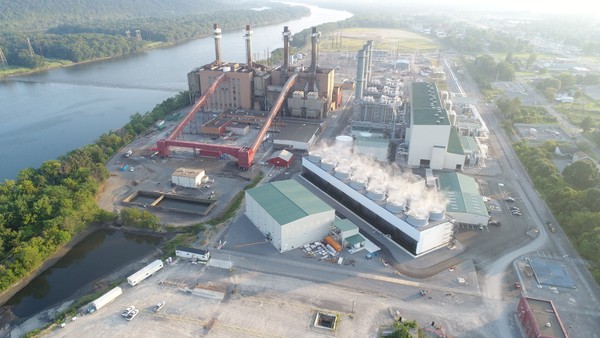
 Dominion Energy has found a buyer for two of its natural gas-fired electric generating plants, one located in Pennsylvania, the other in Rhode Island. In July MDN told you that Dominion was shopping the two plants, hoping to raise $1+ billion (see
  The short answer to the question posed in our headline is, “Too much.” The reason it’s costing too much is because of a blizzard of frivolous lawsuits launched by anti-fossil fuel groups, funded with money from big foundations (see
  Diversified Gas & Oil has been on a mission to buy as many non-shale (conventional) oil and gas wells as it can in the Appalachian Basin. In June, MDN brought you the exclusive news that Diversified had purchased EQT’s Huron Shale assets in Kentucky, Virginia and West Virginia for $575 million (see
  Why can’t liberal Democrats, for once, just be honest about their intentions and motivations? A liberal Democrat who sits on the Allegheny County (PA) Council, Anita Prizio, is floating a plan that requires drillers to provide information on their oil and gas leases (shale AND conventional) in digital format to the county recorder of deeds. The supposed aim is to create an easy-to-access database/registry showing which land has been leased and which has not. We won’t lie (unlike lib Dems)–such a registry would be worth its weight in gold to many people, including landowners, other drillers/competitors, but most of all to antis who want to make trouble. Why do we say Ms. Prizio has ill-intent, even though she claims she has no ulterior, anti-drilling motive? Because she’s floating this plan for a lease registry at the prompting of radical leftist and anti-driller Doug Shields, from the odious group Food & Water Watch. Before joining FWW, Shields was himself a Pittsburgh Councilman for 20 years–lobbying for a total frack ban on more than one occasion (see
  We have a lot of lawyer friends, and lot of loyal MDN readers are lawyers. With all due respect to our lawyer friends and readers, we are outraged at the amount of money awarded to the attorneys in a recent oil and gas case in PA. Let’s back up. This post is primarily a warning to drillers and their contractors to play it straight when it comes to classifying who is exempt from overtime and who is not. You know who’s really “hourly” and who isn’t, and if you screw that up, it will come back to bite you–in a major way. A group of oilfield service workers in western PA were, according to the workers, misclassified as exempt from overtime when working over 40 hours per week. They sued. The details are below, but the short version is that the eight employees who stuck it out until the bitter end won their case. Collectively they got just over $1 million in back wages and “damages.” However (and here’s our outrage), the lawyers got a “reasonable fee” of $2.3 million! Really? It’s “reasonable” that the lawyers got more than twice what the employees got?…