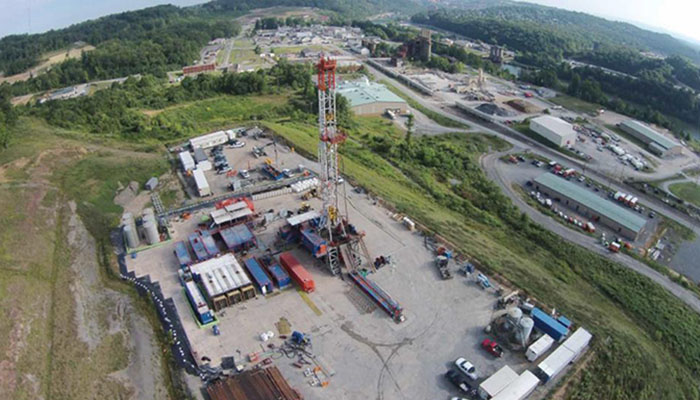
We spotted an announcement by Columbia Gas (subsidiary of NiSource) that says they are withdrawing a rate case–their request filed earlier this year with Massachusetts to increase natural gas rates by $33 million. Probably a good idea in light of the recent tragedy (see Local NatGas Pipes Explode Near Boston Killing 1, Injuring 25). The rate case got us to thinking about the recent tragedy. It dawns on us that there’s a fair bit of irony in this tragedy–a lesson we can learn. For years political leaders in states like Massachusetts and New York, heavily influenced by radical environmentalists (afraid of their power and money) have trash-talked natural gas. Those leaders, people like Elizabeth Warren and Maura Healey in MA and Andrew Cuomo in NY, have told their constituents that natural gas is evil, it’s “dirty,” it’s unnecessary. “We don’t need more pipelines that will perpetuate another 50 years or more of dependence and reliance on these filthy fossil fuels” has been their message. And so, they are directly responsible for rejecting new pipeline projects to bring cheap Marcellus gas to New York and New England, on the theory that magical, unicorn-like “renewables” will ride in to save the day. “In fact…” (they say), “…if we only had ‘the will,’ we could end our use of evil fossil fuels right NOW, today. Certainly in another 10 or 20 years at most.” And then this explosion occurs, this disaster that killed one, injured 25 and burned some 80 homes and businesses. Columbia has pledged to replace 48 miles of underground delivery pipeline. In the meantime (please don’t misunderstand us here)–some 8,600 homes and businesses are now living what the politicians and radical environmentalists have preached for years–no gas. They are without gas for weeks–likely for months. Can you imagine no gas for your stove to cook with? No hot water for showers or laundry? And as the temps drop, no heat to stay warm? While we’re not excited nor happy to see this (quite the opposite), we’d like to ask those 8,600 homes and businesses–what do you think of your no-gas future now? Is this how you want to live, not only today, but 10 or 20 years down the road? Can you really live without natural gas? Perhaps this situation will give them, and us, a new perspective on all this senseless talk of replacing natural gas with renewables…
Read More “Further Thoughts on Columbia Gas Disaster in Massachusetts”

 Two days ago we reported that the Federal Energy Regulatory Commission had finally lifted the stop-work order for Dominion Energy’s huge 600-mile Atlantic Coast Pipeline (see Victory! FERC Lifts Stop Work Order for Atlantic Coast Pipeline). In a new article talking about ACP workers resuming work on the project, we learn there are a massive 17,000 workers who work on this project. We also learn something else: Even though there has been no work on the project for over a month, since FERC shut down all work on it in early August (see FERC Shuts Down ALL Work on Atlantic Coast Pipeline), Dominion did not lay off those 17,000 workers! When the same thing happened to EQT Midstream’s Mountain Valley Pipeline, EQT laid off roughly half of their pipeline workers–perhaps as many as 3,000 (see Sierra Club Forces Thousands of Pipeline Workers Out of Work). The fact that Dominion didn’t lay off any workers is truly remarkable. Why did’t they lay them off? And what did those workers do in the meantime? The answers will surprise and impress you…
 In early June MDN told you that Dominion Energy’s Cove Point LNG export plant is due to shut down–after being online for just a few months–for scheduled maintenance (see
  JobsOhio, a private, nonprofit corporation that works closely with the state (works on behalf of the state) to drive job creation and new capital investment in Ohio by attracting business, has decided it’s time to once again wave the flag, blow the trumpet, and talk about the shale industry in the Buckeye State. And well they should! According to research quoted by JobsOhio, Ohio, largely due to the Utica Shale, has attracted an amazing $70 billion in new private sector energy investments from 2011 to 2017. This is truly stupendous stuff! That’s PRIVATE (non-tax, non-government) money flowing into Ohio mainly because of the Utica Shale. Not only that, but roughly 12,000 high-paying jobs have been created in Ohio thanks to the Utica. Those are “direct” jobs. When you include indirect jobs–such as welders, fabricators and logistical workers–the number goes to 100,000! God bless the Utica. Here’s another fact: Even though Ohio neighbor Pennsylvania produces far more natural gas than Ohio, Ohio’s production (as a percentage) has grown faster than PA, faster than any other state, for four years in a row…
 In 2016, Philadelphia’s SEPTA (Southeastern Pennsylvania Transportation Authority) announced plans to build a Marcellus gas-powered electric plant to provide electricity to SEPTA’s northern Regional Rail lines and a bus garage (see
  Last Thursday a major accident occurred 25 miles northwest of Boston when natgas delivery pipelines owned by Columbia Gas (NiSource) in three communities exploded and caught fire at more than 80 locations (see
  The Ohio Supreme Court has ruled that yet another ballot measure backed by the Community Environmental Legal Defense Fund (CELDF) in Columbus, OH, a measure meant to ban fracking to send a “you’re not welcome” message to Utica drillers, is in fact illegal and will not appear on the November ballot. In July we told you about a group of anti-fossil fuel nutters, backed by CELDF, making a run at implementing an illegal frack ban in Columbus, OH (see
  What is it about teachers’ unions that makes them so greedy for other people’s money? We’ve told you, for years, about the quest by Pennsylvania’s teachers’ unions (most of them in the Philadelphia area) who want to raid the coffers of Marcellus drillers via a confiscatory severance tax slapped on top of an existing impact tax slapped on top of corporate income taxes. You can never have too many taxes in education-land. That’s the only way they get paid. In West Virginia it’s the same routine. WV already has a severance tax, a nosebleed-high severance tax of 5% (one of the highest in the country). And yet teachers want to increase it–so they can grab that money for moi (see
  Ever hear of the “cracker effect”? No, we hadn’t either. Not until we read about a new study by a husband and wife team from Washington & Jefferson College. The pair studied the economic impact of cracker plants on surrounding communities–some 34 ethane crackers in 16 counties around the country. Most of the cracker plants are located along the Gulf Coast. The purpose of the study is to accurately forecast what will happen with Shell’s new $6 billion ethane cracker currently under construction in Beaver County, near Pittsburgh. What might the real, measurable economic effect be from Shell’s cracker? According to the authors, the Shell cracker will generate ~7,400 permanent, long-term jobs. Crackers not only create new jobs, they boost wages in cracker counties by nearly 13% over counties without crackers. But counties without a cracker plant benefit too. Counties bordering counties with a cracker plant see lower unemployment rates. No mystery there. While the authors alluded to some negatives from crackers, we were hard-pressed to find any! It sure looks like everything is coming up roses with the Shell cracker. The numbers prove it…
 Although the push is on to get Marcellus/Utica molecules to new markets where they can fetch higher prices, there is a group who has benefited in a major way from an abundance of cheap, clean-burning shale gas. That would be the residents and businesses located in West Virginia. Industry group Consumer Energy Alliance (CEA) has just published a new report that reveals WV residents and businesses have saved a cumulative $4 billion from 2006-2016 as a result of the decreasing price of natural gas in the state. You may recall not long ago CEA published a similar study for Pennsylvania (see
  A pair of newly published research papers from Dartmouth College may shed new light on radioactivity in shale waste water. We previously highlighted research from Dartmouth in 2015 and again in 2016 dealing with Marcellus Shale and water (see
  Once again, the forces of good have overcome the forces of evil–evil being the Sierra Club and the Southern Environmental Law Center (SELC) and their mission to stop the Atlantic Coast Pipeline (ACP) from getting built. Yesterday the Federal Energy Regulatory Commission (FERC) lifted a previously issued stop-work order that had idled work along the entire 600+ mile ACP. The stop-work order came in early August after a federal court pulled permits for approximately 100 miles of ACP in response to a lawsuit filed by the anti-American Sierra Club and a few other groups, including the SELC (see
  An article appearing on the Pittsburgh’s PBS station WESA website is, in a phrase, fake news. The article boldly states in its headline (and text) that: “Only 11 Percent Of Pennsylvania’s Natural Gas Pipelines Are Mapped For The Public.” The implication, the slight-of-hand intended to mislead lazy readers, is that 89% of natural gas pipelines in PA are not mapped at all. That simply is not true. The second graf of the story says this: “There are three types of natural gas pipelines: large transmission lines, medium-sized gathering pipelines and small distribution lines that go to homes and businesses. Transmission lines are the only ones mapped and disclosed to the public by the federal government, and they make up about 11 percent of total pipelines. There are 89,296 total natural gas pipeline miles in the commonwealth; the vast majority are small distribution lines, but more than 1,105 miles worth are gathering pipelines.” Does that not overtly imply the “vast majority” of PA’s pipelines are not even mapped? Pennsylvania recently went through a major revision of the state’s 811 system. Not only are gathering pipelines to shale wells mapped and included in the 811 system, so too are gathering lines to conventional wells. The only pipelines not part of the 811 system are those that run to “stripper wells”–wells that produce barely a puff of gas and therefore there’s no danger if you do happen to hit one when digging. The state Public Utility Commission wants to include stripper well pipelines in 811 too (see
  Last Thursday a major accident occurred 25 miles northwest of Boston when delivery pipelines owned by Columbia Gas (NiSource) in three communities exploded and caught fire at more than 80 locations (see
  Each month when we bring you the latest U.S. Energy Information Administration (EIA) “Drilling Productivity Report” (DPR) we say the same thing: “We shattered another record.” And so it is again this month, with the DPR issued yesterday. The DPR is the EIA’s best guess, based on expert data crunchers, as to how much each of the U.S.’s seven major shale plays will produce for both oil and natural gas in the coming month. The Marcellus/Utica region (called Appalachia in the report) continues to see production go through the roof. For six months in a row Marcellus/Utica production grew at roughly one-third of a billion cubic feet–massive! EIA says in the coming month of October, M-U production will grow another 298 million cubic feet per day (MMcf/d). Hey, it’s not a full one-third Bcf, but it’s close enough. The big news is that (a) M-U production will hit another new all-time high–of 29.4 Bcf/d of production; and (b) natural gas production for all seven plays will hit another new all-time high–of 73 Bcf/d. Run the numbers and you’ll see that M-U production is 40% of all shale gas production. Let’s not ignore shale oil production, which will go up another 79,000 barrels per day in the coming month across all shale plays to a record-breaking 7.6 million barrels per day. Month after month after month we keep breaking records…