
Williams 17/18 Update: Full Atlantic Sunrise Startup Slightly Delayed
 Last week Williams, the largest pipeline/midstream company operating in the Marcellus/Utica region, released its fourth quarter and full year 2017 update. While the company lost $342 million in 4Q17 due to “non-cash charges related to Tax Cuts and Jobs Act of 2017,” the company made a profit of $871 million for the year, up 100% from making $431 million in 2016. The company brought five big projects online in 2017–Gulf Trace, Hillabee Phase 1, Dalton, New York Bay and Virginia Southside II–which added an extra 2.8 billion cubic feet per day of capacity and led to record-breaking volumes of gas flowing along the Transco pipeline (see Williams Marcellus Buildout Leads to Record Transco Pipe Volumes). However, it was the Atlantic Sunrise Pipeline project that stole most of the limelight in last week’s update. Atlantic Sunrise is a $3 billion, 198-mile pipeline project running through 10 Pennsylvania counties to connect Marcellus Shale natural gas from northeastern PA with the Williams’ Transco pipeline in southern Lancaster County, PA. The pipeline will be ready in July, on schedule. However, an associated compressor station will take “a few months longer” than July, meaning the pipeline won’t be online until early fall sometime (not on schedule). Below is last week’s Williams update, a copy of the latest PowerPoint presentation, and excerpts from the analyst phone call…
2/22/18 Update: Our original thought was that with a delay in the compressor station starting up, the entire pipeline would be delayed in starting up. Not true! We reached out to Williams for an explanation for how the pipeline could stay on schedule without the compressor going online initially. We got this statement back: “The gas that is placed into the system by producers enters the pipeline at very high pressures. In addition, we have existing Transco compression near the terminus of the line that is pulling the gas through the line. This push/pull dynamic is what allows gas to flow through the pipe prior to the full commissioning of the project’s compression.” So there you have it. While the full startup will be slightly delayed, the pipeline will still flow much of the volume intended–on schedule in July.
Read More “Williams 17/18 Update: Full Atlantic Sunrise Startup Slightly Delayed”
 TransCanada, one of Canada’s leading midstream/pipeline companies, cooked up a deal in 2016 to pipe natural gas from Canada’s West Coast to the East Coast in order to fend off cheap supplies of Marcellus/Utica gas that will flow into Canada from the NEXUS and Rover pipelines (see

 This simply must stop. We MUST begin to countersue (monthly/weekly/daily if necessary) the Big Green radical groups that continue to bring a flood of lawsuits against legally permitted pipeline projects. We must! It is the only way to even the playing field. Mountain Valley Pipeline (MVP)–a $3.5 billion, 301-mile pipeline that will run from Wetzel County, WV to the Transco Pipeline in Pittsylvania County, VA–is one of the targets of Big Green. MVP has had so many lawsuits filed against it, we can’t keep track of them all. Two recent examples. (1) Five radical green groups, including the Sierra Club, Appalachian Voices, Chesapeake Climate Action Network, West Virginia Rivers Coalition, and Wild Virginia, sued the Federal Energy Regulatory Commission (FERC) in federal court in early January over FERC’s approval of the project (see
 Something momentous has just happened. The loons at the Sierra Club, who once loved natural gas until they began irrationally hating it, have just admitted to the world that burning natural gas to produce electricity is A.O.K. with them. Brunner Island Power Plant is located in York County, PA, straddling Lancaster County. It is a huge, 1,490 megawatt coal-fired electric generating plant, and has been the target of environmentalists for years. In February 2017, MDN told you that the new owner of the plant is investing $100 million to retrofit the plant so it can, at least part of the time, burn Marcellus Shale gas (see
 MDN has written a number of posts about an effort in West Virginia to correct an ongoing issue called co-tenancy (
 MDN told you last week that anti officials who lead the City of Green, OH (Summit County), had finally faced the reality that NEXUS Pipeline–a $2 billion, 255-mile interstate pipeline that will run from Ohio through Michigan and eventually to the Dawn Hub in Ontario, Canada–will come through their vicinity (see
 In what can only be considered a government shakedown, Sunoco Logistics Partners agreed last week to pay a massive (historically high) $12.6 million fine to the PA Dept. of Environmental Protection (DEP) for “permit violations related to the construction of the Mariner East 2 pipeline project” (see
 Lots of news coming out of Antero Resources, one of the Marcellus/Utica’s biggest (and best) drillers. Antero issued its fourth quarter and full year 2017 update, along with a statement about the company’s proved reserves, earlier this week. Perhaps the biggest news is that after losing $849 million in 2016, net income for Antero in 2017 was $615 million–a $1.4 billion swing (to the good) over the course of a single year! Average daily production in 2017 was 2.25 billion cubic feet equivalent per day (Bcfe/d)–a 22% increase over 2016. Zooming in on just the fourth quarter, Antero completed and placed on line 28 Marcellus and 10 Utica wells. Antero said they are getting into long laterals. Of the Marcellus wells drilled in 4Q17, nine had laterals over 12,000 feet, with two of those exceeding 14,000 feet in length (over 2.5 miles horizontally underground). Even with long laterals, Antero decreased the average number of days it takes to drill a well–from 15 to 12 (20% less). They also upped the amount of sand they use in fracking by 23%–to over 2,000 pounds of sand per foot. At the end of 2017, Antero estimates it had 17.3 trillion cubic feet equivalent of natural gas sitting in the ground that can be extracted using today’s technology at today’s prices (“proved reserves”). That 17.3 Tcfe is 12% higher than at the end of 2016. Below is the whole enchilada–two updates from Antero, excerpts from the analyst phone call, and the latest and greatest PowerPoint presentation…

 Two days ago we reported that the West Virginia House of Delegates was due to vote on House Bill (HB) 4268, the “Co-tenancy Modernization and Majority Protection Act” (see
 Pennsylvania Gov. Tom Wolf’s Dept. of Environmental Protection (DEP), the agency charged with overseeing oil and gas drilling in the state, “blindsided” the shale industry last week with a proposal to hike the fee required when submitting an application to drill a new shale well (see

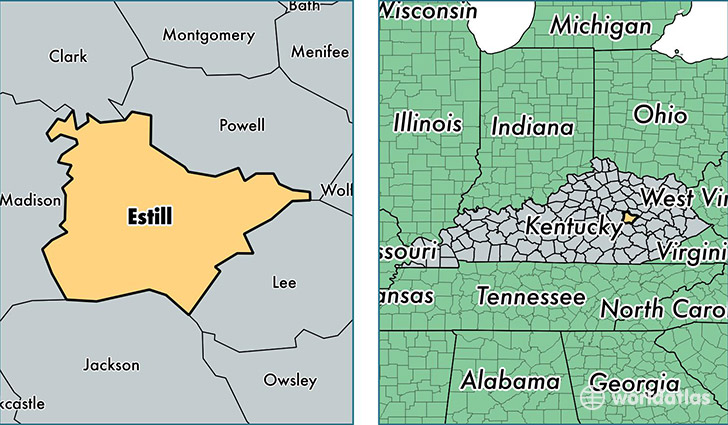
 Kentucky antis have gone to court to try and block a plan by Kinder Morgan to convert a portion of the Tennessee Gas Pipeline that flows natural gas from the Gulf Coast to the northeast, to reverse the pipeline and flow natural gas liquids from the Marcellus/Utica region to the Gulf. Part of the 964-mile project runs through Kentucky (see
 As we reported last week, President Trump’s marvelous tax cut has had some unintended (negative) consequences for pipeline companies (see