
81% of 2016 Ohio Valley Investment Came from One Natgas Project
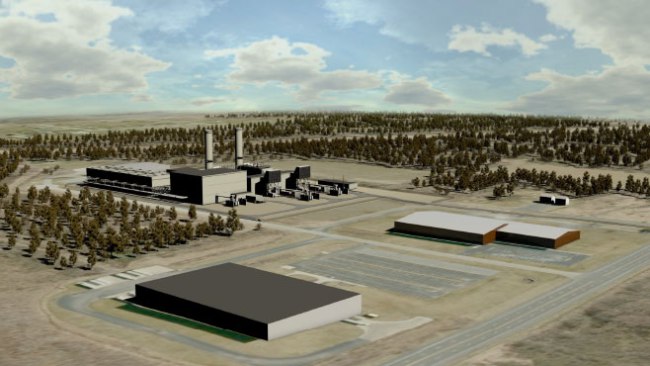
We spotted a story that seemed to us like the Ohio Valley was doing some justified bragging about investment in the region during 2016. Recently, the “Youngstown/Warren, Ohio Economic Development 2016 Report Card” was released. The Report Card was a joint effort of the Youngstown/Warren Regional Chamber of Commerce, OhioMeans-Jobs, the cities of Warren and Youngstown, the Youngstown Business Incubator and Youngstown State University. The Report Card found that 111 projects led to a whopping investment of $1.1 billion–in 2016! Or at least you can say, that much money was committed in 2016. Some of the actual spending was made last year, some this year, likely some over the next several years. But hey, let’s not split hairs. This is an achievement to crow about. But when you look at the project list, one project accounts for 81% of the total–the Lordstown Energy Center. The $890 million Lordstown Energy Center is an electric generation plant planned for Lordstown (Trumbull County), OH that will be powered with Utica Shale gas. The project won village approval in the summer of 2015 (see Lordstown $800M Gas-Powered Electric Plant Gets Village Approval). It then won state approval in the fall of 2015 (see Lordstown $800M Gas-Powered Electric Plant Gets OH State Approval). The project broke ground in June 2016 (see Lordstown Energy Center Breaks Ground on $890M Electric Plant). Our point: Without deregulated electric markets in Ohio, and without the Utica and Marcellus Shale, the Ohio Valley investment last year would have been, at best, $220 million, not $1.1 billion… Read More “81% of 2016 Ohio Valley Investment Came from One Natgas Project”
 “Stupid is as stupid does.” – Forrest Gump. New England needs more natural gas. Why? Because they heat with it, but more importantly, because the produce electricity with it. New England has the highest electric rates in the country–up to four times higher than other regions. These are indisputable facts. In early 2014 all of the six New England state governors sent a letter supporting new pipeline infrastructure to bring cheap, abundant, clean-burning Marcellus Shale gas to New England (see
  Somebody somewhere isn’t telling the truth. Earlier this week MDN brought you the news that Energy Transfer’s Rover Pipeline project has been fined by the Ohio Environmental Protection Agency (OEPA) for $431,000 for “18 incidents involving mud spills from drilling, stormwater pollution and open burning at Rover pipeline construction sites have been reported between late March and Monday” (see
 Yesterday MDN brought you the news that Williams is talking with White House officials about federal intervention into the illegal refusal by the New York Dept. of Environmental Conservation (DEC) to issue water crossing permits for their Constitution Pipeline project (see
  While Williams is battling New York State in court, and in Washington, to get its Constitution Pipeline approved, another Williams project in neighboring Pennsylvania is much closer to construction–the Atlantic Sunrise Pipeline project. Atlantic Sunrise is a $3 billion, 198-mile pipeline project running through 10 Pennsylvania counties to connect Marcellus Shale natural gas from northeastern PA with the Williams’ Transco pipeline in southern Lancaster County. The Federal Energy Regulatory Commission (FERC) gave its final seal of approval for the project in February (see
  To say that how electricity in the Northeast gets generated has shifted dramatically over the past 10 years is an understatement. In the nine Northeast states, natural gas doubled its share of the region’s total generation to 41% in 2016, up from 23% in 2006. Coal-fired generation fell from 31% to 11% of generation over the same period. Nuclear-powered generation as a share of total generation remained relatively constant near 34%. And so-called renewables like wind and solar are almost undetectable as a percentage of electricity generation. Which means Andrew Cuomo’s insistence that New York get 50% of its electricity from “renewable” sources by 2030 is not only fantasy–it’s lunacy. The man is a crackpot if he thinks that will actually happen. Anyhow, the point of this post, which contains an article recently released by our favorite government agency, the Energy Information Administration, is that over the past 10 years, natural gas has essentially replaced coal in electric generation in the Northeast…
  New England, with its opposition to new natural gas pipelines, is shooting itself in the head when it comes to electricity supplies. A recent announcement from ISO New England, charged with maintaining electric reliability for New England’s power grid, says everything should be fine this summer when it comes to electric generation–BUT “forecasts show possibility of occasional tight system conditions.” Rolling blackouts anyone? Some 700 megawatts (MW) of expected new resources “are delayed and may not be available this summer.” Natgas-fired electric generators in New England have been begging and pleading for pipelines to bring more natural gas to the region–to feed their plants. Yet the dopes in New England, like Sen. Elizabeth “Pocahontas” Warren and Massachusetts Attorney General Maura Healy, keep shutting them out…
 Bret Stephens, until recently, was a writer for the Wall Street Journal. He’s your typical liberal–Democrat and big believer in man-made global warming hysteria. Stephens recently left the WSJ and joined the New York Times. His very first column in the Times, published at the end of April, tackles the issue of “the science is settled” when it comes to “climate change.” Stephens does not say he’s flipped sides and not does not believe in man-made global warming–he simply wants to acknowledge that algorithms and suppositions change, and it’s better to be honest about it now, rather than have some of your theories proven wrong later–leading to the belief that the entire meme is wrong. Stephens is the kind of intellectual lefty lib that, quite frankly, we respect. He’s willing to deal honestly with facts–not ignore them and pretend they don’t exist. And for that, his own posse turned around and viciously attacked him. Stephens, a “never Trumper” was used to being attacked by the right, but the attacks he’s now getting from the left are “perhaps worse” than those he ever received from the right…
 You can’t see we didn’t warn Rover Pipeline. In our story yesterday about the Ohio EPA’s frustration with Rover over regular spills of drilling mud (and other violations), we pointed out that the OEPA’s language is “Not good news for Rover, when one of the main state regulators (that can stop the project) is leveling criticisms like that” (see
  Does Williams have an “ace in the hole” with respect to the Constitution Pipeline? The Constitution, a ~$900 million, 124-mile pipeline planned to run from Susquehanna County, PA into Upstate New York, was approved by the Federal Energy Regulatory Commission (FERC) in December 2014 (see
 Moody’s Investors Service issued a report earlier this week saying an abundance of cheap, clean-burning Marcellus Shale gas threatens to “wreak havoc” in the electric generation market in the PJM area, which covers all or parts of DE, IL, IN, KY, MD, MI, NJ, NC, OH, PA, TN, VA, WV, and Washington, DC. According to Moody’s researchers, a large influx of natural gas power plants entering PJM Interconnection, due to cheap gas supplies from the Marcellus Shale, will pose “severe challenges for generators operating in the region” in the next few years. Because of the Marcellus “glut,” new plants coming online will drive down power prices, which “could lead” to widespread closures of coal power plants, and pressure operating margins for all generators, including other gas-fired plants. The prediction is that a low-price Armageddon will result in widespread corporate casualties. What can be done to avoid this hideous future? Nothing. The only thing power plant operators can do is cut their debt load, which they are doing. In other words, good old American competition (coming from Marcellus Shale gas) is making the PJM electric industry get leaner and more efficient. Imagine that…
  We’ve kept an eye on several LNG export projects along the Eastern shore of Canada (most of them in Nova Scotia) for some time. Why? Because they’re a huge potential market for Marcellus and Utica Shale gas. One of those projects, in Nova Scotia, is the Goldboro LNG project from Pieridae Energy. The U.S. Dept. of Energy approved the plant for exporting to non-free trade agreement counties in February 2016 (see
  Hold that decline curve! Researchers at Los Alamos National Laboratory have done “extensive data mining” and analysis of 20,000 shale gas wells. In a paper published in the journal Applied Energy titled “The shale gas revolution: Barriers, sustainability, and emerging opportunities” (full copy below), Los Alamos researchers say that refracking existing wells with new technology can transform those wells from “diminished producers” (so/so wells) into “high-performers” long after the wells had supposedly hit peak production. “We hypothesize that manipulating tail production could re-revolutionize shale gas extraction,” said lead author of the study, Richard Middleton. Refracking eliminates the cost of drilling a new bore hole, and provides a smaller environmental footprint. What’s not to love! Let’s get refracking…