
MVP Urges Appeals Court to Revive Civil Lawsuit Against Protesters
 We’re happy to see Mountain Valley Pipeline (now majority-owned by EQT) continues to vigorously pursue court action against so-called protesters who illegally blocked work during construction. These “protesters” (from out-of-state, possibly paid by Big Green groups to be there) thought they would skip out on taking responsibility for their actions. But MVP continues to hold their feet to the metaphorical legal fire, as well they should. MVP filed a civil lawsuit against four protesters for contributing to significant delays and costs. They must be held to account for their actions. On Tuesday, MVP asked an appeals court in West Virginia to reinstate its dismissed (on a technicality) civil case in county circuit court. Read More “MVP Urges Appeals Court to Revive Civil Lawsuit Against Protesters”
 In April 2023, MDN told you about the Adams Fork Energy project, a multi-billion-dollar clean ammonia production facility planned for Mingo County, WV (see
  Recently, two neighboring towns in Greene County, PA, declared a Disaster Emergency related to a “frac-out” at the EQT Lumber well that happened three years ago, in July 2022 (see
  The New York State Public Service Commission (PSC) is meeting today and will vote on whether to approve National Grid’s natural gas plan, which includes using more natural gas from the Williams Transco pipeline. More gas would be delivered to National Grid via the proposed Northeast Supply Enhancement (NESE) pipeline project that will add a new 23-mile pipeline from the shore of New Jersey into (on the bottom of) the Raritan Bay, running parallel to the existing Transco pipeline before connecting to the Transco pipeline offshore from Long Island. The odious National Resources Defense Council (NRDC) convened a Zoom call featuring dingbat actor Mark Ruffalo to trash-talk the project ahead of the vote.
  Evolution Well Services, headquartered in Houston with a regional office in Pittsburgh, specializes in electric fracking (“e-fracking”) — using natural gas from the well pad instead of diesel fuel to power turbines that create electricity to drive fracking pumps. It’s a much quieter, less-polluting version of fracking. EQT Corporation, the country’s second-largest natural gas producer, uses Evolution Well Services for much (all?) of its drilling. Evolution and EQT issued an announcement yesterday about a series of record-breaking achievements they’ve made in the Marcellus/Utica.
  Under orders from the Biden White House in 2022, Federal Energy Regulatory Commission (FERC) Chairman Richard “Dick” Glick tried to permanently enshrine global warming considerations as a requirement to approve all new pipeline projects (see
  In early April, MDN brought you the exciting news that pipeline giant Williams, via its subsidiary, Will-Power, is planning to build two Utica/Marcellus gas-fired power plants in the New Albany International Business Park in Licking County, Ohio (see
 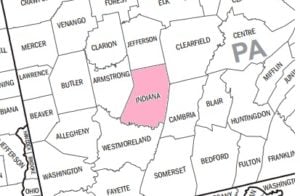 In April, Knighthead Capital Management, Homer City Redevelopment (HCR), and Kiewit Power Constructors Co. announced a plan to convert the former Homer City Generating Station, previously the largest coal-fired power plant in Pennsylvania (Indiana County, 50 miles east of Pittsburgh) into a more than 3,200-acre natural gas-powered data center campus, designed to meet the growing demand for artificial intelligence (AI) and high-performance computing (see
  Each fall in the September/October timeframe, Cove Point LNG shuts down for a few weeks (typically around three weeks) for annual maintenance. That time has arrived. According to a notice posted on the Berkshire Hathaway Energy Informational Postings website, reductions in flows to the Cove Point facility will happen between Monday, September 15, and Friday, October 10 (a whole month). Having said that, feedgas flows will not be zero during all of that period, but will be significantly reduced.
  Last week, MDN told you that there was a disagreement brewing between those who operate the PJM Interconnection power grid and Big Tech, including Amazon, Google, Microsoft, and others, regarding the issue of adding data centers to the PJM grid (see
  We’ve railed against the Jones Act for years. The Jones Act, passed in 1920, requires goods shipped between U.S. ports to be transported on ships that are built, owned, and operated by U.S. citizens or permanent residents. The problem is, big LNG tankers are all built, owned, and/or operated by foreign countries. You can’t fill up an LNG tanker in Sabine Pass or Cove Point and float it into Boston Harbor and unload it because the ship is not “U.S.-flagged.” It’s illegal under the Jones Act. We came close to repealing it during the first Trump administration, but ultimately failed (see
  The American Exploration & Production Council (AXPC) yesterday released a new study (full copy below) analyzing the upstream oil and natural gas sector’s profound impact on the U.S. economy. The study found that upstream, onshore independent producers supported 3.1 million jobs nationally, contributed to $277 billion in labor income, and paid $129 billion in taxes — accounting for 87% of the sector’s total economic contributions in 2024. As vital contributors to America’s energy security, independents accounted for over 85% of onshore crude and condensate production and over 90% of onshore gas production from 2022 to 2024.
  Earlier this month, we brought you the bombshell news that Antero Resources, the country’s fifth-largest natural gas producer and largest producer in West Virginia, is preparing to market its Ohio Utica assets, hoping to fetch $900 million to $1 billion (see
  In June, we reported that the Pennsylvania Environmental Hearing Board (EHB), a special court in PA that hears appeals of decisions made by the Department of Environmental Protection (DEP), had ruled in favor of CNX Resources to allow two previously permitted wells in Penn Township (Westmoreland County) to move forward with construction (see
  On August 17, Eureka Resources’ Williamsport Second Street facility (one of the three previously operated by Eureka) leaked some of its stored untreated wastewater, which ended up in the nearby Susquehanna River via a storm drain (see
  EQT Corporation, at one time the largest natural gas producer in the U.S. (now #2 behind Expand Energy), recently signed its third deal to buy LNG from a Gulf Coast liquefaction plant, positioning the company as an LNG trader in addition to being the second largest natural gas producer in the country and a major midstream player (see