
Energy Services | Industrywide Issues | Pennsylvania | Pipelines | Statewide PA | Transco | Williams
Williams Record M-U Volumes, Early Startup for SET, Leidy South
 During the Williams third-quarter 2020 update yesterday, CEO Alan Armstrong shared some very interesting, and relevant (to the Marcellus/Utica) comments. Armstrong said that two important pipeline projects to carry M-U gas to other markets, the Southeastern Trail expansion project and the Leidy South project, are both in the midst of coming online–ahead of schedule.
Read More “Williams Record M-U Volumes, Early Startup for SET, Leidy South”
 Equitrans Midstream, the lead partner and builder of the 303-mile Mountain Valley Pipeline (MVP) project, announced yesterday it has (once again) pushed back the in-service date for the pipeline, from 1Q21 to the second half of 2021 (meaning by December), and pushed up the cost of the project, from $5.4 billion to as high as $6 billion. You can thank the jobs-and-economy-destroying Sierra Club for the delays and increase in cost.
 In July, when Dominion Energy announced it had decided to exit the natural gas pipeline business by selling it to Warren Buffett and cancel the much-needed Atlantic Coast Pipeline project, the company said it would retain a 50% ownership in its Cove Point LNG export facility and sell a 25% interest to Buffett’s company (see
  “It’s dangerous! It’s a killer! It will flow evil, nasty fracked gas! It’ll explode and kill everyone within a mile, and if it doesn’t explode, emissions from the plant will poison everyone around it anyway!” Those are the faux arguments used by radicals in Weymouth, Massachusetts to smear a compressor station built by Enbridge. All of those arguments have just magically disappeared. The price tag to make it happen? Enbridge will pay $10 million now, and $28 million later, for a grand total of $38 million.
 The New Jersey Highlands Water Protection and Planning Council (“Highlands Council”) is a regional planning agency that works in partnership with municipalities and counties in the Highlands Region to help them implement the state’s 2004 Highlands Water Protection and Planning Act (the Highlands Act). The Highlands Council has just given its blessing for a Tennesee Gas Pipeline (TGP) compressor station in Passaic County, NJ, near the border with Westchester, NY.
 While Gulfport Energy (big Ohio Utica driller) hasn’t officially filed for bankruptcy, it’s certainly a possibility (see
  The bad blood between Energy Transfer (ET) and the Pennsylvania Dept. of Environmental Protection (DEP) continues. ET’s Sunoco Pipeline subsidiary is desperately trying to complete the Mariner East 2X pipeline from eastern Ohio through to Marcus Hook near Philadelphia. A recent drilling mud spill in Marsh Creek State Park prompted the DEP to demand Sunoco change the route for ME2X (which was less than 60 days from being done) to a new route around the State Park (see
  Anti-fossil fuel nutters believe they have an opening to try and bully the Federal Energy Regulatory Commission (FERC) into de-certifying a fully permitted and ready-to-start compressor station in Weymouth, Massachusetts because of an “emergency” release of a few puffs of natural gas during final testing of the facility.
 Energy Transfer (Sunoco Pipeline) is pushing back against a demand by the Pennsylvania Dept. of Environmental Protection (DEP) that the company’s Mariner East 2X pipeline project be rerouted around Marsh Creek State Park (in Chester County, PA) following a drilling mud spill in August. Sunoco has asked the PA Environmental Hearing Board, a special court created to hear appeals of DEP decisions, to override the DEP’s demand to reroute ME2X.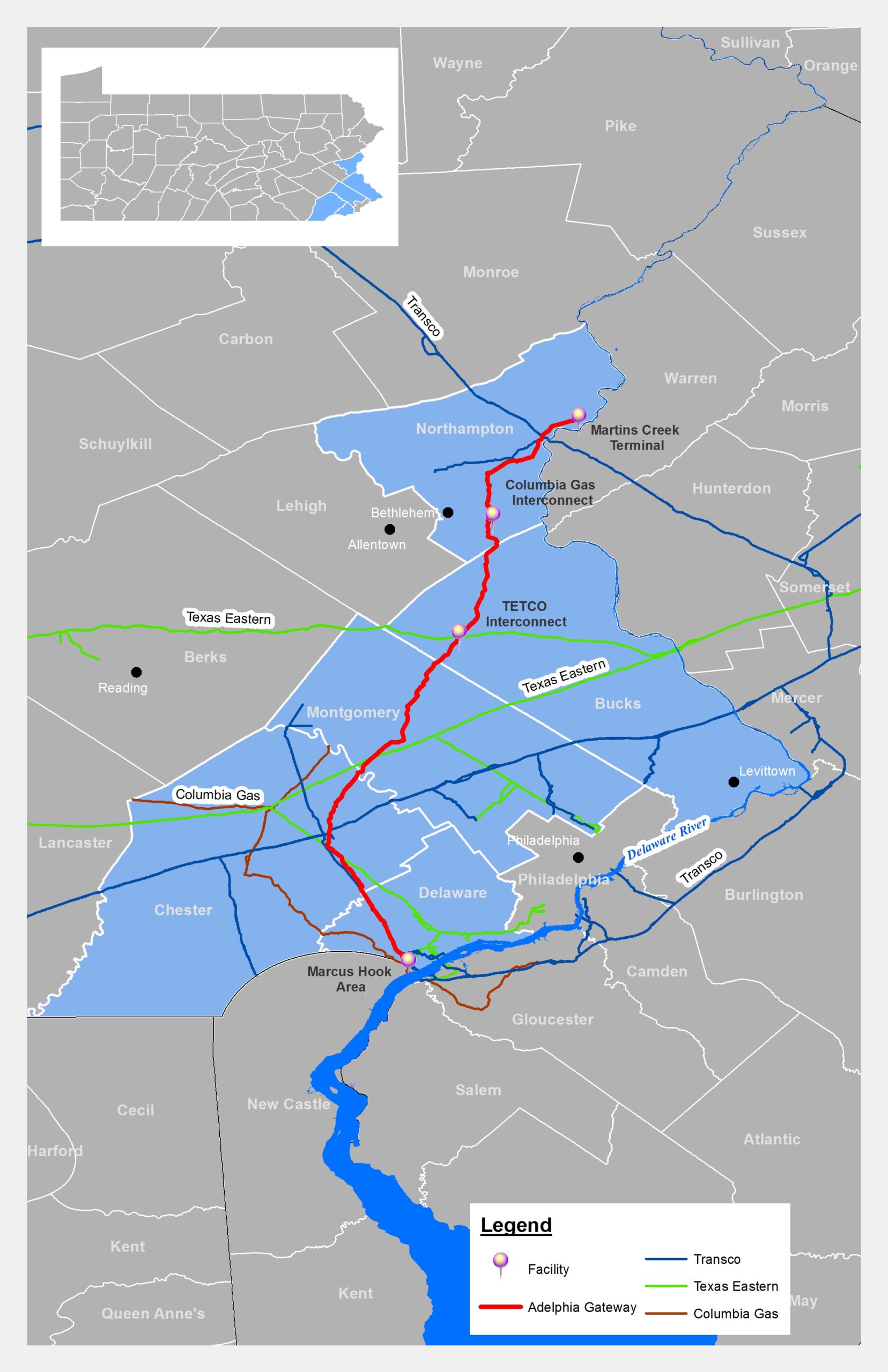
 This would be funny if it weren’t so darned sad. In Lansing, NY, just outside of Planet Ithaca in Tompkins County, the local utility (NYSEG) wanted to build a short pipeline in 2017 to supply new customers with natural gas, but was blocked by crazies who irrationally hate fossil fuels (see
  Once again the Mariner East 2 pipeline project is up Snitz Creek…without a paddle? There have been a number of “inadvertent returns” or mud spills in Snitz Creek, place where drilling mud is used to grease a drill bit for drilling holes under the creek. Mud has popped up where it’s not supposed to. Some of the mud spills have been, literally, just a couple of gallons. NOTHING. A recent spill on Oct. 19 was for 200 gallons.
 Radicalized leftists from environmental groups like the Environmental Defense Fund (EDF) are no longer content to try and prevent the construction of new natural gas pipelines, they now seek to shut down already-built and flowing pipelines. Case in point: A year ago the Spire STL pipeline came online flowing Marcellus/Utica molecules to the St. Louis area (see