
Virginia DEQ Draft Water Permit for MVP Signals Project Approval
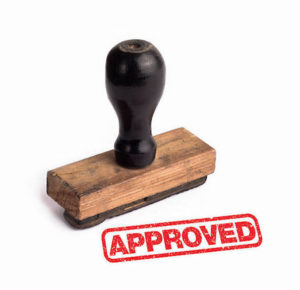 Although some 92% of the 303-mile Mountain Valley Pipeline (MVP) is already built and in the ground, important segments remain unfinished, including pipeline built under or through rivers, streams, and wetlands. One of the key remaining segments for water crossings is in Virginia. Last Thursday the Virginia Dept. of Environmental Quality (DEQ) issued a draft Section 401 of the federal Clean Water Act permit that would approve plans to let MVP finish its work in the state. The DEQ is now accepting comments on the plan. Anti-drilling zealots have gone nearly berserk with the news. Did they really think they would stop this $6 billion project?
Read More “Virginia DEQ Draft Water Permit for MVP Signals Project Approval”
 In June MDN brought you the news that Enbridge’s Texas Eastern Transmission (TETCO) pipeline was being flow-restricted by the Pipeline and Hazardous Material Safety Administration (PHMSA). Some 40% of the Marcellus/Utica molecules that flow through TETCO’s pipeline to destinations in the southeastern U.S. disappeared and were predicted to stay that way until the end of September (see
  Chester County, PA commissioners are, once again, attempting to instill irrational fear into county residents over the construction and operation of the Mariner East 2 (ME2) pipeline. ME2 runs hundreds of miles across the state, from eastern Ohio all the way to the Marcus Hook refinery near Philadelphia. The pipeline runs through Chester on its way to Marcus Hook. Chester commissioners are preparing to pay big bucks to hire a consultant to help the county draw up emergency plans for the pipeline in case it blows up or leaks. It’s a scare tactic. “The sky is falling!” MDN friend Garland Thompson has written a cogent and devastating response to an article highlighting news of the commissioners’ attempt to amplify people’s fears about ME2. His response offers the bigger (and truer) picture about ME2 safety.
 It’s that time of year again. Annual maintenance along pipelines that feed several major U.S. liquefaction (LNG) facilities will negatively impact gas deliveries to some terminals over the next six weeks according to notices to customers. Pipelines that serve the Cove Point, Maryland LNG facility and the Sabine Pass, Louisiana facility will be affected. Marcellus/Utica gas flows to both facilities.
 In an effort to flow more Marcellus natural gas to a gas-starved New York City, Kinder Morgan cut a deal with utility company Consolidated Edison in 2019 to beef up capacity along its Tennessee Gas Pipeline (TGP) that feeds NYC, allowing Con Ed to avoid cutting customers off from natgas hookups (see
  Last October the Sisters of the Corn (our name for a group of leftist nuns in Lancaster County, PA) filed yet another frivolous lawsuit against Williams over a pipeline that crosses their land–a pipeline (Atlantic Sunrise) that has been up and running for years (see
  The federal Pipeline and Hazardous Materials Safety Administration (PHMSA) recently issued a “warning letter” to Shell concerning the company’s ethane pipeline, called the Falcon Pipeline. PHMSA claims the pipeline committed two “probable violations” by failing to place pipeline sections at a construction site in Beaver County on protective padding. PHMSA told Shell to fix it, or else.
 When the executive branch of the federal government operates outside the law and nobody holds them to account, we have a lawless country. Under federal, established law, states have a maximum of one year to review applications for pipeline permits under Section 401 of the Clean Water Act. Yet now the Biden administration and its rogue EPA is telling states they can take all the time they want to review these permits, instructing “co-regulators” like the Federal Energy Regulatory Commission (FERC) it’s OK if states go beyond one year. What a disaster. This is yet one more way Biden gets around the law in his mission to destroy the fossil fuel sector.
 Mountain Valley Pipeline (MVP) is a 303-mile pipeline from West Virginia to southern Virginia that is 92% complete (in-the-ground). The pipeline is targeted to be in-service by the middle of next year. The project is currently stalled, temporarily, due to frivolous lawsuits filed by disgusting Big Green groups like the Sierra Club. MVP Southgate is an extension to MVP that will travel an additional 75 miles from southern Virginia (where the current MVP terminates) into North Carolina. MVP Southgate has not yet broken ground. The project has been opposed by North Carolina and the same mish-mash of “environmental” groups that opposed MVP. However, this week there are two fewer groups opposed to Southgate than there was last week.
 We hate to keep harping on this, but we keep reading stories about a developing issue here in the Marcellus/Utica. That issue is the lack of pipeline capacity to flow an increase in gas production from the northeast to other locations. The experts at RBN Energy predict that within the next two years M-U producers will “hit the capacity wall” and run out of extra pipeline capacity for an ever-increasing amount of natural gas production. When will the Northeast run out of “exit capacity” and how bad could constraints get?
 The Pennsylvania House Environmental Resources and Energy Committee held a hearing on Tuesday that investigated the economic benefits of the state’s 1,000-plus miles of gas pipelines. The adults in the room all acknowledged even if there is a transition away from fossil fuels “someday,” pipelines hauling natural gas around the state will need to be kept up and running for *at least* the next 30 years (likely longer). Pipelines are here to stay. A band of radical anti-fossil fuel nutters behaved badly during the hearing, as they so often do, and had to be ejected.
 It’s been a long, tough slog for Equitrans Midstream’s Mountain Valley Pipeline (MVP), a 303-mile pipeline from West Virginia into southern Virginia. The project is 92% done and in the ground. The final bits should be done within the next year and it will go online (if the crick don’t rise and the Lord don’t come) in mid-2022. One of the places where the pipeline was recently installed is close to a small clump of homes (called a “village”) in the Virginia mountains of Giles County. A place called Newport. A recent article in the Roanoke Times would have you believe the pipeline has somehow devastated the local community. It has not. We’re here to provide perspective on pipelines as good neighbors.
 There is a very real and tangible cost to the delays coming from the Federal Energy Regulatory Commission (FERC) with respect to reviewing natural gas pipeline projects. Those delays, intentionally created by current FERC Chairman Richard “Dick” Glick, are costing West Virginians jobs and money. JB McCuskey, the state auditor for WV, should know. He audits how tax dollars are spent in the state. His office reviews and approves general operating budgets for some 700 municipalities, counties, and school districts across the state. McCuskey says FERC is tangibly hurting the state of WV by dragging its feet in reviewing pipeline projects.
 Spire STL is a 65-mile pipeline that connects to and flows Marcellus/Utica gas from the Rockies Express (REX) pipeline to residents and businesses in the St. Louis, MO area. The pipeline began flowing gas in late 2019 (see
  The New York State Dept. of Environmental Conservation (DEC), completely corrupted by radicals under the thumb of outgoing Gov. Andrew Cuomo, has struck again. The DEC has filed a letter with the Federal Energy Regulatory Commission (FERC) blasting a plan to boost capacity at two existing compressor stations along the Iroquois Gas Transmission System pipeline. DEC says more natural gas flowing along the pipeline (desperately needed in both New York City and in New England) will cause more mythical global warming and therefore FERC should reject the request. How sad. How intellectually bankrupt.