
Is PJM Giving Data Centers the Heisman with Connection Proposal?
 There is a disagreement brewing between those who operate the PJM Interconnection power grid and Big Tech, including Amazon, Google, Microsoft, and others, regarding the issue of adding data centers to the PJM grid. PJM recently proposed a fast-track stakeholder process to develop rules by the end of the year for interconnecting data centers to its system while ensuring the region has enough power supplies. The proposal would treat new data centers over 50 megawatts (MW) as “non-capacity-backed load” (or NCBL). Under the proposal, PJM could curtail (reduce or cut off) power deliveries to data centers with NCBL status before the grid operator moves to pre-emergency load curtailments for other electricity users. Big Tech doesn’t like it one little bit. Read More “Is PJM Giving Data Centers the Heisman with Connection Proposal?”
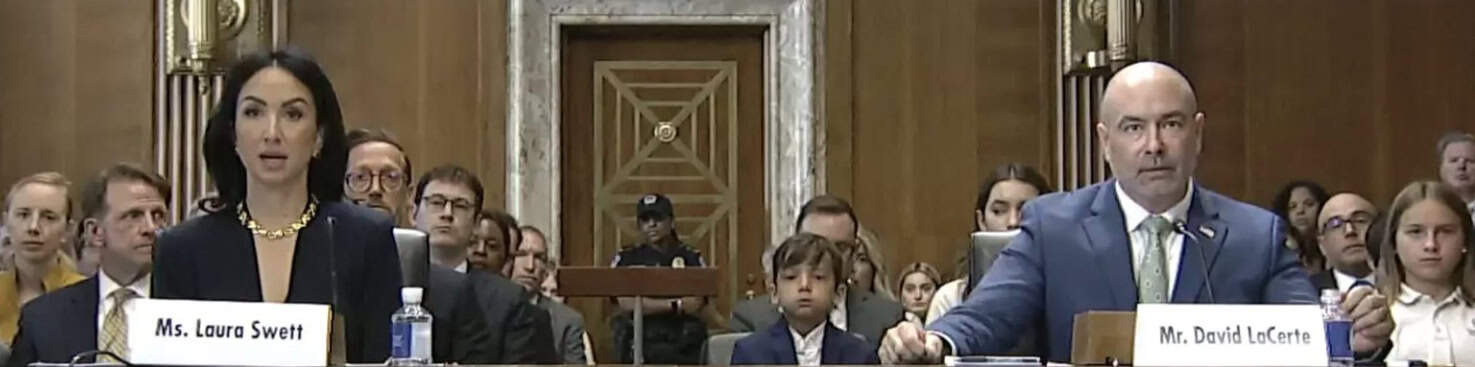 We’re still waiting for the Federal Energy Regulatory Commission (FERC) to gain two new members, which would give the commission its full complement of five members (with three of them Republicans). In June, President Trump nominated Laura Swett of Vison & Elkins to replace Republican Mark Christie, who had been elevated to Chairman under Trump (see
  Last week, MDN brought you the news that Freeport Township, located in Greene County, PA, declared a Disaster Emergency on June 23, 2025 (see
  Upper Burrell (Westmoreland County, PA) town supervisors have historically been receptive (or at least tolerant) to the Marcellus Shale industry that has so blessed their town and Westmoreland County. But attitudes seemed to change last December, at least with respect to wastewater injection wells (see
  Unlike Ohio, with its over 200 oil and gas wastewater injection wells, Pennsylvania operates just 18 such wells (
 We’re not sure how to feel about this story. Outrage. Relief. Sarcasm. Befuddlement. All of those emotions swirl in our heads. For years, we have chronicled the radical/left position of former Attorney General (and now Governor) Maura Healey in Massachusetts with her opposition to pipelines and natural gas energy (here’s one of many examples:
  Earlier this year, a video circulated on social media featuring a Biden EPA political appointee talking about “tossing gold bars off the Titanic,” intentionally rushing to get billions of tax dollars out of the agency before Inauguration Day. The EPA’s new sheriff, Lee Zeldin, located $20 billion of those gold bars sitting at a Citibank bank account (see
  In May, pipeline giant Williams filed a 246-page request with the Federal Energy Regulatory Commission (FERC) to expedite the reissuance of a certificate for the Northeast Supply Enhancement (NESE) project, a billion-dollar-plus project designed to increase Transco pipeline capacity and flows of Marcellus gas heading into New York City and other northeastern markets (see
  Eureka Resources and its now shuttered three frack wastewater treatment plants continue to be under the microscope of the Pennsylvania Department of Environmental Protection (DEP). In August, one of the three facilities, located in Williamsport, PA (Lycoming County), leaked some of its stored untreated wastewater, which ended up in the nearby Susquehanna River via a storm drain (see
  The Iroquois Gas Transmission’s Enhancement by Compression (ExC) project will increase horsepower at three compression stations — two in New York and one in Connecticut — by an extra 125 MMcf/d, to flow more Marcellus/Utica gas into New York City and New England. The two NY compressor expansions include one in Dover and one in Athens. The CT compressor expansion is located in Brookfield. Another CT compressor will get minor upgrades (gas cooling, no extra compression) in Milford. The NY DEC approved the permits for the NY compressors with the condition that Iroquois pays a $1.5 million contribution to the “Disadvantaged Community Benefit Program” (see
  The Eddystone Generating Station is a power plant owned by Constellation Energy Corporation, located in Eddystone, PA (near Philadelphia, in Delaware County). Units 3 and 4, each with 380 MW of generation capacity, can run on either natural gas or oil. The Eddystone Units were initially scheduled for retirement on May 31, 2025, but the U.S. Department of Energy (DOE) stepped in and ordered both units to remain online and active due to emergency energy conditions in the PJM grid. The original order kept both units online and active an extra 90 days, until yesterday. DOE Secretary Chris Wright sent a new order to Constellation yesterday, extending the operation of the two units for an additional 90 days, until November 26.
  Back in May, a prominent Wall Street fund manager (investor) was skeptical that Williams would be able to revive and build two pipeline Marcellus projects: the Constitution Pipeline and the Northeast Supply Enhancement (NESE) Project. Then he sat down to dinner with Williams executives. He came out of that meeting with his mind changed. “I came out of that dinner pretty optimistic. I went in very skeptical. It changed my mind.” If you had any reservations that maybe, just maybe, antis would once again defeat these two projects, set your mind at rest. People with significant financial stakes don’t invest their money in ventures that aren’t a sure thing. That’s our takeaway.
 The war of words continues.