Marcellus-Fired Electric Plant in Clinton County, PA Gets DEP Approval
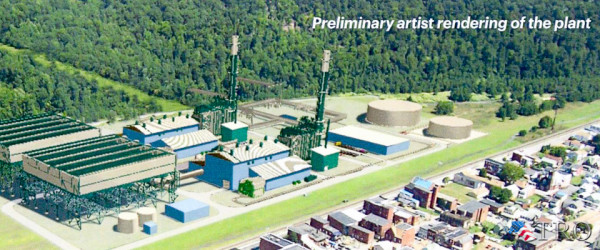
Last July MDN brought you news about a new Marcellus-fired electric plant planned for Clinton County, PA (see New Marcellus-Fired Electric Plant Coming in Clinton County, PA). The $800 million Renovo Energy project (in Renovo, PA) will be a 950-megawatt dual fuel (natural gas and ultra-low sulfur diesel) combined cycle electric generating plant located in the Renovo Industrial Park. The official application for the project was filed with the PA Dept. of Environmental Protection (along with an application fee of $29,700) in August 2015. Yeah, it takes a looooong time to get these things approved. However, a key (perhaps THE key) permit needed by the PA DEP was issued over the weekend. The DEP approved Renovo’s application for an air quality permit for the project. An official working with Renovo says recent rumors that plans to build the plant are dead is false. He said construction may start by the end of this year, after a few more kinks are worked out…
Read More “Marcellus-Fired Electric Plant in Clinton County, PA Gets DEP Approval”
 A far-left group of radicals calling themselves Ending Dirty Gas Exploitation Philadelphia (EDGE Philly) is borrowing a tactic first pioneered by THE Delaware Riverkeeper, to oppose a short pipeline project near Philadelphia. In November, MDN shared the exciting news that an old oil pipeline stretching from Northampton County, PA through Bucks, Montgomery, and Chester counties, terminating in Delaware County at Marcus Hook, had been purchased by a subsidiary of New Jersey Resources and will get converted to flow Marcellus natural gas to the greater Philadelphia region (see
  In what can only be considered a government shakedown, Sunoco Logistics Partners has agreed to pay a massive (historically high) $12.6 million fine to the PA Dept. of Environmental Protection (DEP) for “permit violations related to the construction of the Mariner East 2 pipeline project.” The fine, along with a “stringent compliance review” going forward, gives the DEP enough confidence to allow Sunoco to resume construction on the ME2 project, which has been halted since January 3rd (see
  Ever hear of “title washing?” MDN alerted readers about this funny sounding practice that has to do with mineral rights in Pennsylvania, with possible implications for landowners and drillers, back in 2016 (see
  There’s a real eyesore in downtown Washington, PA–a building that brings down the neighborhood. Even though the building is a blight for the entire area, it remains standing due to prejudice on the part of local residents, including a local Catholic church. There was a plan to renovate a former, run-down convent and turn it into a boarding house for Marcellus Shale workers in Washington, PA. We previously chronicled City Council’s opposition to the project (see
  This is one of those zany Friday kind of stories. Yet another so-called study on the Marcellus Shale industry recently caught our attention. We’ve often pointed out the “bought and paid for” research that abounds on shale drilling. This one goes to a whole new metaphysical plane. Instead of researching and drawing conclusions from research data, the recently published study “Engaging over data on fracking and water quality” (University of Pittsburgh and Penn State University) talks about talking about the issue of Marcellus Shale drilling. Yeah. How do you *feel* about drilling? Here, lie down on this sofa while we ask you some questions about your childhood and fracking practices. OK, so maybe a study about how people talk about the issues involved with Marcellus Shale drilling isn’t so far-fetched–if such a “study” were to appear in the Journal of Idiosyncratic Sociology. This “study” however, was published in the journal Science. As in hard science–not social science. So now it no longer matters what real science finds–whether or not fracking actually pollutes water and air. Whether or not living near a fracking site will stunt your growth. Whether or not fracking carves up forests or increases automobile accidents or any of a plethora of other issues. What REALLY matters is what you *think* about all that. That’s what now passes for science in Science…
 Pin Oak Energy Partners has just more than doubled the leased acreage it owns in the Marcellus/Utica, adding 70,000 Utica acres in both Ohio and Pennsylvania to its portfolio. MDN previously ran several stories about this relatively new entrant to our region (
 In November 2015 MDN reported on a seemingly obscure zoning court case in Westmoreland County, PA (see
  In 2011, then-Gov. Tom Corbett’s Marcellus Shale Advisory Commission filed a final report with 96 recommendations (see
  As we told you last week, Monday (Feb. 5) was the final day for landowners who live along the path of the PennEast Pipeline to accept an offer from PennEast to lease their land for the pipeline (see
  Here we go again. Supposedly striking a more “cooperative tone,” Pennsylvania Gov. Wolf’s sympathetic media buddies are trying to spin, as best they can, Wolf’s state budget proposal delivered yesterday. Wolf is a hyper-partisan who, in this latest budget, continues to demand a $250 million/year Marcellus-killing severance tax–on top of the existing impact tax. It is the only new tax in the budget, a budget that increases the already wildly overspent state budget by an additional $1 billion! Spending in Harrisburg is completely out of control–a disaster. The last governor (frankly the only governor in a generation) who tried to correct Harrisburg’s voracious appetite to spend more, Tom Corbett, got voted out of office after one term. Wolf is hoping to score a second term by continuing his Santa Claus routine–by pulling money from the pockets of those who earn it (landowners and drillers) to give away to those who don’t (teacher’s unions in Philadelphia). We are not exaggerating–this is fact. In his proposed $32.9 million budget, Wolf claims a “modest” severance tax will generate $248.7 million this year, and ALL OF IT will go to “education”–meaning teachers and their unions in the Philadelphia region. It’s political payback for their ongoing support and for their efforts to get Wolf elected in the first place. Why is this FACT not discussed openly in the media? It is repugnant to use the gun barrel of the state to steal the wealth of one group and transfer it to another as political patronage. Yet that is Wolf’s mission. Republican legislators reacted negatively to Wolf’s wildly overspent budget (and severance tax), as did the Marcellus industry…
 This is what passes for “action” in the swamp of Harrisburg. Over the past couple of years the Pennsylvania Dept. of Environmental Protection (DEP) has gotten slower and slower in issuing permits for shale drilling–for simple things, like erosion permits a driller needs to push dirt around to create a well pad. The DEP has a policy of issuing erosion and sedimentation permits 14 days from the date of application. As of last summer it was taking the DEP over 250 days to issue those permits (see
 Everybody has a “fix” for the chronically slow Pennsylvania Dept. of Environmental Protection (DEP). The DEP has a policy of issuing erosion and sedimentation permits for shale drilling 14 days from the date of application. At last check, it was taking the agency over 250 days to issue those permits. The Marcellus industry has been pressuring the PA legislature for a fix. As we noted in a companion story today, the PA Senate’s “fix” is to study it (see PA Senate Passes Meaningless Resolution to “Study” DEP Slow Permits). The PA House is more proactive, with a series of 5 bills that would, among other things, enlist the help of independent third parties to take up the slack (see
  Pennsylvania Gov. Tom Wolf’s Dept. of Environmental Protection (DEP), the agency charged with overseeing oil and gas drilling in the state, has “blindsided” the shale industry with a proposal to hike the fee required when submitting an application to drill a new shale well. The current fee is $5,000. The proposed new fee is $12,500–or 2.5 times greater (i.e. 250% higher). The DEP Oil and Gas Technical Advisory Board (TAB) is scheduled to meet next week, on Feb. 14, to discuss the permit fee increase. The fee funds the oil and gas program within the DEP. Wells must be visited and inspected throughout their life–decades after they are initially drilled. The permit fee is a one-time, up-front fee. Over the past couple of years the number of new wells getting drilled has decreased (although in 2017 it went back up, see