
MDN Launches Redesigned Web Site – We’d Like Your Feedback
 Starting today you will notice changes on the MDN website. A new “look and feel” for the site. The overall architecture remains the same–same menu items, same layout of where stories are located, etc. The fonts and colors and use of white space has changed, hopefully making it easier to read on your computer screen. Please note there are likely a few issues with the new site. As much as we test and review, it seems like something always slips through the cracks. So we want your feedback. Have a look around, and tell us what you like/don’t like about the new look. And if you find any problems/issues, please alert us right away. Send your comments to: jim@marcellusdrilling.com.
Also note that this is not the end, but just the beginning. We promise to “go slow,” but there will be more changes coming in the months ahead as we work to drag the MDN website into the 21st Century. Any recommendations you have for adding new features or changes, send those to Jim as well. Thanks for your patience as we work to improve the MDN-reading experience.
Jim Willis, Founder & Editor
 The “best of the rest” – stories that caught MDN’s eye that you may be interested in reading. In today’s lineup: PA natgas pipeline safety bill heading for full House vote; VA DEQ to make pipeline recommendations in Dec. for Atlantic Coast & Mountain Valley; court orders Vermont AG to sit for deposition in #ExxonKnew case; Shell says energy industry close to voluntary methane emissions; US shale shows signs of fatigue; natgas exports could add $73B to US economy; India wants to rework LNG deals; and more!
 In an issue that’s growing old, fast, the Pennsylvania legislature has still not dragged the dead horse known as the 2017 state budget across the finish line. It all started months ago when the Republican-led legislature passed a $32 billion budget–with only $30 billion available to pay for it. Big mistake. The pressure was intense to pass a severance tax to help fill the gap. Traitorous Republicans in the Senate caved to that pressure and in July passed a budget bill that hikes taxes on lots of things, including a severance tax (see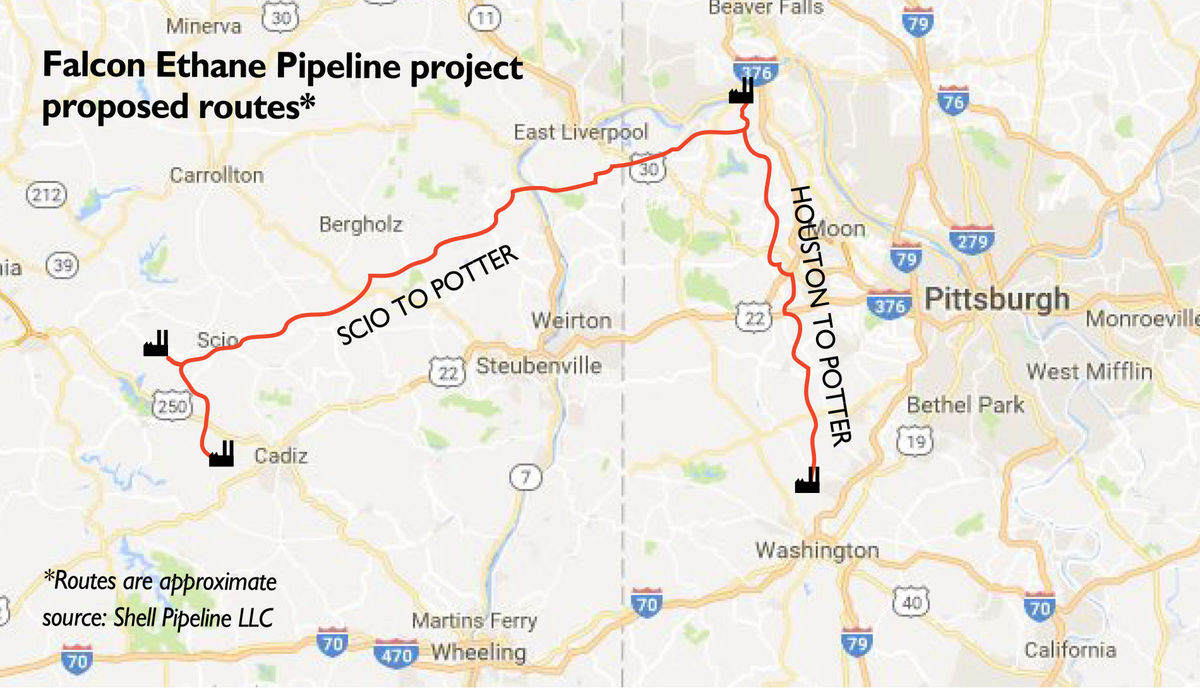
 On Monday, Mr. Supattanapong Punmeechaow, president and CEO of PTT Global Chemical (Thailand’s largest petrochemical company) signed a Memorandum of Understanding (MOU) with JobsOhio regarding PTT’s proposed ethane cracker plant. The MOU pledges to “enhance the well-being and quality of life” for those living in the area near the proposed cracker plant. PTT announced in April 2015 they are interested in building a $5 billion ethane cracker plant complex in Belmont County, OH (see
  There’s lots of acronyms in that headline, so right up front let us restate the headline in clearer language: The Federal Energy Regulatory Commission (FERC) has just taken the next step to advance a project by Kinder Morgan to reverse a portion of the mighty Tennessee Gas Pipeline (TGP) to reverse its flow, to go from the northeast to the southwest, in order to haul Marcellus/Utica natural gas liquids (NGLs) to the Gulf Coast. Currently TGP hauls natural gas (not liquids) from the Gulf to the northeast. With a bumper crop of natural gas produced by the Marcellus/Utica, gas from the Gulf is no longer needed. Kinder Morgan, the owner/operator of TGP, first floated the idea to reverse 964 miles of their pipeline back in 2013 (see
  According to experts speaking at the Platts Houston Energy Forum held yesterday, new pipelines going into service in the Marcellus/Utica region are having an effect. Pipeline constraints–not enough capacity to get the gas to markets outside of the region–are easing. Prices in some areas of our region where gas is bought and sold are improving (going up), but prices still have a long way to go. Perhaps the biggest eyeopener is that at least in the near-term, we may end up having more pipeline capacity than gas to fill it. By next spring, another 4.57 billion cubic feet per day (Bcf/d) of new pipeline capacity will go online: Access South and Adair Southwest projects on Texas Eastern Transmission will add another 520 million cubic feet per day (MMcf/d); Leach XPress on Columbia Gas Pipeline will add 1.5 Bcf/d; Rover Pipeline will get finished, bringing online an additional 2.55 Bcf/d (on top of the existing 700 MMcf/d flowing now). Here’s what the experts had to say about what’s coming down the pike in our region over the next year or so…
 Perhaps it’s time for those who support using clean-burning natural gas to find a new hospital–if they live in the Lancaster, PA area. In the fall edition of The Journal of Lancaster General Hospital, an anti-fossil fuel doctor who practices at the hospital published an outrageous political smear job pretending to be a scientific article–lying about natural gas and its extraction and its “pollution” of the environment. Dr. Alan S. Peterson, M.D., who specializes in geriatrics (he’s 71 himself), is an anti-driller with a history of activism against the shale industry. In an article in the Fall issue of the Journal, Peterson quotes a number of discredited “studies” funded with money from Big Green groups to make a case against the shale industry. Unfortunately, the article is dressed up scientific garb, giving it the illusion of accuracy. It is nothing more than typical anti hoo-ha. Two weeks ago Dr. Peterson penned an op-ed for a local Lancaster news outlet opposing a plan to fix dramatically slow response times at the Dept. of Environmental Protection (DEP) when issuing permits related to shale drilling. Peterson is political, plain and simple–and he opposes the extraction of fossil fuels, which says all you need to know about Dr. Peterson, and about Lancaster General…
 For more than two years MDN has chronicled the journey of Competitive Power Ventures (CPV) to build a $900 million Marcellus gas-fired electric plant in Wawayanda, NY, called the Valley Energy Center. Early on the project faced court challenges, but a judge gave final approval to build it in September 2015 (see
  This story is really rich. Consolidated Edison (ConEd) is one of the nation’s largest investor-owned energy companies. ConEd is a utility, operating in the New York City area. It is one of the largest (perhaps the largest) seller of natural gas in NYC area. In a press release that has us equally laughing and crying, ConEd floats a new plan to meet the “growing natural gas demand” it’s seeing from customers. Early in the release ConEd states the facts: “construction of new natural gas pipelines [in New York] is not keeping pace with growing demand.” Why? Because New York has a corrupt governor, Andrew Cuomo, who caters to wild radicals that give him money for his campaigns. Yes, CORRUPT. And so Cuomo issues edicts to executive agencies, like the Dept. of Environmental Conservation (DEC), to deny permits for new pipelines. Hence, NY doesn’t have enough pipelines to flow increasing demand for natural gas. ConEd just admitted that. So how does ConEd plan to solve the problem they have? Maybe anchor a floating LNG import terminal off Long Island? Nope. Virtual pipelines to haul more gas to its facilities? Nope. How about rail cars hauling CNG or LNG? Nope. Here’s the brilliance at ConEd–they want to raise everyone’s gas and electric rates so they can pay building owners to not use as much gas! What?! That’s right, ConEd has filed a rate case with the New York State Public Service Commission that requests permission to raise rates and pay people to use less natural gas. Welcome to Wonderland (i.e. New York), Alice…
 Yesterday afternoon Pennsylvania Senate Majority Leader Jake Corman told the media that talks on finishing the state budget are “closer than we’ve been in some time.” He also cautioned, “nothing is agreed to until everything is agreed to.” As for a severance tax, Corman said current discussions do not include a severance tax, which is interesting as Corman is one of the traitorous Republican Senators who voted for a severance tax back in July (see
  An update in the ongoing case of a proposed injection well in Highland Township (Elk County), PA. In 2013 the radical leftist group Community Environmental Legal Defense Fund (CELDF) convinced ignoramuses in Highland Township to pass a so-called Community Bill of Rights. Seneca Resources, a driller with leases and an active drilling program in Elk, had planned to drill an injection well on their own property to dispose of their own flowback and produced water. The CELDF-inspired ordinance in Highland prevented it, and Seneca threatened to sue the town (see
 Last week MDN reported the Canadian National Energy Board (NEB) had approved of TransCanada’s plan to lowball the price to haul natural gas all the way from Alberta (in western Canada) to the Toronto Dawn Hub in eastern Canada (see