 It doesn’t happen often, but every now and again we read about driller or (in this case) pipeline company operating in the Marcellus/Utica we had never heard of before. Such is the case today. A new (to us) midstream company, XcL Midstream, has formed and is already building a dry gas gathering pipeline system in West Virginia, with plans to build a wet gas gathering system in WV too. According to its website, XcL “operates in the premier region of the Appalachia basin in Marshall and Wetzel Counties, West Virginia. XcL Midstream’s Appalachia Connector Pipeline is strategically located at the intersection of every major long-haul interstate pipeline system in Southwest Appalachia and provides shippers with market price optionality.” XcL plans to gather and process dry gas, wet gas (i.e. natural gas liquids), and transport water for its customers. XcL has its headquarters in Canonsburg, PA, near Pittsburgh. The reason that the company popped up on our radar is because Platts ran an article announcing that XcL has signed a customer–THQ Appalachia I, an affiliate of Tug Hill–to use 600 million cubic feet per day (Mmcf/d) on the dry gas pipeline, 200 Mmcf/d on the wet gas pipeline system, and to use a forthcoming water pipeline to boot. Here’s the thing: both XcL and THQ/Tug Hill are backed by private equity company Quantum Energy Partners. So apparently this is one of Quantum’s portfolio companies doing business with another of Quantum’s portfolio companies. In essence, one cousin helping out the other cousin. Perhaps we can call them kissin’ cousins?…
Read More “XcL Midstream Building New Dry & Wet Gas Gathering Pipes in WV”

 The “best of the rest” – stories that caught MDN’s eye that you may be interested in reading. In today’s lineup: Activists tell basin commissioners to ban drilling and fracking in the Delaware Watershed; EPA moves to halt Obama methane rule for two years; is shale productivity bumping up against its limits?; oil glut slows demand for shale-oil drilling; North American pipeline capacity crisis looms large; wind and solar in March accounted for 10% of U.S. electricity generation for first time; and more!
 An article in the left-leaning Harrisburg Patriot-News has this incendiary opening: “Is it ‘abnormally dangerous’ to drill and frack for oil under a massive oil refinery, particularly if that well is bored beneath a tank filled with 3.6 million gallons of gasoline? A decision issued by a divided Commonwealth Court panel on Monday will give a Pennsylvania community a chance to find out.” In a court decision filed on Monday, the Commonwealth Court of Pennsylvania will allow a driller to drill and frack a well that is close to (but not directly underneath) the above-ground 3.6 million gallon petroleum tank. At first blush, especially when reading an opening like the one in the Patriot-News story, the average reader would think such a plan is stark raving mad. But when you dig into the details, a far different story emerges. As usual, mainstream media misrepresents many of the facts. We’re here to sort it out for you…
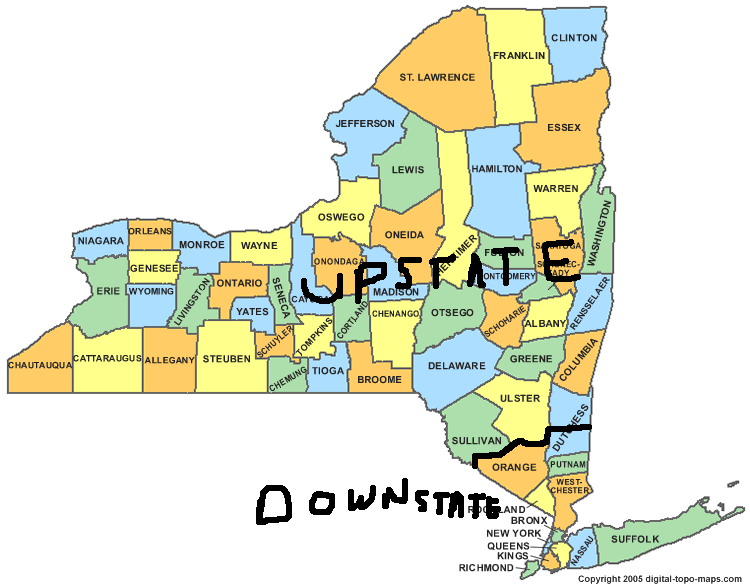 Every now and again anti-fossil fuel nutters in New York will pop up from whatever hole they live in to claim that the couple of NY landfills accepting drill cuttings (leftover rock and dirt) from PA shale drilling will result in an environmental apocalypse. One landfill in particular, in Chemung County, seems to be the focus of their ire (see
 Duke Energy needs to replace an aging pipeline, built in the 1950s, near Cincinnati, OH–or some people in Cincy will have to go without natural gas (see
  As we reported yesterday, the first two (of four) public hearings were held on Monday by the Pennsylvania Dept. of Environmental Protection (DEP) to elicit comments on the proposed $3 billion, 198-mile Atlantic Sunrise Pipeline, an expansion of Williams’ Transco Pipeline system (see
  Although headquartered in Radnor, Pennsylvania (near Philadelphia), Penn Virginia Corporation is an oil and gas driller with (at last check) only a small presence in the Marcellus Shale: 21,700 net acres with no drilled wells. They concentrate on oil drilling the Texas Eagle Ford Shale play. Penn Virginia is one of the Philly area’s oldest companies, started in 1882 by Philadelphia coal barons. It later transitioned into an oil company. MDN told you in March 2015 that Penn Virginia’s top stockholder, the vile corporate raider George Soros, forced the company to put itself up for sale so George can line his pockets with more cash (see
  According to an article appearing on Forbes, “The sell-off of oil and gas exploration and production stocks has been brutal. Exchange-traded funds that specialize in the sector have fallen around 10% to 20% this year, versus an 8% uptick in the market overall.” Why? Low oil prices. Several analysts are quoted as saying the market is “ripe” for some companies to sell themselves. In a companion story today, we covered one such rumor–that Penn Virginia Energy is shopping itself. An analyst with Williams Capital Group has offered up a list of five such companies he believes may be next. Note we said “may.” There’s lots of hedging in this prediction. This is one analyst, albeit an experience analyst, spitballing about what “may” happen. The final entry in his list of five companies that “may” get sold this year is none other than Gulfport Energy, an Oklahoma City-based independent oil and natural gas exploration and production company that is a “top 5” driller in the Ohio Utica Shale. One alternative to selling itself, according to the analyst, is that Gulfport could sell it’s 24% interest in oilfield services company Mammoth Energy Services…
 If you’re deeply involved, or even peripherally involved, with the Marcellus/Utica, there are two events each year that you should attend. One of those events is
  It doesn’t happen often, but every now and again we read about driller or (in this case) pipeline company operating in the Marcellus/Utica we had never heard of before. Such is the case today. A new (to us) midstream company, XcL Midstream, has formed and is already building a dry gas gathering pipeline system in West Virginia, with plans to build a wet gas gathering system in WV too. According to its website, XcL “operates in the premier region of the Appalachia basin in Marshall and Wetzel Counties, West Virginia. XcL Midstream’s Appalachia Connector Pipeline is strategically located at the intersection of every major long-haul interstate pipeline system in Southwest Appalachia and provides shippers with market price optionality.” XcL plans to gather and process dry gas, wet gas (i.e. natural gas liquids), and transport water for its customers. XcL has its headquarters in Canonsburg, PA, near Pittsburgh. The reason that the company popped up on our radar is because Platts ran an article announcing that XcL has signed a customer–THQ Appalachia I, an affiliate of Tug Hill–to use 600 million cubic feet per day (Mmcf/d) on the dry gas pipeline, 200 Mmcf/d on the wet gas pipeline system, and to use a forthcoming water pipeline to boot. Here’s the thing: both XcL and THQ/Tug Hill are backed by private equity company Quantum Energy Partners. So apparently this is one of Quantum’s portfolio companies doing business with another of Quantum’s portfolio companies. In essence, one cousin helping out the other cousin. Perhaps we can call them kissin’ cousins?…
 Yesterday saw the first two (of four) public hearings being hosted this week by the Pennsylvania Dept. of Environmental Protection (DEP) to elicit comments on the proposed $3 billion, 198-mile Atlantic Sunrise Pipeline, an expansion of Williams’ Transco Pipeline system. One of yesterday’s meetings was held in Lancaster (Lancaster County), and the other in Tunkhannock (Wyoming County). The striking thing about both meetings is that they were not the usual circus freak shows by anti-fossil fuelers we’ve come to expect. Indeed, in both venues, an overwhelming majority of those speaking were there to speak IN FAVOR of the projects. Oh, there were detractors, to be sure. Nonsensical statements made by people like Malinda Clatterbuck, one of the locals in Lancaster who is attempting to turn Lancaster into another North Dakota fiasco. Clatterbuck said “angst over the pipeline has caused premature births, divorces and heart attacks” among people she knows. Complete rubbish. Anyone can say (or do) anything at these hearings. Mark Clatterbuck (Malinda’s husband) also spoke. Mark was a protester in North Dakota against the Dakota Access Pipeline. He warned (threatened?) DEP representatives of a coming “community uprising” against the Atlantic Sunrise pipeline. Even though there was some opposition like the clattering Clatterbucks at last night’s hearings, the big news is that their opposition was drowned out by supporters of the pipeline project. And that’s good news for all Pennsylvanians…
 We just knew getting a “virtual pipeline” facility built in ultra-liberal Broome County, NY was proceeding a little too easy. MDN recently told you about a proposed virtual pipeline (i.e. natgas trucking system) coming to MDN’s neighborhood. NG Advantage wants to build a new compressor station and tap into the Millennium Pipeline where it crosses the Chenango River near Port Dickinson, a suburb of Binghamton, in Broome County (see
  Rex Energy began selling natural gas, gas liquids and condensate from its four newest wells, part of the “Baird” pad (in Butler County, PA) on May 31st. The company issued a press release yesterday to do some well-deserved crowing about their wells. Two of the wells (the 1H and 4H) are Marcellus wells and initial production is averaging 12.1 million cubic feet equivalent per day (Mmcfe/d). The other two wells (the 2H & 3H) target the Upper Devonian layer and initial production for those wells has been 8.1 Mmcfe/d. Rex also posted a new company PowerPoint presentation (full copy below) which shows a new 6-well pad in Butler County will go online to sales in August, another 4-well pad in September, and a 2-well pad and 4-well pad sometime in the fourth quarter. In addition, Rex expects to begin drilling a 3-well pad in the Ohio Utica (in Carroll County) in July…
 During the Obama reign of terror, the world’s #2 largest oilfield services company, Halliburton, tried to buy the world’s #3 largest oilfield services company, Baker Hughes. The Obama Dept. of Justice (DOJ) killed that deal (see