
NARUC President Powelson: Obama’s Energy Mandates are Toast

Rob Powelson is a member of the Pennsylvania Public Utilities Commission (PUC). At one point, under then-Gov. Tom Corbett, Powelson was the PUC Chairman (see PA’s PUC Pro-Drilling Chairman Powelson Leads Mid-Atlantic Group). After Democrat Tom Wolf was elected as governor, he replaced Powelson with Gladys Brown as Chairwoman (see Anti-Drillers Cheer PA Gov Wolf’s New Appointment to Head PUC). However, Powelson remains on the PUC as a member. He’s one of the good guys–someone who supports shale energy. As we reported in November, Rob’s stature and reputation dramatically increased, yet again. He was elected as the next president of the National Association of Regulatory Utility Commissioners, or NARUC (see PA PUC Commissioner Rob Powelson Elected as President of NARUC). He is serving a one-year term. It is not a full-time gig–he remains a commissioner with the PA PUC. NARUC is about to hold it’s annual winter meeting–the first big meet since Powelson began serving as president. Ahead of that meeting, Powelson was interviewed by the Washington Examiner. His comments are enlightening. Essentially, Powelson says Obama’s climate regulations (including the odious Clean Power Plan) are toast. Here’s what a common sense, shale-supporting intelligent person had to say about the end of Obama’s reign of environmental terror…
Read More “NARUC President Powelson: Obama’s Energy Mandates are Toast”
 We’ve caught a fair bit of criticism (kind, but firm criticism) from MDN subscribers about our views that global warming (a) doesn’t exist, and (b) if it does exist to any small degree, it’s certainly not something being caused by mankind and not something we can influence, even if we tried. Believing such things marks us as being radical, fringe, kooks, for many. Perhaps you’ll now reconsider. You might think if someone inside the epicenter of global warming science–the National Oceanic and Atmospheric Administration (NOAA) were to announce to the world he has evidence that other scientists at the agency had faked data to support the theory of man-made global warming, it would be the lead article in every newspaper and the lead story on every newscast. Such a thing has just happened–a whistle-blower has stepped forward. Unfortunately our country is plagued with fake/manufactured news–CNN, The New York Times, Washington Post, ABC/NBC/CBS, etc. Not a single so-called mainstream news source has or will run the story that Dr. John Bates, the recently retired principal scientist at NOAA’s National Climatic Data Center, has admitted that others in the agency rushed the numbers and published unverified data in what is known as the Karl study, which was used “to discredit the notion of a global warming hiatus and rush to time the publication of the paper to influence national and international deliberations on climate policy.” The Karl study was released to influence world leaders ahead of the Paris Climate Agreement last year. Once again, scientists with a left-leaning political agenda have been caught, red-handed, faking the numbers–and our media is SILENT…
 Did you watch the Superbowl on Sunday? What’s that? You didn’t?! Admission: We did not watch. We decided to “take a knee” this year and skip the Superbowl. You know, take a knee–like loser Colin Kaepernick, backup quarterback for the San Franciso 49ers. Every time he plays in a game he kneels when the National Anthem is played–in an act of obscene disrespect for our country. The NFL needs to get its house in order and we won’t watch until it takes care of papered jerks like Kaepernick. At any rate, we’re guessing a great many MDN readers did, in fact, watch (we won’t hold it against you). If you watched, you may have seen a 30-second commercial from the American Petroleum Institute called Power Past Impossible–an effort to highlight how natural gas and oil provide enormous value to Americans’ everyday lives. If you didn’t see it, or want to watch it again, we have it below…
 You know those sleazebag companies that sell their products to two opposing sides in a war–just to make a buck? Here’s a new twist on it. How about a sleazebag with a lot of money to invest who funds anti-fossil fuel groups (by paying protesters to destabilize our country), and at the same time invests money in the very fossil fuel companies whose projects the protesters are protesting? Such a loathsome creature has a name: George Soros…
 The “best of the rest” – stories that caught MDN’s eye that you may be interested in reading. In today’s lineup: Cabot stocks pop following FERC announcements; Laurel Pipeline reversal to undergo judicial review; Texas to see more Marcellus/Utica gas heading south; Velocys launches first Fischer-Tropsch GTL plant; onshore rig count to double by next year; offshore driller still in the doldrums; US shale drilling picks up; and more!
 Titan Energy, which used to be known as Atlas Energy/Resource Partners, is today listing what appears to be the rest of the acreage they still own on the Appalachian basin–some 494,229 acres–including rights for drilling in the Marcellus/Utica. An astonishing 100% of the acreage is HBP, or held by production–meaning there are working or drilled wells. Not all of it is shale-related. We suspect a good portion of the acreage is conventional (vertical only). However, there is a significant number of acres where Marcellus/Utica drilling can be done that the sale should pique the interest of competitors. The acreage is being offered in seven states: New York, Pennsylvania, West Virginia, Ohio, Indiana, Kentucky and Tennessee. In addition to rights in the Marcellus/Utica, rights are also available in the Upper Devonian, New Albany and Chattanooga shale plays. Here is the low down on the acreage sale, along with a reminder of who Titan (nee Atlas) is, and why this is an important sale…
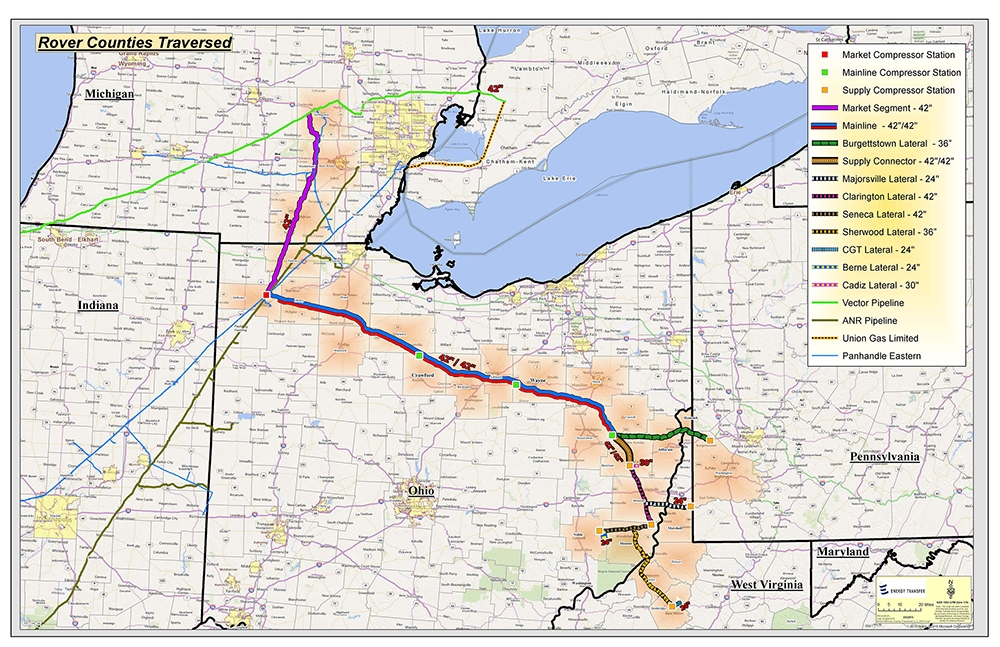
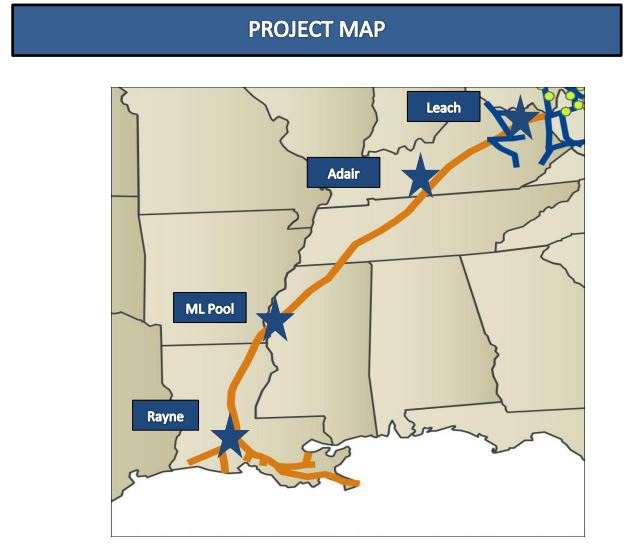


 Looks to us like Donald Trump’s faith in Federal Energy Regulatory Commission (FERC) Commissioner Cheryl LaFleur was well-placed. As we previously noted, Trump has put LaFluer in charge of the agency as Chairman, which caused the existing Chairman of FERC, Norm Bay, to resign in a huff (see
  In December the Bureau of Land Management proceeded with an online auction for BLM-controlled land in Ohio’s Wayne National Forest (see
  We caught sight of an interesting new study just published in the journal BMC Microbiology by researchers at the University of Arkansas/Fayetteville. Researchers studied (did in the field studies) of streams both near and far from fracking activities in the Arkansas Fayetteville Shale. No, the research is not directly about the Marcellus/Utica, although our shale plays are mentioned several times in the study. However, the research and its results apply to our region as well as all shale plays. In the study just published titled, “Do biofilm communities respond to the chemical signatures of fracking? A test involving streams in North-central Arkansas” (full copy below), researchers looked to see if the chemistry of streams was altered by nearby fracking activity. They evaluated “benthic biofilm community composition as a proxy for stream chemistry” to see if bacteria and other tiny critters that show up under a microscope display differences between the streams near fracking, and those not near fracking activity. What did they find? No difference. No change. No impacts from fracking on streams and the microbiology of those streams. What they did find is that streams are affected by agriculture and urbanization…
 According to rumors floating around the Pennsylvania environmental wacko movement, today is the day the Pennsylvania Dept. of Environmental Protection (DEP) will issue the final permits needed by Sunoco Logistic Partners to begin construction of the Mariner East 2 NGL pipeline that will stretch across the entire state. Neither Sunoco nor the DEP would confirm the rumor, but the wackos are agitated and saying their “inside sources” (of which they appear to have many) are telling them it’s today. And what if it happens? According to Maya van Rossum (THE Delaware Riverkeeper), the antis will employ their two favorite tactics: Sue in court, and whip up the more radical folks in the movement into a frenzy so they “rise up in protest.” You know, like the “protesters” (i.e. criminals) did in North Dakota–the ones who fired shots at police officers, burned tires, and engaged in illegal actions to stop work on the Dakota Access Pipeline (see