
Updated Maps for the Utica Shale Play – from EIA
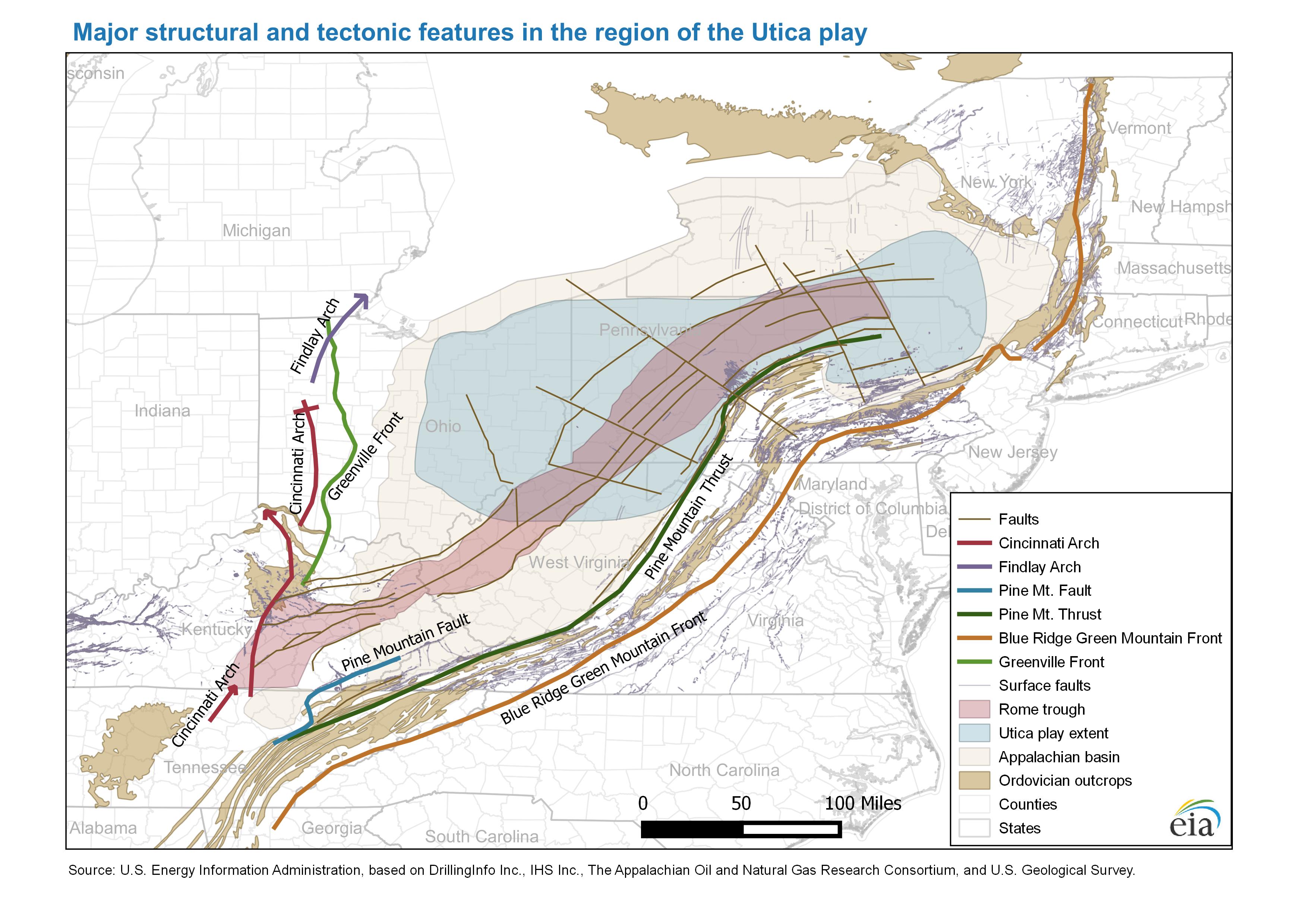
The more you drill in a given shale play, the more you know about it based on the performance of the wells you’ve drilled. And so it is with the newest, youngest, and fastest-growing play in the U.S.–the Utica Shale. Aubrey McClendon (God rest his soul) once said the Utica Shale is “the biggest thing to hit Ohio since the plow.” He was right. But the Utica extends beyond Ohio into West Virginia, Pennsylvania and even into New York. Since active drilling began in the Utica in 2011, more than 1,700 shale wells have been drilled in the Utica/Point Pleasant layer. That gives us (and our favorite government agency, the U.S. Energy Information Administration) a lot of useful information. The EIA has just released a series of revised Utica Shale maps based on the data accumulated over the past five years. We have their updated maps and insights below…
Read More “Updated Maps for the Utica Shale Play – from EIA”
 Yesterday MDN told you about the Texas Eastern Transmission Company (TETCO) pipeline explosion last Friday in Westmoreland County, PA (see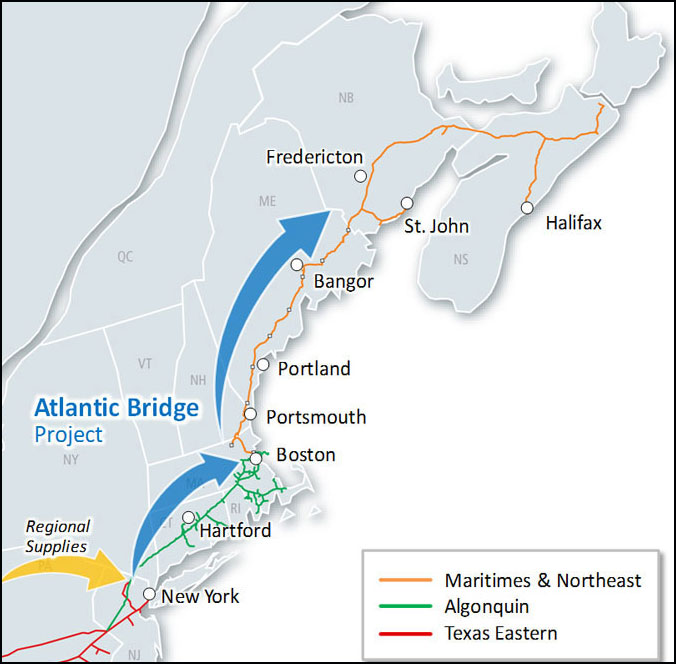

 It was four years ago last month that BP entered the Utica Shale in a big way by signing a lease with members of the Associated Landowners of the Ohio Valley (ALOV) group to lease 84,000 acres in Trumbull County, OH (see
  Yesterday MDN brought you the news that the Halliburton buyout of Baker Hughes is now officially dead (see
  Crazy Bernie Sanders believes that we can just stop fracking for oil and gas, and turn off our nuclear plants, and sing Kumbaya to each other and usher in the nirvana age of Bernie renewable energy. What a dope. The people who support him are bigger dopes (sorry if you’re a Bernie supporter–but you need to wise up, quick). Below is a column that points out that shale gas and nuclear are the PROVEN path to a lower carbon emissions future–not reverting back to the stone ages with everyone parking their cars and turning down the thermostat. Carbon emissions in the U.S. have gone down faster than anywhere else in the world–BEFORE Obama’s idiotic Clean Power Plan and BEFORE any of the draconian measures cooked up by the out-of-control federal Environmental Protection Agency. Why? Because of the dramatic increase in the use of shale gas to power energy plants. And because nuclear powers energy plants. Here’s the story Crazy Bernie doesn’t want you think about (thinking not a requirement to be a Bernie supporter)…
 EPIX is on the way. What is it? A joint venture between Weir Oil & Gas, the world’s leading provider of upstream pressure pumping equipment, and Rolls-Royce Power Systems subsidiary MTU, a market leader in heavy-duty industrial power systems based on diesel and gas engines. EPIX will provide the drilling industry’s first integrated system for hydraulic fracturing. Here’s the low down on the Rolls-Royce of fracking…
 The “best of the rest” – stories that caught MDN’s eye that you may be interested in reading. In today’s lineup: Inside Climate News should be a RICO target; National Oilwell Varco cuts 6,000 jobs, closes 200 facilities; Clean Energy signs LNG deal with Hawaii Gas; Exxon Mobil reaches for the credit card; Enbridge considers dumping U.S. natgas business; and more!
 It’s a sad day for Halliburton and Baker Hughes. The two companies intended to get married, with Halliburton buying out BH and merging it in a deal worth $35 billion (see
  Ultra Petroleum, based in Houston, TX, is an independent exploration and production (E&P) company mainly focused on drilling in the Green River Basin of Wyoming. Ultra also drills for oil in the Uinta Basin/Three Rivers area in Utah. In addition, Ultra maintains a position in the Pennsylvania Marcellus shale with leases on 184,000 gross (91,000 net) acres–no small amount. They aren’t currently drilling on their Marcellus acreage, but if prices change, they likely would. That is, if they make it through bankruptcy. On Friday Ultra filed for Chapter 11 bankruptcy protection in Houston. The company listed $1.28 billion in assets and $3.92 billion in debt. One (we would say stupid) investor owns a whopping $1.46 billion in unsecured IOUs (i.e. notes) from Ultra. Good luck with getting that paid. Here’s the low down on Ultra’s bankruptcy filing…
 Reuters has written a wide ranging article on Magnum Hunter Resources (MHR) and the results of bankruptcy. The article implies MHR is nearly out of bankruptcy now (although it looks to us like a hearing in June will likely be the grande finale). The deal that MHR cut with debtors was to turn their debt into equity–note and bond holders are now stockholders. So MHR CEO Gary Evans now has a new board of directors composed of the new owners of the company. The problem is, the investors who used to hold stock in the company before bankruptcy have essentially lost their ownership–with the value of their previously issued stock now worthless. At least that’s our understanding of how this works (we’re open to being corrected on this). The Reuters article does a close-up of Gary Evans and recounts how he assured investors that a major asset sale was in the works that would save the company–shortly before he had the company file for bankruptcy. Some investors are not very happy with Mr. Evans over what they consider a deceptive practice…
 Cabot Oil & Gas issued their first quarter 2016 update last Friday. The company reports losing $51 million in 1Q16 (compared to making a $40 million profit in 1Q15) because the price for natural gas slide 40% last year. Production numbers continue to impress. While they operate just a single rig in the PA Marcellus (in Susquehanna County), Cabot’s production increased 10% from 4Q15 to a whopping 1.628 million cubic feet per day average. In addition to the official update, we also selected out portions of Friday’s analyst phone call with Cabot’s top management. Among the topics discussed: the Constitution Pipeline, Cabot’s love of the PA Marcellus, “keep it in the ground” anti-drilling nutjobs and more…
 A circuit court judge recently ruled on a case in West Virginia with implications for unitization or pooling. No, NOT forced pooling–or forcing landowners who haven’t signed a lease into a drilling unit, forcing drilling under their land. That’s not what this case was about. This case was about landowners with an already-signed lease for vertical wells now being used to allow that land to be pooled with other land and a horizontal well allowed to be drilled under it. The landowners, who wanted a new lease for horizontal drilling (and more money, which is reasonable in our opinion) said because the lease was silent on the matter of pooling or unitizing, it should not be allowed. The judge disagreed and found in favor of the energy company, in this case American Energy…