
DTE Asks Michigan for 2 Gas Plants — 2,100 MW of New M-U Demand
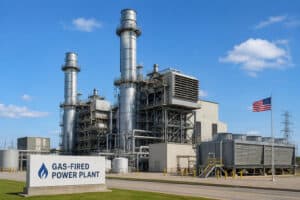 When we covered DTE Energy’s second quarter results in July, we grumbled that the company was throwing $10 billion at unreliable renewables and only $2.5 billion at a single new gas plant to replace a retiring coal fleet (see DTE Energy 2Q: Coal Exit by 2032 Means New Gas Plant and M-U Demand). Turns out we were counting low. On Tuesday, August 25, DTE Electric filed a “Filing Announcement” with the Michigan Public Service Commission (MPSC) — a required 30-day heads-up before a big filing lands — telling regulators it will ask for Certificates of Necessity for two new combined-cycle gas turbine (CCGT) plants: one at roughly 700 megawatts (MW) and one at roughly 1,400 MW. That’s 2,100 MW of new gas-fired generation in a state that produces almost no gas of its own. Guess where the molecules come from. Read More “DTE Asks Michigan for 2 Gas Plants — 2,100 MW of New M-U Demand”
 Back in June, we praised South Strabane Township in Washington County, PA, for doing the hard, unglamorous work of writing data center rules instead of slamming the door shut (see
  South Carolina’s utility regulators voted unanimously yesterday to let a $2.8 billion artificial intelligence data center in Spartanburg County build and run its own 457-megawatt natural gas power plant without asking the state’s permission first. The decision is a big win for the “behind-the-meter” model — where a data center brings its own generation instead of leaning on the grid — and it’s a model that is going to burn a lot of molecules. Possibly some of ours.
  A press release crossed the wire yesterday announcing that Edge LNG — the little company that showed the Marcellus how to truck its stranded gas to market — has been sold. Sapphire Gas Solutions of Conroe, Texas, is the buyer. Blue Water Energy, the private equity firm that backed Edge from the beginning, is the seller. And here’s the part that caught our eye: the announcement calls Edge “a Texas-based LNG company” serving customers in the Southern U.S. The Marcellus, where Edge made its name, doesn’t get a single mention.
  MARCELLUS/UTICA REGION: Gas turbine, copper supply seen as near-term data center constraints in PJM; OTHER U.S. REGIONS: Sempra begins permitting process for major LNG expansion in Texas; Southwest natural gas cash tops $8 as Southern California supply runs short; NATIONAL: U.S. natural gas gains as September contract expires; Trump signs order banning some foreign equipment from US energy grid; What the US Open can teach us about the value of natural gas; MIT uses AI to challenge a century-old process for mass ammonia production; US LNG feedgas demand hits highest level since April as plants return from maintenance; DOE begins tests for fracked geothermal; Trump’s head of offshore leasing leaving for oilfield services firm Halliburton; INTERNATIONAL: Oil rises as Iran deal hopes fade; U.S. outpaces China in nat gas capacity for AI data centers; Iraq to deliver oil beyond Hormuz; Are we misreading the oil demand shock from Hormuz?; Why Fort McKay First Nation is a profound example; GALACTIC: Titan is bigger than Mercury, runs on methane and ethane.
  Sixty-two days after a wastewater pipeline let go at Equitrans’ Richter impoundment in Aleppo Township, Greene County, the Pennsylvania Dept. of Environmental Protection (DEP) went back out to look at the site on August 18 — and didn’t like what it found. Contaminated water is still moving, soil is still dirty, and DEP says the cleanup has largely stalled. Quick refresher for those just tuning in. On June 17, 2026, Equitrans Water SVC (PA) LLC — the water-handling arm of EQT — reported a wastewater release from a pipeline tied to its Richter Shale Gas Water Impoundment while the site was being reclaimed. DEP issued a cleanup order on June 30 requiring the company to stop contaminated water from migrating off site and from reaching ground or surface water.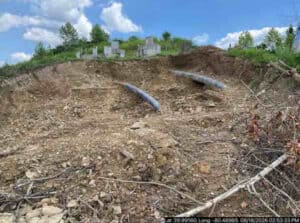
 A second poll of Pennsylvania voters on data centers landed this week, and the headlines say what you’d expect: six in ten are opposed. Dig into the crosstabs — the detailed tables showing how each group answered — and you find something the coverage skipped entirely. A majority of Pennsylvania Republicans support building data centers. Fifty-one percent for, 42% against (take note, Stacy Garrity). The Philadelphia Inquirer, teaming up with the New York Times and Siena University, surveyed 760 likely Pennsylvania voters from August 17-21. The topline: 62% oppose the construction of AI data centers, 33% support them.
 The PJM market monitor asked federal regulators to kill Hull Street Energy’s purchase of two gas-fired peaking plants unless Hull Street promised not to point them at data centers. On August 13, FERC said no — and said the monitor hadn’t supported its argument. Thirteen days later, the deal closed. Hull Street Energy (HSE), a private equity firm in the Washington, D.C. area, announced yesterday that it completed the acquisition of the Lee County Generating Station in Dixon, Illinois, and the Tait Electric Generating Station near Dayton, Ohio, from Rockland Capital. HSE calls the pair the “GridFlex Portfolio” and has folded it into Milepost Power, its thermal generation platform.
  Eureka Resources sold the business at all three of its shuttered Pennsylvania frack wastewater plants. What it did not sell — and legally could not sell — is the obligation to finish hauling the waste out. The Department of Environmental Protection (DEP) put that in writing last week, and added five words that ought to get somebody’s attention in Williamsport: DEP “is considering alternative enforcement measures.” The news comes, again, not from Eureka and not from a DEP press release, but from the Middle Susquehanna Riverkeeper Association, which keeps sending the agency questions and publishing the answers. DEP Northcentral communications manager Megan Lehman replied by email Aug. 20; the Riverkeeper posted the exchange Aug. 24.
  The single most important piece of pipe for Marcellus/Utica wet gas drillers is about to get a lot cheaper to use — and Enterprise Products Partners (EPD) just said so out loud. On its second quarter earnings call, EPD told analysts that the tolls it charges on ATEX, the 1,230-mile ethane pipeline running from Washington County, PA to Mont Belvieu, TX, now often cost more than the ethane moving through it. Enterprise executive Justin Kreider put it plainly: “There is going to be some degree of a rate reset.” A new analysis from East Daley Analytics puts numbers behind that comment — and finds that roughly half of ATEX’s capacity comes up for renewal in 2028.
  A federal appeals court in Washington on Tuesday threw out all eleven claims that environmental groups and Louisiana fishermen filed against Venture Global’s CP2 LNG export terminal and the pipeline that will feed it. The terminal sits 1,300 miles from Washington County, Pennsylvania — but buried in this decision is a holding that should make every Marcellus/Utica pipeline developer very happy. The case is For a Better Bayou v. FERC, No. 24-1291 (consolidated with Nos. 24-1292 and 25-1157). It was argued March 24 and decided August 25. Senior Judge Douglas Ginsburg, a Reagan appointee, wrote for a unanimous panel that also included Judge Karen Henderson (George H.W. Bush) and Judge Patricia Millett (Obama).