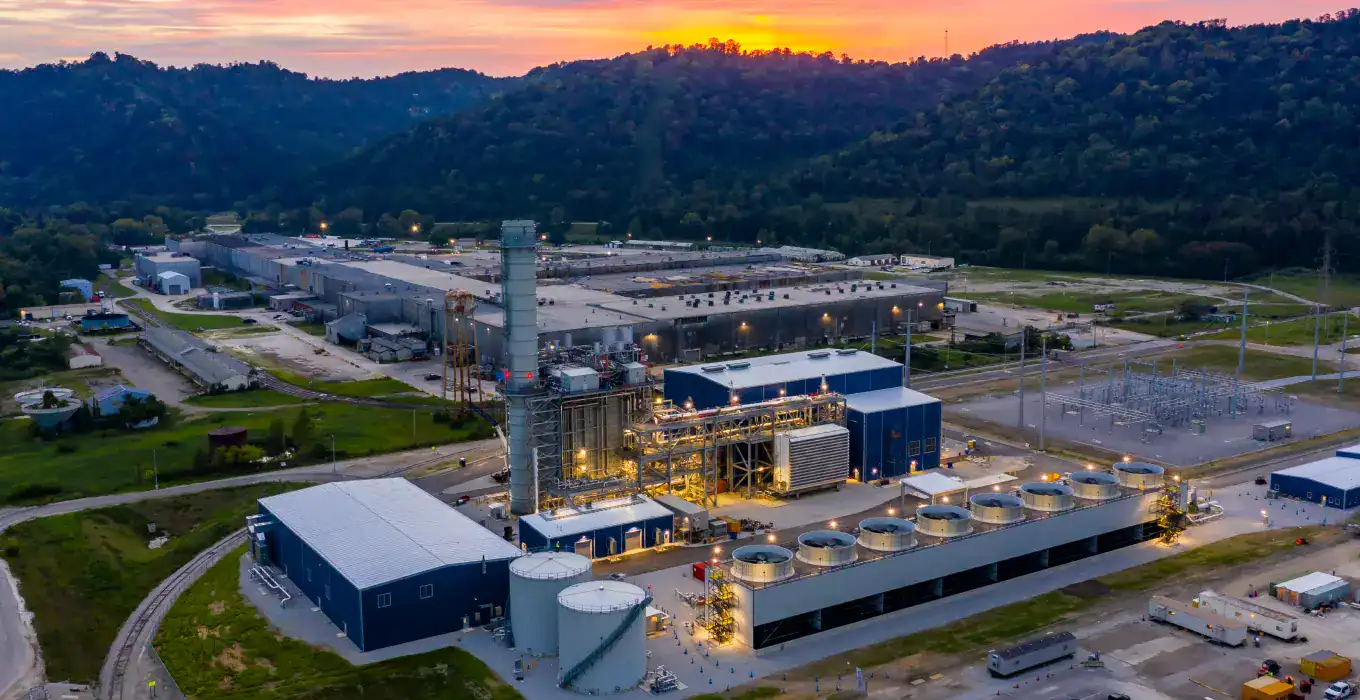
CNX Swings to $348M Profit, Drills Record 4.4-Mile Lateral
 Last week, CNX Resources issued its first quarter 2026 update. During 1Q26, CNX drilled 14 Southwest PA Marcellus wells, frac’d 6 wells (3 SWPA Marcellus and 3 Central PA Utica wells), and turned-in-line (TIL’ed) 12 wells (6 SWPA Marcellus, 3 CPA Marcellus, and 3 CPA Utica wells). Included in that activity were three of the company’s longest Marcellus laterals to date, all of which exceeded 22,000 feet, including a company record lateral that reached 23,369 feet (4.4 miles!), and a company daily drilling record of 9,252 feet of lateral in 24 hours. Production in 1Q26 was 1,693.0 MMcfe/d, up from 1Q25 (1,642.3) and up from 4Q25 (1,654.8). Read More “CNX Swings to $348M Profit, Drills Record 4.4-Mile Lateral”
 What happens on the other side of the world sometimes affects the Marcellus/Utica. So far, the Iran war has not affected prices (or demand) in the M-U for natural gas. However, if the war continues to drag on for months, it could potentially affect us by affecting the price of LNG on the world market. About one-fifth (20%) of global LNG trade depends on the Strait of Hormuz, with effectively no other way to get it out. Oil can, potentially, find other pathways out of the Persian Gulf (via overland pipelines). But such is not the case with LNG from Qatar.
  OTHER U.S. REGIONS: N.J. senator says we can’t lower energy costs without natural gas; NATIONAL: U.S. natural gas futures settle higher; Trump II vs. Biden – energy policy reversal; Treasury’s 990 overhaul – major implications for dark money networks fueling climate lawfare; INTERNATIONAL: Oil surges on Middle East attacks; Shipping freeze deepens in Strait of Hormuz; Chevron CEO says shortages in oil supply will begin appearing; Qatar extends force majeure on LNG supply through mid-June; OPEC report shows oil demand reached over 105MMBpd in 2025; OPEC+ decides to boost output; What about Earth’s threatened and endangered PEOPLE?; Gulf oil production could be restored quickly.
  Last week, the combined Marcellus/Utica Baker Hughes rig count remained at 37 active rigs for the sixth week in a row. The M-U’s chief competitor, the Haynesville, added two rigs and now runs 58 active rigs, some 21 more than the M-U. Clearly, drillers are choosing to put their money into the Haynesville over the M-U despite that play’s higher costs because (a) it’s closer to the Gulf Coast LNG export facilities, and (b) it’s easier to build pipelines in Louisiana and Texas than it is in the northeast. The national count added three rigs last week and now operates 547 rigs.
  Last Friday, TC Energy reported a robust first quarter in 2026, highlighted by a 14% increase in comparable EBITDA to $3.1 billion and record delivery volumes across its North American pipeline network. For the Marcellus and Utica shale region, the standout development is the newly announced $1.5 billion Appalachia Supply Project on the Columbia Gas system. Slated for 2030, this expansion will add 0.8 Bcf/d of takeaway capacity to meet surging electricity and data center demand. Appalachia is explicitly identified as a major contributor to the growth in U.S. natural gas production, and is expected to account for over 55% of the growth by 2035.
  The West Virginia Supreme Court of Appeals ruled in favor of Equinor USA Onshore Properties Inc. (formerly Statoil) in a multi-million dollar tax dispute last Friday. The case has major implications for how the state calculates severance taxes for natural gas liquids. The decision reversed an intermediate court’s procedural dismissal, entitling Equinor to over $19 million in tax refunds for the years 2014, 2015, 2016, 2018, and 2019. The dispute centered on the definition of “gross proceeds” and the timeliness of administrative appeals in a years-long battle with the West Virginia tax commissioner.
  In January, MDN reported that Fidelis New Energy and 8090 Industries together had launched a new company, American Intelligence & Power Corporation (AIPCorp), to develop the Monarch Compute Campus in Mason County, West Virginia (see
  Antero Resources, the largest Marcellus/Utica (M-U) driller in West Virginia, released its Q1 2026 update last week. Antero placed 20 Marcellus wells to sales during Q1 with an average lateral length of 11,652 feet. Thirteen of these wells have been online for approximately 60 days with an average rate per well of 25 MMcfe/d, including 1,457 Bbl/d of liquids per well. Antero’s drilling and completion capital expenditures during Q1 were $222 million. In addition to capital invested in drilling and completion activities, the company invested $25 million in land during the first quarter. Through its land investment, Antero added approximately 5,400 net acres, representing 24 incremental drilling locations at an average cost of approximately $900,000 per location.
 The Marcellus/Utica region received 12 new drilling permits last week, Apr. 20 – 26, down 10 from the 22 permits issued two weeks ago. Pennsylvania issued all 12 of last week’s permits. Neither Ohio nor West Virginia issued any new permits. What a disappointment! The drillers who received new permits in PA last week included: Expand Energy, PennEnergy Resources, and Snyder Brothers.
 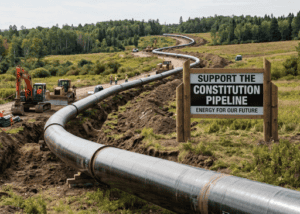 This is a critical moment for reliable, affordable energy in the Northeast, and your voice can make a difference. The Federal Energy Regulatory Commission (FERC) is currently accepting public comments on the Constitution Pipeline, representing an important step toward finally advancing this long-delayed project and a key opportunity for supporters to be heard. If you support building the Constitution Pipeline, please take a few minutes to submit a brief comment to FERC by May 4, 2026, because your input truly matters. We have instructions below on how to file a comment (it takes just a couple of minutes).
  Data centers are driving significant growth in natural gas demand in the Midwest, leading to several pipeline expansion projects. East Daley Analytics is tracking 24 GW of potential power generation capacity from Midwest data centers, which could create over 5 Bcf/d of new gas demand in a high-case scenario. The region’s appeal stems from ample land, water resources, and low-cost electricity, with Illinois and Wisconsin showing the largest potential growth (if the Democrat machine in those states doesn’t block it). To meet this demand, over 3.2 Bcf/d of pipeline expansions are planned for six different pipelines. While some of the pipelines flow molecules from other regions, they ALL flow at least some Marcellus/Utica molecules. We have the list of pipelines looking to expand below.
  In December, the Pennsylvania Environmental Quality Board (EQB) accepted a petition by radical green groups, including the Clean Air Council and Environmental Integrity Project, to “study” the issue of increasing setbacks for shale drilling so far that it would ban ALL new Marcellus/Utica drilling in the Keystone State, which is no exaggeration (see
  The Rover Pipeline is a 711-mile, $6.3 billion natural gas transmission pipeline operated by Energy Transfer, transporting up to 3.25 billion cubic feet per day (Bcf/d) of Marcellus and Utica Shale gas. It connects supply areas in West Virginia, Pennsylvania, and Ohio to markets in the Midwest, Great Lakes, and Canada. As of April 29, 2026, Blackstone (via its Energy Transition Partners funds) has sold its entire 32.4% ownership stake in Rover to Ares Management. Blackstone originally acquired its ownership stake in 2017 to fund the construction of the pipeline.