
Delaware Republicans Seek to Convert Shuttered Coal Plant to NatGas
 Delaware Republican Senators Brian Pettyjohn and Gerald Hocker are exploring reopening the Indian River Power Plant in Dagsboro to address rising energy demands and grid reliability concerns. Although the 68-year-old facility closed last February, lawmakers are discussing a potential conversion from coal to natural gas with stakeholders like Chesapeake Utilities. Supporters believe reviving the plant could lower costs and stabilize the regional grid. While the site is also tied to proposed offshore wind projects, local residents favor any solution that ensures a steady power supply as formal discussions about the facility’s future gain momentum. Read More “Delaware Republicans Seek to Convert Shuttered Coal Plant to NatGas”

 MARCELLUS/UTICA REGION: Solar on the rise in gas-rich Pennsylvania; NATIONAL: Can grid handle next Winter Storm Fern, solar flare, or enemy attack?; Climate superfund laws face legal challenges, political pushback, and implementation doubts; Legislators should set policy, not intervene in rate cases; Global capital is buying U.S. LNG – why isn’t American money leading?; INTERNATIONAL: UK oil regulator launches new digital strategy; ‘Net Zero’ is NOT affordable by the 6 billion living in poverty!
  Wow! What a week for rigs last week. On Friday, Baker Hughes reported that the national count remained unchanged at 551 active rigs. However, the Pennsylvania Marcellus picked up another rig and now operates 20 rigs, the most it has operated in well over a year. Both Ohio and West Virginia remained at 13 and 7, respectively. The combined M-U count was 40 rigs last week, the most in well over a year. The M-U’s primary competitor (for attention and money), the Haynesville, added another 2 rigs last week after adding 7 the week before, for a new modern high of 52 rigs (12 more than the M-U, bummer). It’s probably too early to declare a trend, but the upshot is that more gas drilling is underway in the two largest gas plays in the country. That’s a good sign.
 Antero Resources Corporation has reached a proposed settlement with the U.S. Department of Justice (DOJ) and the state of West Virginia to resolve Clean Air Act violations at 242 oil and gas facilities in West Virginia and Ohio. To address unauthorized volatile organic compound (VOC) emissions, Antero will invest approximately $5.8 million in system improvements and monitoring, reducing annual emissions by over 1,100 tons. The company will also pay a $3.8 million civil penalty and spend $1.5 million to permanently plug and remediate abandoned wells in WV. Total price tag: $11.1 million.
  About six years ago, Dominion Energy announced the River Neck to Kingsburg project, a short 15-mile 16-inch natural gas transmission main line that would run in an existing right-of-way alongside another pipeline along Old River Road near Pamplico in Florence County, SC. It was supposed to be built and flowing in 2022. Dominion still hasn’t built a square inch, thanks to the lawfare launched by the anti-fossil fuelers of the Blue Ridge Environmental Defense League. Earlier this month, we told you that the South Carolina Supreme Court finally cleared the last legal roadblocks (see
  Last week, MDN told you that Maryland State Senator Kevin Harris (Democrat) had recently introduced legislation allowing Big Utilities, such as Exelon, to build and operate power-generation infrastructure using ratepayer funds. We also presented the counterargument to re-regulating what is now a deregulated power market in Maryland (see
  According to the U.S. Energy Information Administration’s latest Short-Term Energy Outlook, U.S. natural gas production is projected to reach record highs of 120.8 Bcf/d in 2026 and 122.3 Bcf/d in 2027. This growth is primarily driven by the Haynesville, Permian, and Appalachia (Marcellus/Utica) regions, which together account for 69% of the total forecast output. Haynesville expansion is fueled by rising prices and proximity to Gulf Coast LNG terminals, while the Permian region’s growth stems from increasing gas-to-oil ratios despite falling oil prices. Meanwhile, the M-U region will see modest gains following new pipeline capacity additions, maintaining its status as the country’s leading producer.
  The Marcellus/Utica region received a combined 24 new drilling permits last week, Feb. 2 – 8, up 2 from the permits issued two weeks ago. Pennsylvania issued 10 new permits, Ohio issued 10, and West Virginia issued 4. The drillers receiving new permits last week included: Arsenal Resources, Ascent Resources, Blackhill Energy, EQT, Expand Energy, and Infinity Natural Resources.
  Antero Resources, the largest Marcellus/Utica (M-U) driller in West Virginia, released its Q4 2025 update yesterday. In 2025, Antero Resources underwent a “transformational expansion” highlighted by the acquisition of HG Energy, the largest acquisition in Antero’s history, which the company closed on just last week (see
  President Donald Trump and EPA Administrator Lee Zeldin announced the “largest deregulatory action in American history” yesterday by officially revoking the Obama EPA’s 2009 “endangerment finding.” This move eliminates the legal mandate for the federal government to regulate greenhouse gases like carbon dioxide. The administration claims the rollback will save taxpayers over $1.3 trillion and reduce vehicle prices by approximately $2,400 by stripping away emission standards for cars and trucks. More importantly, it takes away the left’s ability to block coal- and natural gas-fired power plants. While Trump hailed the decision as a victory for consumer choice and the economy, anti-fossil fuel fanatics vowed to challenge the repeal in court.
  Capital & Main is a left-leaning news outlet based in California. The publication has repeatedly targeted CNX Resources to smear the company and its Radical Transparency initiative. In September, we brought you Capital & Main’s latest hit piece alleging CNX’s operations are polluting and causing ill health for those who live nearby. The article also said CNX’s drilling program is anything but transparent (see
 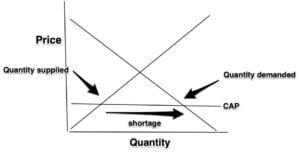 PJM Interconnection, the electrical grid operator that covers Pennsylvania (along with all or parts of 12 other states and the District of Columbia), has once again caved to the political demands of PA Gov. Josh Shapiro to artificially cap prices in its upcoming capacity auctions for the next two years. PJM caved for the July 2025 auction (see