
NJ DEP Issues Final Air Permit Needed for NESE Compressor Station
 In November of last year, both New York and New Jersey issued the required federal water permits for the Williams Transco Northeast Supply Enhancement (NESE) natural gas pipeline project (see Trump Won: New York & New Jersey Issue Water Permits for NESE Pipe). The permits were issued after years of both states rejecting the very same permits. As we pointed out in a December post, one permit remains—an air permit for a compressor station in New Jersey that is part of the NESE project (see With NESE Pipe Approved by NY & NJ, Next Up is Compressor Permit). Great news! The NJDEP issued the air permit for the 32,000-horsepower natural gas Compressor Station 206, located in Somerset County, NJ. Read More “NJ DEP Issues Final Air Permit Needed for NESE Compressor Station”
 As we’ve often noted, the NYMEX futures price and spot (physically traded) prices often move in tandem. It’s not a direct, one-to-one relationship, but when futures prices fall, spot prices tend to fall too. Most often, the reason is the weather. However, other factors can influence regional spot prices. In the Marcellus/Utica region, pipeline constraints sometimes contribute to lower prices. If we can’t get our molecules to other markets, they pile up, and the price goes down. There seems to be some of that at play right now.
  The bidding war for Ascent Resources continues and gets more complex. Law firm Kirkland & Ellis has been drawn into a dispute between Ascent Resources investors and the private equity firm Energy & Minerals Group (EMG). Mason Capital Management is questioning Kirkland & Ellis’s role representing the Ascent board while also advising EMG in its legal fight with the Abu Dhabi Investment Council. The dispute concerns EMG’s plan to put Ascent into a “continuation vehicle,” which Mason Capital and other investors have opposed. Other companies have since jumped in to make bids to take over Ascent.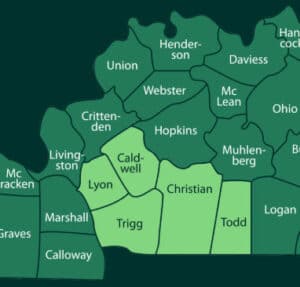
 OTHER U.S. REGIONS: New York nuclear renaissance; NATIONAL: U.S. natural gas edges up on coming weather; IPAA boss highlights ‘challenging price environment’; Climate alarmism’s credibility sinks under weight of ecological evidence; U.S. fossil donors ‘pissed’ at Trump, mock him behind his back; INTERNATIONAL: Oil surges as Iran tensions fuel supply risk; Iran releases oil tanker seized in 2024.
  Yesterday, the Ohio Oil & Gas Land Management Commission (OGLMC) met in a public forum in Columbus and voted to open another 6,570 acres of state-owned wildlife land (in Belmont and Harrison counties) to allow bids to frack under (not on top of) those areas. The Commission also awarded a contract to Grenadier Energy to drill under another wildlife area in Carroll County, 172 acres of the Leesville Wildlife Area. The state is getting an amazing $6,000 signing bonus, equaling $1.03 million, plus big royalties!
  The current (until this week) Chief Operating Officer (COO) of major Marcellus/Utica driller Seneca Resources (a subsidiary of National Fuel Gas Company) is leaving not only Seneca but also the country to become the Chief Executive Officer (CEO) of Australian driller Tamboran Resources Corporation.
  In 2015, a group of landowners in northeastern Pennsylvania who had leased their land for fracking filed a lawsuit against Chesapeake Energy, Anadarko, Statoil (now Equinor), Mitsui E&P, and Access Midstream (later bought by Williams), alleging the companies had improperly deducted post-production costs (e.g., gas gathering and transportation expenses) from royalties owed to the landowners in breach of their respective leases. The lawsuit also alleged collusion and conspiracy to defraud the landowners (antitrust violations). The lawsuit was on hold for many years while other lawsuits played out. In 2024, a federal court in Scranton unpaused the lawsuit, and the judge ruled, tossing out the landowners’ royalty claims (see
  Last October, the Maryland Public Service Commission (PSC) accepted applications for large-scale power projects, also known as “dispatchable” generation, that can provide energy quickly during periods of peak demand under the state’s Next Generation Act (see
  We spotted a short article alleging EQT has “abandoned” a shale well in Washington County, PA, and thought it would be a good opportunity to (once again) discuss the misnomer of “abandoned” oil and gas wells in Pennsylvania. Let’s begin with the news as reported…
  AI data centers are all the rage. The news (local and national) is full of such stories, playing up opposition to data centers. We’ve written plenty about AI data centers on MDN, given the close connection to gas-fired power that’s needed to operate them. We’ve also told you about a developing trend of “behind the meter” gas-fired power plants, built at the same location as a data center. That’s when the data center is built next to a power plant or vice versa. The electricity goes directly to the plant and never flows through the local power grid. Another part of this story is that sometimes the gas-fired power plant that’s on-site powering the data center receives its gas from a well drilled at the same site! The gas flows directly into the gas plant (bypassing gathering pipelines), and the plant produces electricity for the data center. And therein lies a potential, very thorny issue.
  The Marcellus/Utica rig count gained 1 rig five weeks ago in the Ohio Utica, bringing the total to 39 rigs. For the past five reports in a row, the M-U has maintained that count—the most rigs it has operated in more than a year. Pennsylvania has held at 18 active rigs for eight consecutive weeks. Ohio has operated 14 rigs for five straight weeks (its highest in over a year). And West Virginia maintained 7 rigs, which it has operated since May 30, 2025. There were 24 rigs targeting the Marcellus and 15 targeting the Utica. The national count lost 2 rigs last week, bringing the total to 544 active rigs.
  Last year, Houston-based EOG Resources acquired Encino Acquisition Partners for $5.6 billion, establishing the Utica Shale as a “third foundational play” alongside its Permian and Eagle Ford assets (see
  Last summer, Texas Eastern Transmission Pipeline Company (aka TETCO, owned by Enbridge) filed to build the Appalachia to Market III Project, abbreviated A2M III (see
 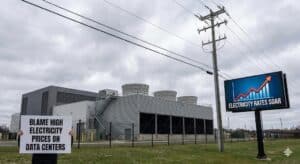 Data center forecasts — beyond existing data centers — made up 45% of the $47.2 billion in capacity costs in PJM’s last three capacity auctions, according to a report by Monitoring Analytics, PJM’s so-called independent market monitor. Data center load accounted for $6.5 billion, or 40%, of the $16.4 billion in costs from the PJM Interconnection’s December capacity auction (the most recent auction). PJM’s market monitor directly and unequivocally blames new data centers for higher electricity prices, instead of putting the blame where it really belongs: On Democrat governors who have restricted new gas-fired power plants.