
New Hampshire Towns Ticked Off New Homes Can’t Connect to NatGas
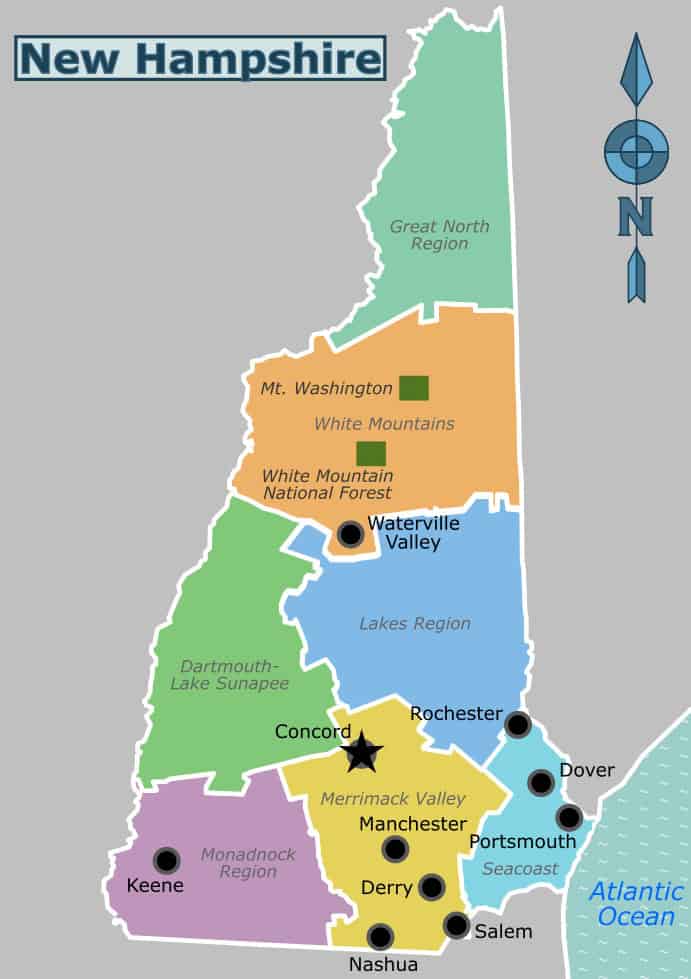
New Hampshire’s Lakes Region faces a development crisis after Liberty Utilities paused new natural gas connections due to pipeline capacity limits and lack of natural gas. Municipalities like Franklin and Laconia were “blindsided” (but should not have been) by the moratorium, which threatens hundreds of planned housing units. The region’s outdated pipeline requires upgrades that could take seven years and cost tens of millions. While local officials worry the gas shortage will stall workforce housing, so-called clean energy advocates with a vested financial interest suggest this bottleneck is an opportunity to pivot toward electrification (and it allows them to make more money). They argue that high-efficiency, high-priced heat pumps offer a faster, more sustainable solution than waiting years for expensive and uncertain natural gas expansions. Read More “New Hampshire Towns Ticked Off New Homes Can’t Connect to NatGas”
 In 2025, U.S. natural gas prices at the Henry Hub averaged $3.52/MMBtu, representing a 56% increase from the inflation-adjusted record lows of 2024. This upward trend was fueled by rising LNG export capacity and intense winter heating demand, punctuated by late-year polar vortex events. Although record-high summer production and reduced electric power sector consumption moderated prices mid-year, regional volatility persisted. While most hubs saw increases, the Northeast experienced dramatic spikes due to pipeline constraints.
  MARCELLUS/UTICA REGION: Vistra and Meta announce agreements to support nuclear plants in PJM; OTHER U.S. REGIONS: Texas oil, gas industry employed nearly 500k Texans in 2025; NATIONAL: U.S. natural gas falls on loose supply outlook; 30 pct of oil reserves might be consolidated under U.S. influence; Why don’t global lower tropospheric temps more closely track atmospheric CO2 levels?; Energy stocks enter 2026 on uneven ground after a surprising 2025; INTERNATIONAL: Iran turmoil pushes oil price to weekly gain; OPEC receives updated compensation plans from 4 countries; China’s gas growth casts a shadow over LNG demand; Why Canada is rethinking pipelines and rediscovering refineries.
  It hardly seems worthy of a post to update you on new permits to drill in the Marcellus/Utica when just one permit was issued. We suppose there may be a lag at the various environmental agencies that issue permits, but maybe not. The sole permit issued last week was in Washington County, PA, to Rice Drilling (aka EQT). The details of that well are in the report below. We will re-run our permit search next week to see if any additional permits appear for last week, Dec. 29 through Jan. 4.
  Vickery Energy Partners, LLC, a portfolio company of the private equity firm Quantum Capital Group, announced yesterday that it has closed on the acquisition of Tribune Resources. The transaction includes assets located primarily in Wetzel, Tyler, Harrison, and Doddridge counties, West Virginia, totaling approximately 38,000 net acres and more than 200 million cubic feet equivalent per day (MMcfe/d) of net production.
  Iroquois Gas Transmission’s Enhancement by Compression (ExC) project would increase horsepower at three compressor stations — two in New York and one in Connecticut — by an extra 125 MMcf/d, to flow more Marcellus/Utica gas into New York City and New England. The two NY compressors are in Dover and Athens. The CT compressor is located in Brookfield. In September, we told you that the Sierra Club paid for a fake study bashing the Connecticut portion of the project (see
  Last October, a seven-member, all-Democrat group of Pennsylvania House of Representatives members announced a six-bill legislative package aimed at regulating the “responsible development” of artificial intelligence (AI) data centers in the state (see
  Despite claims by anti-fossil fuelers that the Tenaska Westmoreland Generating Station in southwestern PA would spread disease and death if built, it’s been up and running since 2018, producing power and generating revenue for both its builders and the community. Oh, and everyone is in good health. However, the plant has been operating under a state permit since it opened. It needs a federal Title V permit for long-term operation. The state Department of Environmental Protection (DEP) is the agency that issues such a permit and is proposing to do so, which (of course) has antis’ knickers in a twist (see
  Duke Energy is seeking regulatory approval for a $3.2 billion, 1,400-megawatt natural gas power plant in Anderson County, South Carolina. Scheduled for a February 2026 Public Service Commission hearing, the project aims for operations by 2031 to meet surging electricity demand in the region. Unlike other regional proposals, Duke’s facility avoids new interstate pipeline construction by utilizing the existing Transcontinental Gas Pipeline (Transco). The plant will use air-cooling technology to significantly reduce water use and has already secured turbines from GE Vernova. While Duke remains the primary owner, local electric cooperatives will hold a 7% stake in the facility.
  Deep River Data, a company with connections to the cryptocurrency industry, wants to drill for natural gas in Lee County, North Carolina. However, production from the well would not be used to power crypto mining, but instead to fuel an AI data center. If approved, the project would be the first commercial well drilled into the Triassic Basin, a natural gas repository underlying North Carolina and other Eastern Seaboard states. The planned well is conventional, not shale, so it involves no (or very little) fracking. Yet lefty environmentalists have whipped up opposition from the locals by urging them to “ban fracking.”
  Another new (to us) pipeline project in the Southeast with the potential to flow Marcellus/Utica molecules. We recently became aware of Enbridge’s Texas Eastern Line 31 Expansion Project. The project is designed to expand the capacity of the Texas Eastern (TETCO) interstate natural gas system in Madison County, Mississippi. The current proposal (not yet officially filed with FERC) includes approximately 10.2 to 11.5 miles of 36-inch-diameter pipeline looping, a 1.7-mile delivery lateral, and the construction of the new Ridgeland Compressor Station. The project is expected to provide between 125,000 and 160,000 dekatherms per day (Dth/d) of additional natural gas transportation capacity, primarily intended to serve Entergy’s proposed Ridgeland Advanced Power Station (gas-fired power station) in Madison County.
  An interesting case in Ohio deals with whether or not natural gas can be taxed, depending on how it’s used. The Ohio Board of Tax Appeals ruled on Tuesday, January 6, that MGQ Terminal, Inc. is exempt from use tax on natural gas purchases used to process asphalt to customer specifications. Although Tax Commissioner Patricia Harris had assessed use tax for the period between 2013 and 2016 based on the determination that the company was engaged in a storage business, the board reversed this decision, finding that the company’s activities qualify as tax-exempt “manufacturing operations.” The board held that MGQ’s use of natural gas to heat, agitate, and blend refinery waste into homogeneous, specification-compliant products constitutes a transformative manufacturing process rather than mere storage.
  Constellation Energy Corporation has finalized its acquisition of Calpine Corporation from Energy Capital Partners, becoming the largest electricity producer in the United States, with a generating capacity of 55 gigawatts. This merger integrates Constellation’s zero-emission nuclear fleet with Calpine’s natural gas and geothermal assets. Prior to the merger, Calpine owned 79 energy facilities across the country, generating some 27 gigawatts (GW) of electricity, with a significant number located in the eastern U.S. Many of Calpine’s facilities use natural gas to produce electricity.
  Duke Energy breathlessly announced the launch of the DeBary Hydrogen Production Storage System, claiming to be the first U.S. project to demonstrate an end-to-end process for producing, storing, and combusting 100% green hydrogen. Located in Volusia County, Florida (near Daytona Beach), the facility uses solar energy to power electrolyzers that extract hydrogen from water. This stored hydrogen then fuels a turbine modified to burn hydrogen to meet peak electricity demand. Duke thinks that it can overcome the unreliable nature of solar power by using solar when the sun is shining to split water into oxygen and hydrogen, and storing the explosive hydrogen for later use. Below, we bring you the big claims by Duke Energy—in their own words—and then tell you why we consider their claims lacking.
  In a major disappointment, Republicans caved to Democrats in both the Senate and the House of Representatives, releasing a so-called bipartisan spending package on Monday morning that keeps the Environmental Protection Agency (EPA) budget largely intact. The spending package would fund several federal agencies and scientific bodies, including the EPA, the Departments of Interior and Energy, and the National Science Foundation, through Sept. 30, the end of the fiscal year. The “minibus” bills, which will likely move to the House floor for a vote this week, allocated more than $38 billion to Interior, Environment, and related agencies, or $9.5 billion more than the Trump administration’s budget request.