
Gulfport Eyes 5% Growth in Production & New Drilling in 2026
 Gulfport Energy is the third-largest driller in the Ohio Utica Shale (by the number of wells drilled). Gulfport released its fourth quarter and full-year 2025 update yesterday. The company reports delivering a strong performance during the period, with total net production reaching 1.10 Bcfe per day and net liquids production rising 12% over the fourth quarter of 2024 to 18.2 MBbl per day. Financial highlights included $132.4 million in net income and $234.8 million in adjusted EBITDA, supported by $185.4 million in net cash from operating activities and $120.2 million in adjusted free cash flow. Gulfport spent $25 million on drilling and completions (D&C) and $11.4 million on maintenance, land, and leasehold spending. The company spent an additional $55.7 million on discretionary appraisal and development. Furthermore, the company expanded its footprint through the acquisition of $47.2 million in opportunistic acreage. Read More “Gulfport Eyes 5% Growth in Production & New Drilling in 2026”
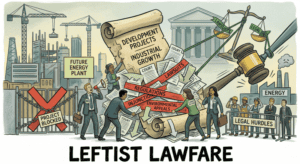 Several Big Green groups, including the Sierra Club, Wild Virginia, Appalachian Voices, and the Center for Biological Diversity, have filed a legal challenge against a permit issued by Virginia for the Mountain Valley Pipeline (MVP) Southgate extension. The Virginia Department of Environmental Quality (DEQ) approved a water permit for the project in January 2026. Big Green radicals argue that the pipeline “threatens” 138 streams, wetlands, and regional drinking water supplies. It’s the typical lawfare tactic used by the left to stall work on projects, hoping to delay them long enough that the builder (EQT in this case) gives up. Or if the builder won’t give up, they have to pay double or triple the price to construct it. That’s the game the radicals are playing.
  METLEN (Greek energy company) and Shell have signed a memorandum of understanding to cooperate on liquefied natural gas (LNG) supply and trading between 2027 and 2031. This partnership allows the Greek company to secure up to one billion cubic meters of LNG annually, leveraging domestic terminals and the Vertical Gas Corridor to supply Central Europe and Ukraine. The agreement highlights Greece’s growing importance as a strategic energy hub designed to replace Russian gas with U.S.-produced alternatives. This shift is further reinforced by increased Mediterranean exploration by major U.S. firms such as Chevron and ExxonMobil, solidifying the region’s role in European energy security. Believe it or not, there are implications for the Marcellus/Utica region.
  Yesterday, Expand Energy and Evolution Well Services announced a new agreement to deploy Evolution’s 100% electric hydraulic fracturing technology (e-fracking) in Expand’s Northeast Appalachia (northeast Pennsylvania) drilling program. Evolution, headquartered in Houston with a regional office in Pittsburgh, specializes in “electric” fracking — using natural gas from the well pad (instead of diesel) to power turbines that generate electricity to drive fracking pumps. We’ve written about Evolution’s e-fracking work in the Marcellus/Utica for years (
 In December, Antero Resources announced a deal to sell its Ohio Utica assets to a partnership of Northern Oil & Gas (NOG) and Infinity Natural Resources (INR) for $1.2 billion in cash (see
  The Marcellus/Utica region received a combined 43 new drilling permits last week, Feb. 9 – 15, up 19 from the permits issued two weeks ago. The most recent high in permits (going back at least a year) occurred during the first week of December, when 60 new permits were issued (see
  The bidding war for Ascent Resources continues to bubble. Ascent, formerly American Energy Partners, is a privately held company focused 100% on the Ohio Utica Shale. Ascent, headquartered in Oklahoma City, is Ohio’s largest natural gas producer and the 8th largest natural gas producer in the U.S. The largest shareholder in the privately owned company is the private equity firm Energy & Minerals Group (EMG), with an “over 30% stake.” EMG wants to sell that stake in one of its portfolio companies to another EMG company. That action set off a firestorm with one major investor (the Abu Dhabi Investment Council) suing to block the transfer, and several other investors, including Mason Capital Management, making offers to buy the company lock, stock, and barrel. Mason issued a press release yesterday, “demanding” answers from Ascent, accusing the board of stonewalling.
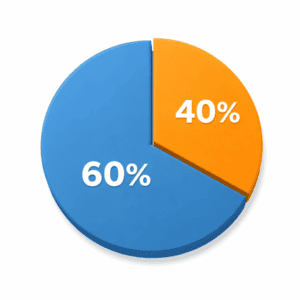
  Expand Energy turned in its fourth quarter and full-year 2025 update earlier this week. The company reported a year of “phenomenal execution,” marked by a 15% reduction in Haynesville breakevens and significant debt reduction post-Southwestern merger. The company, the largest natural gas producer in the U.S., had combined (Marcellus/Utica and Haynesville) production of 7.4 Bcfe/d, up 16% from 6.4 Bcfe/d for the same period in 2024. Interim CEO Michael Wichterich said the company is making a “strategic move” to Houston (from Oklahoma City) to align with a projected 40% rise in natural gas demand over five years.
  In December, Antero Resources announced a deal to sell its Ohio Utica assets to a partnership of Northern Oil & Gas (NOG) and Infinity Natural Resources (INR) for $1.2 billion in cash (see
  Hedging is the practice of locking in a price now to sell gas you will produce in the future. We’ve written a fair bit about hedging (
 EQT Corporation delivered its latest quarterly update yesterday for the fourth quarter of 2025 (and with a look at what’s coming in 2026). CEO Toby Rice opened the earnings call by emphasizing “2025 was another stellar year for EQT, one in which we were able to clearly demonstrate the power of our platform” and highlighted the company’s focus on operational excellence, financial strength, and scale. Rice stated, “Production consistently topped expectations throughout 2025, driven by compression project outperformance and robust well productivity.” Rice continued, “Winter Storm Fern created extremely challenging weather conditions over the past several weeks, but seamless coordination between our midstream, upstream, and gas marketing teams resulted in negligible impact to EQT’s production.” EQT production for 4Q25 was 609 Bcfe (billion cubic feet equivalent), or 6.62 Bcfe/d.
  Yesterday, CNX Resources announced it is issuing new “notes” (we call them IOUs) to raise money to buy back and redeem other notes coming due soon. The old notes are due in 2029. The new notes would be due and payable in 2034. CNX is “rolling over debt,” a common practice among large corporations, especially in capital-intensive industries such as energy and natural gas production. The company hopes to raise $500 million with the new notes to pay off the old ones. The question is, why do companies do this? Why keep rolling over debt every few years?

 Antero Resources Corporation has reached a proposed settlement with the U.S. Department of Justice (DOJ) and the state of West Virginia to resolve Clean Air Act violations at 242 oil and gas facilities in West Virginia and Ohio. To address unauthorized volatile organic compound (VOC) emissions, Antero will invest approximately $5.8 million in system improvements and monitoring, reducing annual emissions by over 1,100 tons. The company will also pay a $3.8 million civil penalty and spend $1.5 million to permanently plug and remediate abandoned wells in WV. Total price tag: $11.1 million.