
FERC Grants Limited Rehearing Request for Constitution Pipeline
 There’s a number of threads to the ongoing saga of Constitution Pipeline, a $683 million, 124-mile pipeline from Susquehanna County, PA to Schoharie County, NY to move Marcellus gas into New York State and from there, into New England. The Andrew Cuomo-corrupted NY Dept. of Environmental Conservation (DEC) refused to grant the pipeline necessary federal stream crossing permits, blocking construction, in April 2016 (see NY Gov. Cuomo Refuses to Grant Permits for Constitution Pipeline). There have been a number of court cases and regulatory actions since that time. Williams, the builder of Constitution, asked the Federal Regulatory Commission (FERC) to overrule the DEC and allow construction to begin. In January of this year, FERC denied that request (see Death of the Constitution Pipeline? FERC Refuses to Overrule NY DEC). In February of this year, Williams asked FERC to reconsider their decision (see Constitution Pipe Files for FERC Rehearing, Then Back to Court). FERC has 30 days to rule on the rehearing request. If they don’t do anything, it’s considered an automatic rejection. However, on Wednesday (just under the wire), FERC granted a “limited” rehearing request–meaning FERC wants more time to consider the request before making a final decision. It’s not a “yes” that they will reconsider and perhaps overrule the DEC–but it’s also not a “no.” Which is a good thing…
Read More “FERC Grants Limited Rehearing Request for Constitution Pipeline”
 Last week MDN told you about two radical anti-fossil fuel activists who built tree houses in the Jefferson National Forest and are living in them (for now) in an attempt to prevent the trees and the trees around them from being cut to make way for the legally permitted Mountain Valley Pipeline (see
  Fairmount Santrol, an Ohio-based sand producer that sells sand as a proppant for use in Utica and Marcellus Shale drilling, recently released its fourth quarter and full year 2017 update. Sand is good in Buckeye State. Fairmount reports the company sold 43.8% more sand in 2017 than in 2016–a sure sign that drilling in the Marcellus/Utica spiked up in 2017. Fairmount made $53.6 million in 2017, versus loosing $140.2 million in 2016, which is another positive sign. According to CEO Jennifer Deckard, “Proppant demand remained robust during the fourth quarter.” This may be the last quarterly update we bring you from Fairmount. As you may recall, late last year the company announced it is selling itself to Unimin, a subsidiary of Belgium-based SCR-Sibelco (see
  We’re not quite sure what to make of this story. North Carolina has been, as we’ve long pointed out, nitpicking in an attempt to slow down (or stop) the Atlantic Coast Pipeline (ACP) from traversing the state (see
  Rover Pipeline is in hot water again. This time it’s not Captain Craig “Ahab” Butler from the Ohio EPA, but the West Virginia Dept. of Environmental Protection. In a letter just released publicly (dated March 5), WVDEP slapped Rover with a “cease-and-desist” order, stopping all construction of Rover in the state, because of inspections in February that found 14 violations of water pollution regulations. The violations occurred in Doddridge, Tyler and Wetzel counties. Violations ran the range of leaving trash behind at construction sites to improper perimeter controls (no erosion devices installed) to failure to clean up the roads they used. In addition to trouble in WV, Rover is also facing new issues in both Ohio and Pennsylvania. In February heavy rains in the region caused “slippage issues” where the pipeline is being installed. Rover filed a report with the Federal Energy Regulatory Commission (FERC) last week to say it has eight crews working to correct slippage issues at six locations along its 51-mile Burgettstown Lateral. Here’s the latest on WV shutting down Rover, and Rover’s work to fix slippage issues…
 Last week MDN reported that due to underground horizontal direction drilling (HDD) in Chester County, PA for the Mariner East 2 (ME2) Pipeline project, a third sinkhole had developed. ME2 is being built close to the existing Mariner East 1 (ME1) pipeline. The sinkhole exposed a portion of the ME1 pipeline to the open air, which is why the head of the state Public Utility Commission (PUC) temporarily shut down the propane and ethane flowing through ME1 (see
  Big Green groups opposed to Dominion Energy’s $6.5 billion (up from $5 billion due to delays) Atlantic Coast Pipeline (ACP) from West Virginia through Virginia and into North Carolina are about out of options in their holy mission to stop the project. They’ve tried multiple lawsuits, protests, bullying state environmental agencies–the whole bag of nasty tricks. And yet ACP is now under construction. What’s left to try to stop it? The Southern Environmental Law Center and Appalachian Mountain Advocates, on behalf of a mishmash of second tier radical groups, have filed a “hail Mary” request with the Fourth Circuit Court of Appeals to stop construction of ACP until a lawsuit sitting before the Fourth Circuit questioning the validity of the permits granted for the project is played out. In other words, back to the tried-and-true playbook: delay, delay, delay–until eventually you deny…
 With much fanfare, yesterday a press event was held in Columbus, OH to make an official announcement of what we already know: that South Korea’s Daelim Chemical, a subsidiary of Daelim Industrial, is now a partner with PTT Global Chemical in the Belmont County ethane cracker project. We previously brought you that news on Feb. 1 (see
 Caiman Energy II is an interesting midstream (pipeline & processing plant) company. Caiman is part of a spaghetti mix of intertwined midstream operators in the Marcellus/Utica. Caiman is related to (backed by) Williams, and Caiman is the operator of Blue Racer Midstream. In April 2012, Caiman sold their West Virginia assets (Caiman “I”) to Williams for $2.5 billion. These days, via Blue Racer, Caiman is focused on the Ohio Utica. The news that recently caught our eye is that two of the investors in Caiman Energy II are interested in selling their ownership stake. Not Williams, which remains the primary investor–but EnCap Flatorck Midstream and Oaktree Capital want out…
 It’s been a while since we’ve heard anything from the so-called “more than 1,000” protesters willing to get themselves arrested in Lancaster County in their holy mission to stop the Williams Atlantic Sunrise Pipeline. As of last November, the unofficial tally we could determine is that 45 people who belong to Lancaster Against Pipelines (LAP) have gotten themselves arrested for illegal actions in attempting to stop the pipeline (see
  A third sinkhole related to Mariner East 2 pipeline work and the uncovering (and subsequent shutdown) of the Mariner East 1 pipeline has some folks in Chester County, PA stirred up and rather grumpy (see
  Anti fossil fuel nutters have been on a holy mission to stop a 3.5-mile, 8″ pipeline from being installed under the Potomac River since last summer (see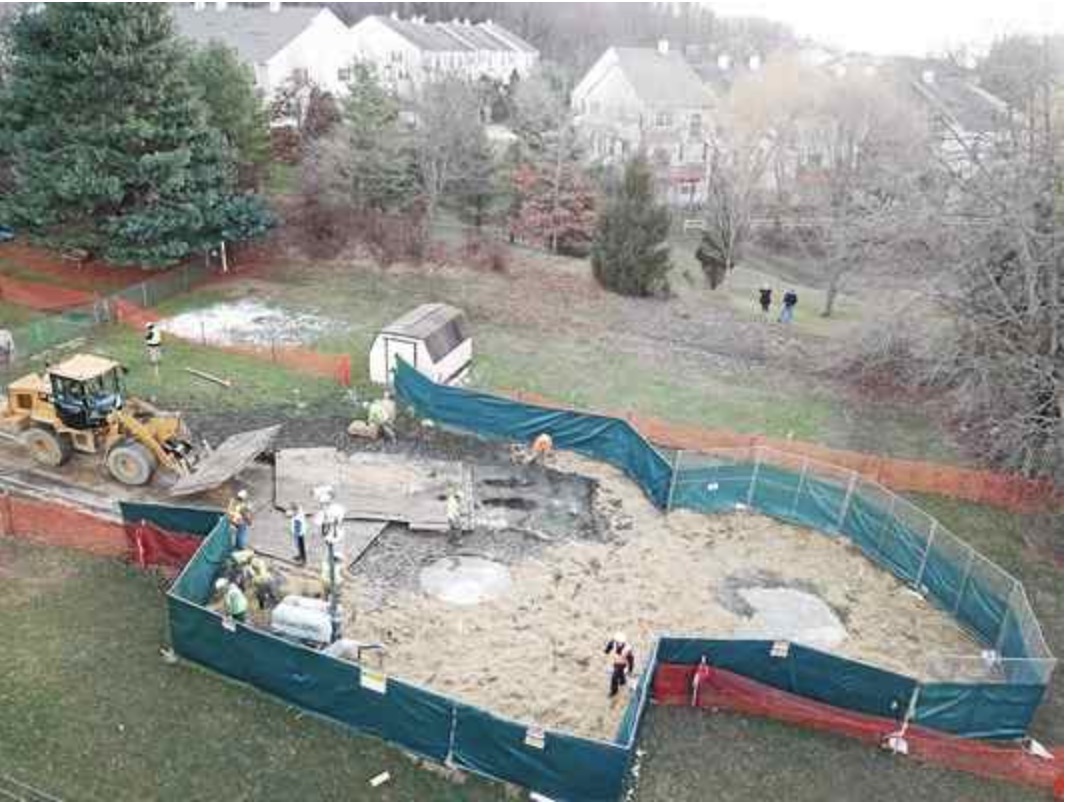
 Last Friday a judge for the U.S. District Court for the Western District of Virginia granted Mountain Valley Pipeline (MVP) the right to enter and construct the pipeline on properties of landowners who have refused to negotiate a right-of-way across their land. There are nearly 300 landowners who have refused to deal with MVP–and their time is now up. Instead of getting a higher price for leasing their property, MVP will first build and later let a court determine how much money the landowners will receive. The courts almost always determine amounts lower than could have otherwise been negotiated between the landowner and the pipeline company. Oh well. Some folks have to learn the hard way…