
Electrical Generation | Energy Services | Guernsey County | Industrywide Issues | Luzerne County | M&A | Ohio | Pennsylvania | Talen Energy
Talen Energy Gets Fed OK to Buy 2 M-U Gas-Powered Plants in PA, OH
 In July, MDN told you that Talen Energy, a leading energy producer in the U.S., which owns and operates approximately 10.7 gigawatts (GW) of power infrastructure, had announced the acquisition of two gas-fired power plants: one located near Wilkes-Barre in northeastern Pennsylvania, and the other in Guernsey County, in eastern Ohio (see Talen Energy Buys 2 M-U Gas-Powered Plants in PA, OH for $3.8B). These types of transactions require approval from the federal government. Yesterday, Talen announced that both FERC (Federal Energy Regulatory Commission) and the DOJ (U.S. Department of Justice) have approved the transaction. Read More “Talen Energy Gets Fed OK to Buy 2 M-U Gas-Powered Plants in PA, OH”
 Existing pipelines in the Marcellus/Utica region are testing the market for expansion. Two weeks ago, we told you that DT Midstream (50% owner of NEXUS Pipeline) is eyeing the growing AI data center market in northwestern Ohio as a customer for M-U molecules that flow through NEXUS (see
  Last week, the Baker Hughes U.S. national rig count gained rigs for the second week in a row. The national count increased by one rig, rising from 548 to 549. The BH rig count has added rigs in four of the last five weeks. Rigs in the Marcellus/Utica remained the same last week at a combined 37, the same number for seven weeks in a row. Pennsylvania remained unchanged at 17 active rigs (seven weeks in a row). Ohio was the same at 13 rigs (eight weeks in a row). And West Virginia maintained its 7 rigs, which it has operated since May 30 (25 weeks in a row). There were 23 rigs targeting the Marcellus and 14 targeting the Utica.
  We continue to win so much, it feels strange. But hey, we can get used to it! Back in April 2021, we reported that the leftist Democrats who run the North Carolina Department of Environmental Quality (NCDEQ) had, for the third time, rejected giving the Mountain Valley Pipeline (MVP) Southgate project a necessary Clean Water Act (CWA) Section 401 water quality certification permit (see
 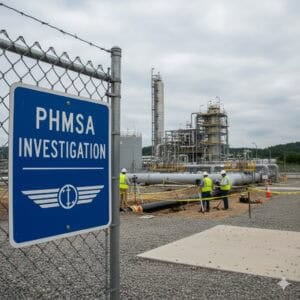 Federal safety officials are investigating leaks of ethane near two small underground storage tanks at the Cove Point LNG export terminal in Maryland and have requested that they be taken out of service immediately, citing potential safety concerns. The cause of the leak appears to be related to the tanks or their piping. However, Cove Point LNG, a facility owned and operated by a Berkshire Hathaway Energy subsidiary, maintains that the 40-gallon tanks are “safe to operate under the current conditions” and that the leaks have never posed an unsafe condition for employees or the community. The Pipeline and Hazardous Materials Safety Administration (PHMSA) issued a proposed safety order in mid-October, and the company has requested an informal consultation to discuss it.
  Since August, we’ve reported about an ongoing war of words between the City of Marietta officials (mostly Republicans) and the Ohio Department of Natural Resources (ODNR) over a permit for a fifth wastewater injection well located close to the city (see
  National Fuel Gas Company (NFG), headquartered in Buffalo, NY, is the parent company for Marcellus/Utica driller Seneca Resources and the parent of midstream company NFG Midstream (and subsidiary Empire Pipeline). Last week, NFG issued its latest quarterly update, which is the company’s fiscal year 4th quarter (but everyone else’s 3rd quarter). According to NFG CEO David Bauer, the company added 220 new Upper Utica locations during the quarter, extending the well inventory to “almost 20 years” that will be profitable at a NYMEX price under $2/MMBtu. Bauer also stated the company recently executed a new pipeline deal with an unnamed shipper to haul an extra 250 MMcf/d of Seneca’s molecules from Tioga County, PA, to premium markets, with an expected in-service date of late 2028.
  Donald Trump once famously said, “We’re gonna win so much. You’re gonna get tired of winning. And you’re going to say, ‘Please, please, it’s too much winning. We can’t take it anymore. Mr. President, it’s too much.’ And I’ll say, ‘No, it isn’t. We have to keep winning. We have to win more!'” He’s keeping his promise to win! However, we’re not tired of winning just yet. 😉 Last Friday, Williams announced that both New York and New Jersey have issued the required federal water permits needed to build the Transco pipeline project called the Northeast Supply Enhancement (NESE). President Trump made a deal (so the rumor goes) with NY Gov. Kathy Hochul, allowing her to continue building a $5 billion offshore wind farm boondoggle in return for building NESE and another project, the Constitution Pipeline (see
  In April, we told you that Energy Transfer’s (ET) Lake Charles LNG project had landed a new partner to help pay for the project, MidOcean Energy, which will cover 30% of the cost of building the plant (see
  The mystery may have been solved by MDN… In September 2022, the Delaware River Basin Commission (DRBC) voted to extend a permit to build a special LNG export dock along the shoreline of the Delaware River in New Jersey by an extra three years (see
  Mon Power and Potomac Edison are local utilities and subsidiaries of FirstEnergy Corp. The two companies recently submitted an Integrated Resource Plan (IRP) to the West Virginia Public Service Commission, outlining how they will continue to deliver reliable, cost-effective power to West Virginia homes and businesses over the next decade (see
 In February 2024, members of the South Carolina Public Service Commission approved a proposed project to build a 1,020-megawatt (MW) gas-fired power plant in the state’s Lowcountry, in Colleton County (see
 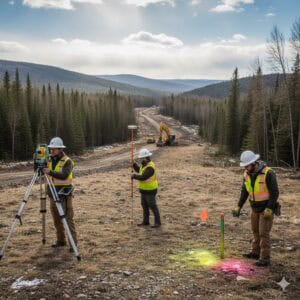 In April, MDN told you about a new greenfield expansion of Kinder Morgan’s Elba Express pipeline into South Carolina to serve growing demand for natural gas in the state (see