
Michigan NatGas Compressor Station Catches Fire, Explodes
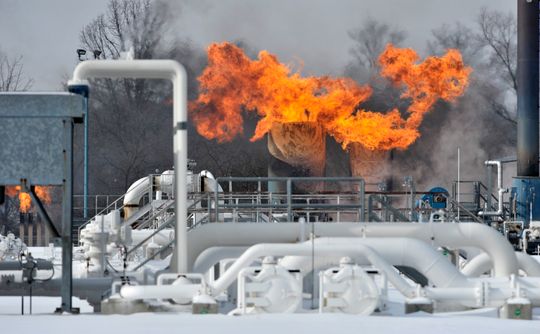
A pipeline compressor station for Consumers Energy (Michigan utility company) experienced an explosion and fire yesterday morning. The facility is located in the Lower Peninsula of Michigan in Macomb County.
Read More “Michigan NatGas Compressor Station Catches Fire, Explodes”
 The folks who keep track of these things expect today’s record-cold polar vortex in the Midwest and northeast (coldest temps in more than a generation, hey, what was that about global warming?) will create the highest demand/usage of natural gas for a single day–ever. Prognosticators also predict a “freeze-off” in the Marcellus/Utica, causing a temporary 1 Bcf/d decrease in production.
 Canadian pipeline giant TransCanada, which owns the Columbia Pipeline system here in the U.S., blames the Marcellus/Utica for a huge drop in volumes flowing through its Canadian Mainline from Western Canada to Ontario and Quebec.
 The Environmental Protection Agency’s (EPA) office of enforcement is close to launching a new audit policy “that will offer significant new penalty reductions for the oil and gas industry.” That’s how the news is being spun–that oil and gas are about to get a big, fat, wet, sloppy kiss from the EPA. The truth is far different from the media spin.
 As we have noted recently in a number of posts, it appears we’re heading into a dip of drilling activity–not only in the oil plays but also here at home in the Marcellus/Utica (see

 Equitrans’ (EQT Midstream) 300-mile Mountain Valley Pipeline (MVP) is now 70% built (see
 MDN previously reported on efforts in both Ohio and Pennsylvania to plug orphaned and abandoned oil and gas wells (all of them conventional/vertical wells), which present a health and safety issue. It’s all too easy to hit one of these old wells when drilling a new horizontal shale well. In WV, a new effort to plug old wells is causing concern for some–that the effort to plug old wells may inflict economic damage on WV counties. Huh?!
 It seems the rather thick-headed governors from New England have finally woken up and understand their resistance to new natural gas pipelines has placed them in a pickle. The region, when it gets really cold (like over the next few days), gets really short on natural gas. Prices soar, supplies diminish, and people not only pay high natgas prices, but high prices for electricity, which gets generated by natgas. The govs have a plan to slap a Band Aid on the problem.
 How is it not child abuse to brainwash young kids with your particular brand of sick environmental radicalism? That’s apparently what THE Delaware Riverkeeper herself has done–brainwashed little kids.
 This post is about a pipeline project we’ve written quite a bit about over the past few years–Dominion Energy’s New Market project that ever-so-modestly expands an existing pipeline in Upstate New York. But at its heart, the issue is much deeper. Anti-fossil fuel radicals are challenging this project, in court, as a way to force the government to consider man-made global warming when approving such projects.
 This is fun to watch. The monied interests in Westchester County, NY (suburb of New York City) are outraged that beginning in March Consolidated Edison will no longer accept new natural gas customers (see