
Indeck to Start Building $1B Gas-Powered Electric Plant in Michigan
 In October 2016, Indeck Energy announced a plan to build a $1 billion electric generating plant (powered by natural gas) in Niles, Michigan, not far from Chicago (see $1B Electric Plant Planned Near Chicago, M-U Connection?). Although there has been no mention of Marcellus/Utica gas feeding the plant (so far), we have little doubt that our gas will be used to power the plant. A number of pipelines already do, or soon will, serve that region with our gas. The State of Michigan gave its blessing and approval for the project over a year ago (see Indeck Gets Michigan Approval for $1B Gas-Powered Electric Plant). Indeck, at the time, said they planned to begin construction by the end of 2017. Didn’t happen. What’s the holdup? A couple of easements are required from Amtrak (Come on Amtrak! Get with the program!). Indeck now says construction is slated to begin in August of this year, and the plant is due to be up and running in early 2021…
Read More “Indeck to Start Building $1B Gas-Powered Electric Plant in Michigan”
 Here’s something you don’t read every day with respect to pipeline construction: “Some township officials have praised the care of contractors in minimizing and reacting to disturbances and nuisance issues such as muddy roads and traffic backups.” Those comments come from officials in (yes), Lancaster County, PA, referring to the stellar job Williams is doing in building the Atlantic Sunrise Pipeline–a $3 billion, 198-mile natural gas pipeline project running through 10 Pennsylvania counties to connect Marcellus Shale natural gas from northeastern PA with the Williams’ Transco pipeline in southern Lancaster County. What happened to the “over 1,000 protesters” willing to get themselves arrested as they stand in front of heavy equipment to block construction in Lancaster County? Where are the Clattberbucks and their Lancaster Against Pipelines gang? Nowhere to be found, apparently. The opposition to Atlantic Sunrise appears to have run out of steam. Meanwhile, Williams is full of steam–going full steam ahead with the project–and local officials could not be happier as Williams drills under 70 roads, 67 streams and 17 wetlands in Lancaster County…
 Limiting fracking to an impossibly small 150 acres (out of 12,620 acres) that make up Monroeville–a mere 1% of the acreage–is not enough of a ban for radical antis in the municipality of Monroeville (suburb of Pittsburgh). They want it all banned–every single centimeter. The only problem with that is the Act 13 law, passed in 2012, requires each municipality to allow drilling in at least one zoned area. But hey, disobeying the law isn’t a problem for antis–they do it all the time. They are anarchists by nature. Last October, Monroeville Council passed a temporary ban on oil and gas well drilling everywhere except for those areas marked M-2 industrial zoning–a big change (see
  Last June, the West Virginia Public Service Commission held a public hearing in Clarksburg, WV on the proposed ESC Harrison County Power Plant project (see
  Tree clearing for Dominion’s $5 billion Atlantic Coast Pipeline (ACP) has already begun in West Virginia (see
  In a sure sign that the $1.1 billion, 120-mile PennEast Pipeline will get built, the Bethlehem Authority, which manages watershed land in the Pocono Mountains that supplies drinking water for the City of Bethlehem, has signed a $1.7 million deal to allow PennEast to traverse four miles of Authority land. Rather than challenge PennEast and potentially lose an eminent domain case, Bethlehem Authority officials said they brokered the deal–not only for the money it will bring in, but also to ensure there are certain protections in place during construction. The State of New Jersey is trying its best to stop the PennEast project (see
  As MDN reported last week, Pennsylvania Gov. Tom Wolf, an extremely partisan Democrat, is once again beating the drum for a Marcellus Shale-killing severance tax in the last of his annual budgets (see
  In October 2017, local officials in Plum, PA (Allegheny County) approved a plan by Huntley & Huntley (H&H) to drill a series of Marcellus wells on a single well pad in their municipality (see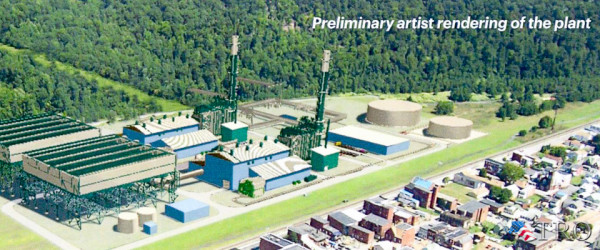
 A far-left group of radicals calling themselves Ending Dirty Gas Exploitation Philadelphia (EDGE Philly) is borrowing a tactic first pioneered by THE Delaware Riverkeeper, to oppose a short pipeline project near Philadelphia. In November, MDN shared the exciting news that an old oil pipeline stretching from Northampton County, PA through Bucks, Montgomery, and Chester counties, terminating in Delaware County at Marcus Hook, had been purchased by a subsidiary of New Jersey Resources and will get converted to flow Marcellus natural gas to the greater Philadelphia region (see
 In what can only be considered a government shakedown, Sunoco Logistics Partners has agreed to pay a massive (historically high) $12.6 million fine to the PA Dept. of Environmental Protection (DEP) for “permit violations related to the construction of the Mariner East 2 pipeline project.” The fine, along with a “stringent compliance review” going forward, gives the DEP enough confidence to allow Sunoco to resume construction on the ME2 project, which has been halted since January 3rd (see
  Last week National Fuel Gas Company (NFG), headquartered in Western New York State which operates drilling subsidiary Seneca Resources and pipeline subsidiary Empire Pipeline, issued its first quarter 2018 (everyone else’s fourth quarter 2017) update. Via Seneca Resources, NFG drills wells in northcentral and northwestern PA. Via Empire Pipeline, they build and maintain hundreds of miles of pipelines. NFG wants to add to their pipeline portfolio by building the Northern Access Pipeline–a $455 million project with 97 miles of new pipeline along a power line corridor from northwestern PA up to Erie County, NY. Northern Access would allow Seneca to drill new wells in an area currently pipeline “constrained.” However, Northern Access construction has been blocked by the corrupt NY Dept. of Environmental Conservation (see
  Duke Energy needs to replace an aging pipeline, built in the 1950s, near Cincinnati, OH–or some people in Cincy will have to go without natural gas. Duke has proposed a 13-mile, 20-inch pipeline along two potential routes. Both routes are opposed by antis, including a group calling themselves NOPE–Neighbors Opposing Pipeline Extension. We call them DOPEs–Dummies Opposing Pipeline Extensions. Will the DOPEs volunteer to shut off the natural gas to their homes and businesses if the pipeline doesn’t get built? Not on your life! The Ohio Power Siting Board (OPSB) held two public hearings last April, to grant anti-pipeliners the opportunity to vent (see
  In 2017 Mountaineer Gas launched the Eastern Panhandle Expansion pipeline project–a project to deliver natural gas via local distribution channels to a new industrial facility in Berkeley County, WV, and to provide gas to other local businesses and residents in the Tri-State area. There are three phases to the Eastern Panhandle Expansion project: Phase One runs a 22.5-mile, 10-inch-diameter steel pipeline from Morgan County to Martinsburg; Phase Two includes a loop to Charles Town; and Phase Three will build a four mile segment of pipeline into Martinsburg. The West Virginia Dept. of Environmental Protection held a hearing on Phase One in January, at the Berkeley Springs High School (see
  Ever hear of “title washing?” MDN alerted readers about this funny sounding practice that has to do with mineral rights in Pennsylvania, with possible implications for landowners and drillers, back in 2016 (see