
New Easement for Shell Ethane Cracker Pipeline Reveals Price Paid
 Bit by bit, piece by piece, Shell is getting landowners in Beaver County, PA to sign easements for its 94-mile Falcon Ethane Pipeline–a pipeline with two “legs” that will feed Shell’s mighty ethane cracker plant. MDN exclusively broke the news in February 2016 that Shell had begun to sign leases with landowners for the pipeline (see Exclusive: Shell Leasing Land for 2 Pipelines to PA Cracker Plant). As we later learned, it’s “one” pipeline with “two” legs or branches. There were more easements signed in January (see Shell Leases More PA Properties to Build Ethane Pipeline), and again in May (see Another 7 Easements Signed for Shell’s Falcon Ethane Pipeline). The latest news is that Shell has acquired another 3,183 feet. What’s different this time, however, is that we know how much Shell paid to lease those 3,138 feet. We’ve not seen any mentions of payments in the past (Shell preferring to keep it private). We won’t keep you in suspense, the price paid works out to be $75 per foot…
Read More “New Easement for Shell Ethane Cracker Pipeline Reveals Price Paid”
 Each June, the Pennsylvania Public Utility Commission (PUC), the agency charged with keeping tabs on impact fee revenue from shale drillers (PA’s version of a severance tax) releases the final numbers of impact fee revenues and disbursements. Today is the appointed day for 2016 impact fees. The PUC reports impact fees on natural gas producers in 2016 totaled $173,258,900–the lowest annual revenue generated from the fee to date (since the fee began in 2011). However, 2016 was the low point for drillers drilling new wells–the bottom of the valley in the oil and gas industry. Since mid-2016 we’ve been on an upswing in drilling new wells, which will no doubt be reflected in 2017 impact fee revenues. We have the PUC press release below, and screenshots for many of the pretty color pie charts showing topline numbers. What was the #1 county receiving impact fee revenue (meaning the #1 county drilled) in 2016? Washington County. The driller paying the most in impact fees in 2016? Range Resources. The municipality receiving the most revenue from impact fees? Interestingly, that would be Cummings Township–in Lycoming County. Here’s the 411 on impact fees (i.e. taxes) raised and spent in PA for 2016…
 In June 2014, MDN told you about the Dominion New Market Project–a project that will build two new compressor plants and upgrade one other compressor station in upstate New York–to help flow more abundant, cheap and clean-burning Marcellus Shale gas from Pennsylvania (and beyond) into the northeast (see
  In April MDN provided an update on the Sabal Trail Transmission pipeline project (see
  In reading a fascinating story about European chemical plant giant Ineos, the article took an unexpected turn when it said Ineos, indeed all of Europe’s petrochemical industry, is “vulnerable as never before because of the shale oil and gas boom in the US, which has made energy costs there just a fraction of those in Europe.” The article specifically names and credits the Marcellus with producing feedstock that is far cheaper than can be found in Europe–and chemical plants are now choosing to relocate and manufacture their products in the U.S. rather than Europe. The inescapable conclusion: if the United Kingdom (and Europe) refuses to frack, they’re hosed. Ineos, which has figured this out, has “quietly” purchased “some interesting onshore fracking licences” in the UK, and they intend to use them…
 Senate Minority Leader Chuck Schumer (extreme partisan) has recommended to the White House that Richard Glick, current a Senate staffer and former lobbyist for the wind industry, should succeed Democrat FERC Commissioner Colette Honorable. That’s according to “three industry sources with knowledge of the decision.” So far the White House is mum and refuses to “get ahead of an official announcement.” Our advice to President Trump: Don’t do ANYTHING recommended by Chucky Schumer…
 UK oil and gas giant BP released the 2017 edition of their BP Energy Outlook on Tuesday. BP, being a European company, pays homage to renewables and pledges its undying love for the crappy Paris climate treaty. Whatever. There are a few facts from the Outlook that stand out: (1) By 2035, across the entire world, 78% of all energy will come from fossil fuels. So much for renewables riding in to the save us all “any day now.” (2) In 2015, natgas produced 24% of the world’s energy. BP says in 2035 that number will go up to 25%–just a single percentage point. We think that’s grossly underestimated, but who are we? (3) The U.S. will achieve overall energy self-sufficiency by 2023 (last year they estimated it would happen in 2021). (4) Carbon emissions were flat for a third year in a row, driven by “weak energy demand and a cleaner energy mix,” which includes the use of more natgas. Tell us again why we need the Paris climate treaty, when carbon output is going down without it? (5) The U.S. will be neck-in-neck with Australia, but we will likely be *the* dominate LNG supplier worldwide by 2035. Read the full BP report below…
 Researchers at the University of Texas at Austin say they’ve found a better/cheaper/faster way to remove oil from water. Which obviously would have a huge impact on the shale industry and the prodigious amounts of produced water (i.e. wastewater) that comes out of wells long after they’re drilled. The UT researchers, in a paper published in the Journal of Nanoparticle Research, reveal how they use nanoparticles and a magnet to separate oil from water. In fact, they filed a short, 10-second video that illustrates the process. In just a few seconds, oil embedded in water collects in one location when a magnet is put next to it. Really cool stuff! Is this the future of shale wastewater treatment?…
 An article in the left-leaning Harrisburg Patriot-News has this incendiary opening: “Is it ‘abnormally dangerous’ to drill and frack for oil under a massive oil refinery, particularly if that well is bored beneath a tank filled with 3.6 million gallons of gasoline? A decision issued by a divided Commonwealth Court panel on Monday will give a Pennsylvania community a chance to find out.” In a court decision filed on Monday, the Commonwealth Court of Pennsylvania will allow a driller to drill and frack a well that is close to (but not directly underneath) the above-ground 3.6 million gallon petroleum tank. At first blush, especially when reading an opening like the one in the Patriot-News story, the average reader would think such a plan is stark raving mad. But when you dig into the details, a far different story emerges. As usual, mainstream media misrepresents many of the facts. We’re here to sort it out for you…
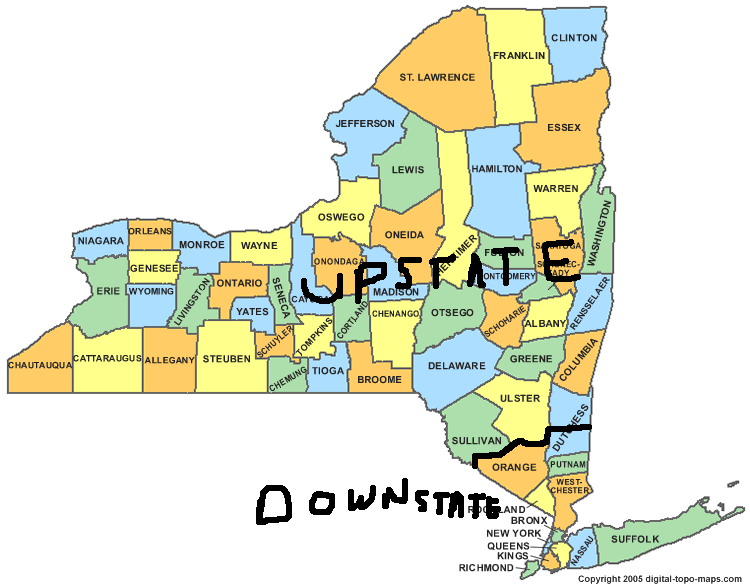 Every now and again anti-fossil fuel nutters in New York will pop up from whatever hole they live in to claim that the couple of NY landfills accepting drill cuttings (leftover rock and dirt) from PA shale drilling will result in an environmental apocalypse. One landfill in particular, in Chemung County, seems to be the focus of their ire (see
 Duke Energy needs to replace an aging pipeline, built in the 1950s, near Cincinnati, OH–or some people in Cincy will have to go without natural gas (see
  As we reported yesterday, the first two (of four) public hearings were held on Monday by the Pennsylvania Dept. of Environmental Protection (DEP) to elicit comments on the proposed $3 billion, 198-mile Atlantic Sunrise Pipeline, an expansion of Williams’ Transco Pipeline system (see
 It doesn’t happen often, but every now and again we read about driller or (in this case) pipeline company operating in the Marcellus/Utica we had never heard of before. Such is the case today. A new (to us) midstream company, XcL Midstream, has formed and is already building a dry gas gathering pipeline system in West Virginia, with plans to build a wet gas gathering system in WV too. According to its website, XcL “operates in the premier region of the Appalachia basin in Marshall and Wetzel Counties, West Virginia. XcL Midstream’s Appalachia Connector Pipeline is strategically located at the intersection of every major long-haul interstate pipeline system in Southwest Appalachia and provides shippers with market price optionality.” XcL plans to gather and process dry gas, wet gas (i.e. natural gas liquids), and transport water for its customers. XcL has its headquarters in Canonsburg, PA, near Pittsburgh. The reason that the company popped up on our radar is because Platts ran an article announcing that XcL has signed a customer–THQ Appalachia I, an affiliate of Tug Hill–to use 600 million cubic feet per day (Mmcf/d) on the dry gas pipeline, 200 Mmcf/d on the wet gas pipeline system, and to use a forthcoming water pipeline to boot. Here’s the thing: both XcL and THQ/Tug Hill are backed by private equity company Quantum Energy Partners. So apparently this is one of Quantum’s portfolio companies doing business with another of Quantum’s portfolio companies. In essence, one cousin helping out the other cousin. Perhaps we can call them kissin’ cousins?…
 Yesterday saw the first two (of four) public hearings being hosted this week by the Pennsylvania Dept. of Environmental Protection (DEP) to elicit comments on the proposed $3 billion, 198-mile Atlantic Sunrise Pipeline, an expansion of Williams’ Transco Pipeline system. One of yesterday’s meetings was held in Lancaster (Lancaster County), and the other in Tunkhannock (Wyoming County). The striking thing about both meetings is that they were not the usual circus freak shows by anti-fossil fuelers we’ve come to expect. Indeed, in both venues, an overwhelming majority of those speaking were there to speak IN FAVOR of the projects. Oh, there were detractors, to be sure. Nonsensical statements made by people like Malinda Clatterbuck, one of the locals in Lancaster who is attempting to turn Lancaster into another North Dakota fiasco. Clatterbuck said “angst over the pipeline has caused premature births, divorces and heart attacks” among people she knows. Complete rubbish. Anyone can say (or do) anything at these hearings. Mark Clatterbuck (Malinda’s husband) also spoke. Mark was a protester in North Dakota against the Dakota Access Pipeline. He warned (threatened?) DEP representatives of a coming “community uprising” against the Atlantic Sunrise pipeline. Even though there was some opposition like the clattering Clatterbucks at last night’s hearings, the big news is that their opposition was drowned out by supporters of the pipeline project. And that’s good news for all Pennsylvanians…