
Antis Hound PA DEP for More Notifications & Fines re Shell Cracker
 Two days ago, MDN brought you the news confirming that Shell is looking to sell all or part of its Beaver County, PA, ethane cracker plant operation (see Shell Looks to Sell All or Part of Monaca, PA Ethane Cracker Plant). We remain somewhat incredulous that it wants to sell an asset like the cracker plant. The question is, why? We said this: “We still think Shell is just plain tired of dealing with all of the CRAP from the environmental left and the Pennsylvania Department of Environmental Protection, which declares a new emergency or violation at the plant about every other day.” Right on cue, a group of radicals is hammering the DEP, claiming the cracker plant is polluting everything in sight and that the DEP is not being hard enough on Shell. Read More “Antis Hound PA DEP for More Notifications & Fines re Shell Cracker”
 Leatherstocking Gas Company, a subsidiary of Corning Energy Corporation, runs gas mains to residents and businesses in small, mainly rural communities in northeastern Pennsylvania (see
  Yesterday, the “front month” contract (for September) for the NYMEX futures natural gas price crashed down 15.1 cents to close at $2.932/MMBtu. Bummer. The $3 level is an important psychological barrier, and we just violated it. The questions, as always, are (1) why did the price go lower (what’s rattling around inside the heads of traders); and (2) where is the price likely to go next? We aim to try to answer those questions in this post.
  Last November, three of five supervisors in Cecil Township (Washington County), PA, voted to ban all new fracking in the town via a new setback (distance from well to nearest structure) requirement of 2,500 feet (see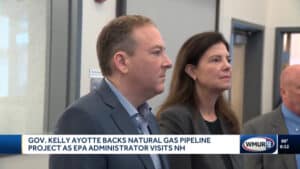
 In December 2022, Louisville Gas and Electric Company (LG&E) and Kentucky Utilities Company (KU), both subsidiaries of PPL Corporation, announced a plan to replace 1,500 megawatts of aging coal-fired generation (nearly one-third of Kentucky’s coal fleet) with two 645-MW natural gas combined-cycle units along with several unreliable, intermittent solar projects (see
  Venture Global’s Calcasieu Pass (CP) LNG export facility in Louisiana began operations in March 2022 (see
 Last week, the Baker Hughes U.S. rig count continued its downward trend, losing another two rigs to end at 540 active rigs nationwide. The count has been down 13 of the last 14 weeks, with the only slight increase happening three weeks ago. The Marcellus/Utica count remained the same (after gaining one rig two weeks ago) at a combined 36 active rigs. PA is running 18 active rigs. OH is running 11 rigs. And WV is operating 7 rigs.
  Back in March, the Wall Street Journal reported that Shell is “exploring a potential sale of its chemicals assets in Europe and the U.S.,” which includes the recently completed Monaca (Beaver County, PA) ethane cracker complex (see
  Data centers are all the rage these days. It seems like a new data center is announced weekly somewhere in the Eastern U.S. Ohio has its fair share of them coming to the Buckeye State (
 Glenfarne’s Texas LNG facility in Brownsville, Texas, will have the capacity to export 4 MTPA. EQT Corporation, the largest natural gas producer in the Marcellus/Utica, signed two agreements with Glenfarne to liquefy 2.0 million tons per annum (MTPA) of EQT-extracted shale gas at the facility when it’s built (see
  Last week, the Environmental Protection Agency (EPA) announced it will delay the implementation of new limits on methane emissions from oil and gas development by an extra 18 months, until January 22, 2027. The Trump EPA is considering scrapping the onerous regs altogether. The regulations were cooked up during the terror reign of President Autopen. Big Green, which loved the Autopen years, filed a lawsuit challenging the delay. No surprise there.

 A group of 26 financial officers (state treasurers) from 21 states sent letters to 18 major financial institutions this week, including BlackRock, warning them to abandon environmental, social, and governance (ESG) practices if they wish to continue doing business with their states. Notably, Pennsylvania’s Treasurer, Stacy Garrity, was one of the signatories on the letter. West Virginia’s Treasurer, Larry Pack, signed, too. Unfortunately, Ohio’s Treasurer, Robert Sprague (a Republican), was NOT one of the signatories. Curious.