
FERC Commissioner LaFleur Admits She’s a Global Warming Activist

For some time we’ve noticed that both of the Democrat members of the Federal Energy Regulatory Commission have been voting against natgas pipeline projects using the excuse of mythical man-made global warming (euphemistically labelled “climate change”). It used to be, under Lord Obama, that Commissioner Cheryl LaFleur didn’t use the climate change excuse when deciding about projects. But something happened. Someone got to her. Maybe Chuck Schumer? Nancy Pelosi? Somebody has told LaFleur if she ever wants another job in the DC swamp after she leaves FERC, she needs to start vetoing pipeline projects. And so she does. Using global warming as the excuse. LaFleur talked about her new-found penchant to use global warming in FERC decision making at the North American Gas Forum this week in DC.
Read More “FERC Commissioner LaFleur Admits She’s a Global Warming Activist”
 The Obama years were a disaster for the country in general, and the oil and gas industry (all coal) in particular. One of the egregious examples of overregulation under Obama (wild, far-out overregulation) was reducing so-called fugitive methane (CH4)–preventing teeny tiny leaks of methane from pipelines, wellheads, etc. Obama’s Stalinist EPA put in place expensive requirements to capture nearly every last molecule of CH4–making it uneconomical for many drillers and pipeline companies, driving them from the industry. The Trump Administration is correcting many of the egregious regulations of the Obama era. On Monday, Team Trump floated reworked (relaxed) regs for methane emissions.
 Hey Andy Cuomo: Your days of blocking pipeline projects are numbered. There’s momentum building in Washington, D.C. to address the issue of rogue politicians like Cuomo from blocking federally-approved interstate pipeline projects, as Cuomo has done with several such projects (Constitution Pipeline, Northern Access, Millennium). There’s talk among Team Trump to fix this problem (see
  Anti-fossil fuelers are on a holy mission to stop a 3.5-mile, 8-inch pipeline from being built under the Potomac River by Columbia Pipeline (see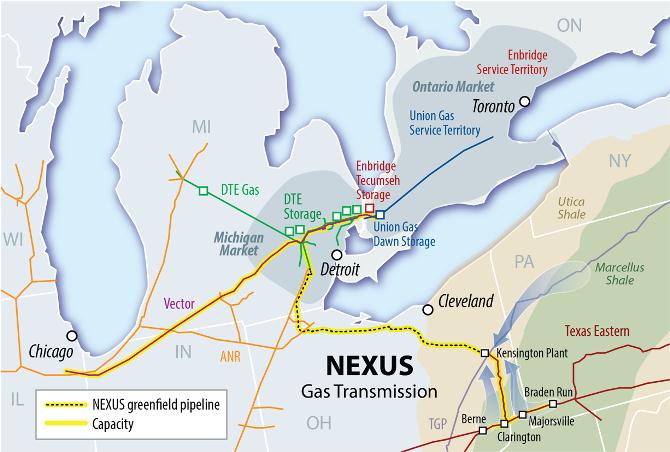
 Earlier this week the Franklin County (VA) Planning Commission voted 5-0 to allow Roanoke Gas Co. to build and operate a “gate station”–a connection to the under-construction Mountain Valley Pipeline (MVP). Roanoke Gas is laying new pipelines in the area and needs natgas to feed its new customers. Antis showed up at the meeting (what’s new?) to complain and threaten and moan and whine. They actually tried to say there is no “public benefit” for MVP, and that this gate station is simply a ruse to give the appearance of a public benefit.
 Our country sacrifices a lot on the altar of so-called safety. Crises are often used as an excuse for “the government” to use a heavy hand in controlling people and actions they (“the government”) deem a threat. Usually it’s a threat to their power. But the justification offered by the government is to protect the well-being of the citizenry. And the citizenry, convinced they are in mortal peril, is only too happy to yield their hard-won rights as free citizens–in the name of “safety.” It’s happening again–this time in the People’s Republic of Massachusetts, where unelected regulators have ordered a private business, National Grid, to cease all work on its natural gas pipeline system following a minor incident of too much pressure.
 More bad news for EQT Midstream’s Mountain Valley Pipeline (MVP). Last week the U.S. Court of Appeals for the Fourth Circuit overturned a permit issued by the U.S. Army Corps of Engineers for MVP in West Virginia (see
  Some of the most important, and slowest, permits issued to drill a new shale well in Pennsylvania are “Erosion and Sediment Control” permits. Well pads and the roads built to access them involve such permits. When sediment/erosion permits are delayed, the whole project is delayed. The PA Dept. of Environmental Protection published an updated general permit covering Oil and Gas Development Erosion and Sedimentation Control (ESCGP-3) in the Pennsylvania Bulletin on Saturday, Oct. 6. The new permit is supposed to streamline and make the approval process faster. We’ll see about that.
 We’re feeling better and better that President Trump is ready to take action to overrule states like New York that abuse the federal Clean Water Act in order to block interstate pipeline projects. We first picked up on comments by Energy Secretary Rick Perry back in May (see
  Yesterday the Federal Energy Regulatory Commission (FERC) finally (finally!) granted Williams permission to open the taps up and let natural gas flow along the Atlantic Sunrise Pipeline, a 200-mile greenfield pipeline from northeastern to southeastern PA. Startup was delayed two months from Williams’ original estimate (due to Williams, not FERC). But that’s all behind us now. Beginning tomorrow, Marcellus molecules from Cabot Oil & Gas, Chief Oil & Gas, and Seneca Resources will begin flowing along the pipeline, heading out of our region where those molecules will fetch higher prices.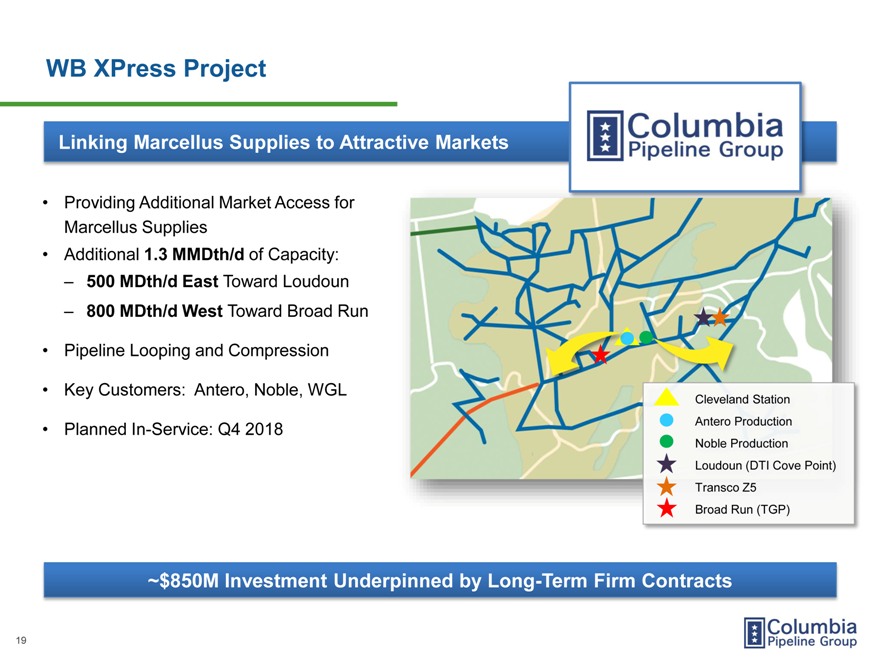

 In August MDN told you the rumor mill was in overdrive that Trump has already picked a replacement for outgoing Federal Energy Regulatory Commission member Rob Powelson (see
  Earlier this year the federal EPA approved a new injection well for Plum Borough in Allegheny County, PA (see