 AFTERNOON UPDATE: We now have a copy of the so-called “open letter” as it was posted from the Scribd website to share with you (see it below). In viewing the properties of the document (image below) you will find that the the Environmental Defense Fund (EDF) and DC-based Smoot Tewes firm–started by two former Obama campaigners–were behind the letter. Kelsey Robinson, an EDF communications person in Austin, was the author. None of the signatories on the letter are from the EDF. In other words, this was a sham, made-up piece of anti-drilling propaganda from the beginning–and the Post-Gazette reporter played along. Just another example of fake news from a mainstream newspaper.
A small group of anti-drilling healthcare workers (i.e. doctors, nurses, etc.) are, once again, trying to stop Marcellus Shale drilling in Pennsylvania. Their latest angle of attack is a publicity stunt using one of their favorite tools–the Pittsburgh Post-Gazette. The Post-Gazette runs a story today that opens this way: “Thousands of Pennsylvania doctors, nurses and other health care professionals have sent a letter to the Marcellus Shale Coalition, requesting that it stop legal challenges and lobbying against regulations aimed at controlling drilling air emissions and safeguarding public health.” Several paragraphs later we read this: “The letter, scheduled for release Monday, is signed by about 40 individual doctors, nurses and health care workers, and organizations representing more than 40,000 doctors, nurses, researchers, and health professionals.” In other words, “thousands” did not send a letter, but in reality, “about 40 individuals” did. That’s called fake news. And it’s being pedaled by the same rabidly radical antis (who happen to work in the healthcare industry) we’ve heard from before. They are committed to irrationally ending the use of fossil fuels, and they’ve apparently enlisted the help of a sympathetic “reporter” to do it…
Read More ““Thousands” in PA Healthcare Send Ltr re Methane Regulations”

 Along with chainsaws buzzing (until Mar. 31) and wood chips flying, Rover Pipeline has now started the backhoes. As MDN previously reported, on Feb. 3 the Federal Energy Regulatory Commission (FERC) gave its final approval for Energy Transfer’s Rover Pipeline project, a $3.7 billion, 711-mile Marcellus/Utica natural gas pipeline that will run from PA, WV and eastern OH through OH into Michigan and eventually into Canada (see ET Rover Pipeline Gets Final Approval by FERC). At the time we observed Rover had received permission to clear trees before the Mar. 31 “can’t kill roosting bats” deadline. However, Rover did not have permission to begin digging trenches and laying pipeline. That permission came this past Friday…
 Compressor stations in Ohio, needed to flow natural gas through numerous new pipelines being built, require a permit from the Ohio Environmental Protection Agency (EPA) in order to get built. The Ohio EPA considers each application independently, a laborious and long process. In an effort to streamline that process, the Ohio EPA began work on a plan in September 2015 to issue “general permits” for compressor stations (see
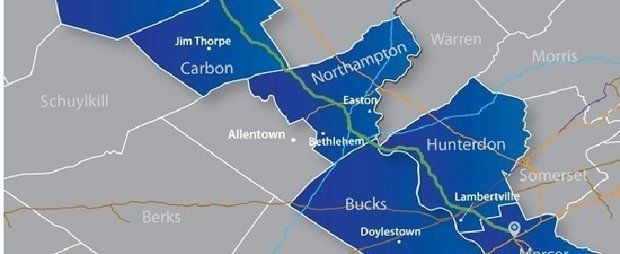 PennEast Pipeline is a $1 billion, 118-mile pipeline from Luzerne County, PA to Mercer County, NJ. Along the entire length of the pipeline, there will only be one compressor station–located in Carbon County, PA. This past Wednesday the PA Dept. of Environmental Protection (DEP) conducted a public hearing on the compressor station plan. Nominally the hearing is to elicit feedback from the public. However, as is so often the case, these are not really hearings but theatrical performances where anti-drilling kooks put on the equivalent of a circus act. But antis weren’t the only ones who showed up for the hearing. Plenty of supporters were there too…
 Yesterday MDN editor Jim Willis had the pleasure of attending, and moderating two panel sessions, at the Oil & Gas Awards 2017 Northeast Industry Summit in Pittsburgh. (Jim is back in Binghamton today, very tired!) When the sessions are made available via video, Jim will post them here on MDN. In the meantime a few words about the sessions and presenters, and about what we consider some pretty big news coming out of yesterday’s meeting. The day began with MDN friend George Stark, Director of External Affairs for Cabot Oil & Gas, making an impassioned plea for everyone in the industry to get involved with telling the great story of our beloved industry. Don’t think it’s someone else’s role–it’s the role of every single person in the industry, from janitor to secretary to CEO. George gave a rousing, opening address. George was followed by a panel discussion led by MDN friend Charlie Schliebs, Managing Director of Stone Pier Capital. Charlie’s panel tackled some interesting topics about mergers and acquisitions, bankruptcies, and where they see the price of natural gas going over the next several years. After Charlies panel was a panel discussing pipeline projects. The moderator was Fred Lowther, a partner at powerhouse energy law firm Blank Rome. Fred, who once worked on the Iroquois Gas Transmission Pipeline project when it was being built, said over the years since that pipeline was built he’s often joked they failed to do a “celebrity impact statement” when building it. Liked that line! After Fred’s panel was a talk given by Michael Krancer, also with Blank Rome (and former Secretary of the PA Dept. of Environmental Protection). Mike is always a take-no-prisoners presenter. We’ve always loved the way he thinks and expresses himself. Yesterday was no different. It was during Mike’s talk that we found what we believe was the most important thing said yesterday. It has to do with PA’s proposed General Permit 5A. Mike said if GP-5A is enacted as written, it will result in a 12-18 month moratorium on production in Pennsylvania…
 Last year the federal Environmental Protection Agency (EPA) under Barack Hussein Obama once again far exceeded its constitutional limits by enacting a new methane regulation that requires oil and gas operators to install all sorts of expensive equipment in a vain attempt to sniff out so-called fugitive methane (see
  In January MDN told you about an effort in Virginia to ensure new changes in Virginia’s environmental regulations that require “mandatory disclosure of fracking chemicals, baseline water testing and monitoring, and spill prevention and response planning” would still protect trade secrets–the exact combinations of chemicals used by drillers when fracking (see
  In May 2015, Obama’s rogue Environmental Protection Agency (EPA), along with the Obama U.S. Army Corps of Engineers (USACE), released a finalized rule clarifying what “Waters of the United States” (WOTUS) means vis-à-vis what can be regulated under the federal Clean Water Act (see
  Less than two weeks ago Oklahoma Attorney General Scott Pruitt was confirmed to be the new Administrator of the Environmental Protection Agency (see
  New York State is a hopeless, corrupt mess. MDN previously reported on a $900 million natural gas-fired electric generating plant coming to Orange County, NY (see
 In July 2014, MDN told you the water wells for two of three families living near a WPX recycled frack wastewater impoundment (i.e. “pond”), near Ligonier (Westmoreland County), PA, were determined to have been contaminated by that impoundment. That is, the Kalp impoundment leaked into the ground, according to the PA Dept. of Environmental Protection (DEP), and that caused a long-term problem with those wells (see
  The legislative session for West Virginia is in full swing–a session that lasts for 60 non-contiguous days at the beginning of each year. This year’s session opened on Jan. 11 and will conclude on Apr. 8th. As MDN previously reported, perhaps the biggest energy-related issue for this year’s session will NOT be (as it has in five previous sessions) a bill on forced pooling. Instead, the West Virginia Oil and Natural Gas Association (WVONGA) is pushing a legislation on co-tenancy and joint development (see
  In December, the Federal Energy Regulatory Commission (FERC) threw a little cold water on two important pipeline upgrades to carry more Marcellus/Utica gas to southern markets. A final environmental impact statement (EIS) was due from FERC for both the Mountaineer XPress and Gulf XPress projects no later than April 28, 2017. FERC said that the deadline would slip by three months due to reroutes and additional environment information requested (see
 In January 2014 MDN brought you the story that due to incessant nagging from the NJ Sierra Club and the NJ League of [Liberal Democrat] Women Voters the Pinelands Commission, which oversees a stand of scrub pines in South Jersey, nixed a plan for a new natural gas pipeline to bring cheap, clean, abundant Marcellus Shale natural gas to South Jersey for use by residents and to feed an electric plant a local utility wants to convert from burning coal to natgas (see