
Bradford County | Energy Companies | Enerplus | Lycoming County | Pennsylvania | Sullivan County | Susquehanna County | Wyoming County (PA)
Enerplus 2018 – Still Owns 36K Marcellus Acres in NEPA
 It’s been a while since we’ve checked in on Canadian energy company Enerplus Corp, which currently owns some 36,000 acres of Marcellus Shale leases in northeastern Pennsylvania. The company doesn’t drilling any wells in the region but does participate by funding the drilling programs of others. On Friday Enerplus issued their 2018 and 4Q18 update, which shows the company’s Marcellus production averaged 208 million cubic feet per day (MMcf/d).
Read More “Enerplus 2018 – Still Owns 36K Marcellus Acres in NEPA”
 Earlier this week Energy Transfer, the company that built the Rover Pipeline in Ohio, the Revolution Pipeline in southwestern Pennsylvania, and the Mariner East pipelines that run from eastern OH clear across PA to Philadelphia, issued its fourth quarter and full year 2018 update. The thing that caught our attention is an admission by ET’s CEO Kelcy Warren that the company has made “mistakes” with its pipeline projects in PA, and has learned from those mistakes.
 From time to time we check in on Epsilon Energy, which concentrates most of its effort on the Marcellus in Susquehanna County, PA. The former Canadian company decided to “domesticate” itself, moving headquarters from Canada to Houston, TX last summer (see
  Natural gas storage fields are an important, but often overlooked, part of the natgas ecosystem. Equitrans (nee EQT Midstream) owns a natgas storage field in Greene County, PA, in the southwest corner of the state. The state Dept. of Environmental Protection (DEP) is threatening to shut down that storage field, because of coal mining in the area.
 On Tuesday we brought you an update about New Fortress Energy’s LNG plant planned for Wylausing (Bradford County), PA (see
  CNX was fracking their Shaw 1G Utica well in Washington Township (Westmoreland County) on Saturday, Jan. 26, when they detected “a strong drop in pressure” and stopped fracking (see
 Williams is in the process of conducting open houses for a series of compressor station projects part of it’s recently announced Leidy South Project. The project will expand capacity along the Transco Pipeline system, including the newly minted Atlantic Sunrise Pipeline portion of Transco, adding another 582 million cubic feet per day (MMcf/d) of capacity to the Transco in northeast PA.
 A single township in Washington County, PA, Smith Township, is home to two “sprawling” shale gas complexes that process and separate Marcellus/Utica gas extracted in southwestern Pennsylvania. One is MarkWest Energy’s Harmon Creek complex, and the other Energy Transfer’s Revolution complex. Area residents think they have quite enough infrastructure and are asking town officials to throttle back new development.
 On Tuesday EQT filed lawsuits in both Pennsylvania and federal courts against two former employees it had fired, claiming the employees, before they were fired (sensing it was coming) had systematically copied confidential information from company computers and took it with them when they left.
 The Sisters of the Corn (our name for the a group of leftist nuns in Lancaster County, PA) asked the U.S. Supreme Court to hear a case in which they claim their religious freedom has been trampled by Williams running a pipeline (Atlantic Sunrise) across their property. The case came up for consideration with the Supremes and they declined to hear it, meaning it’s the end of the road for the Sisters and the green group backing them.
 Last November MDN brought you the exciting news that New Fortress Energy is planning to build an LNG (liquefied natural gas) liquefaction EXPORT plant in landlocked Wyalusing (Bradford County), PA (see
  We won’t pretend to understand the wacky math Pennsylvania Gov. Tom Wolf is attempting to perpetrate on the good citizens of PA. The state Dept. of Environmental Protection (DEP) wants to raise permit fees on Marcellus Shale drillers by 250% in order to help fund the agency, claiming the oil and gas program loses $800,000 per month (see
  In 2013 Eureka Resources built a Marcellus Shale wastewater treatment facility near Towanda (Bradford County), PA with a capacity to treat up to 10,000 barrels of wastewater per day (see
 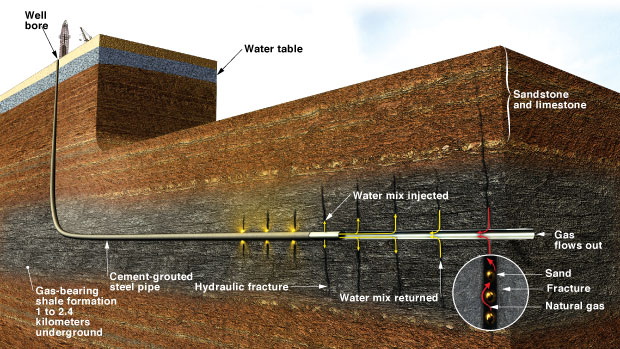 A drilling team with experience drilling more than 1,000 Marcellus shale wells in Pennsylvania with laterals from 1,500 feet to 11,000 feet recently published a research paper looking at best practices and what it will take to routinely drill wells with laterals longer than 18,000 feet.